‘Mum says I was in a boat before I was born as she paddled when she was pregnant’
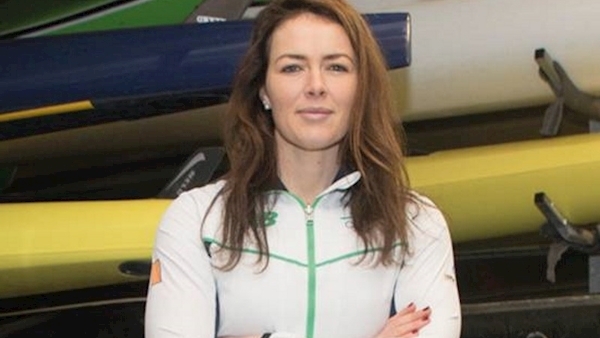
Jenny Egan, who made history last August as the first Irish athlete to medal at an ICF Senior Canoe Sprint World Championships with a bronze, is looking forward to a busy summer, starting next week with the first World Cup event in Poznan. She spoke to .
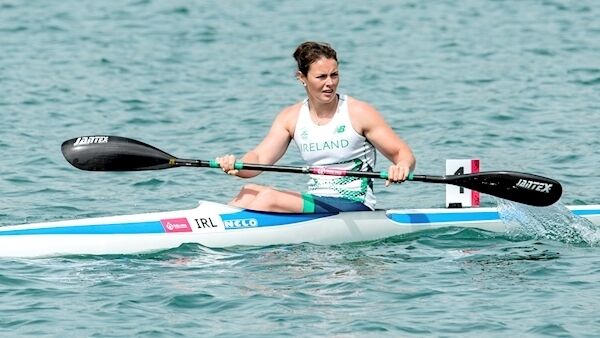
I am a sprint and marathon kayaker and I race in a boat called a K1, which is a kayak for one person. The sprint distances I race are K1 200m, K1 500m, and K1 5000m.
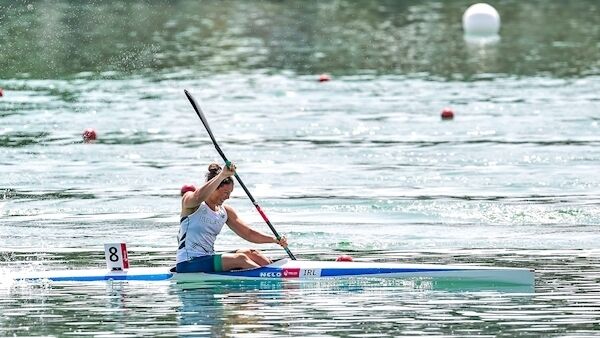
The K1 200m and K1 500m races consist of heats, semi-finals, and finals, which have nine lanes (only eight lanes at an Olympic Games) and the kayakers have to stay in the middle of their lanes from start to finish.
The K1 5000m is a direct final without buoyed lanes. It is, therefore, a very tactical race, where kayakers form groups in which they can conserve energy by wash-riding their competitors. This is similar to the ‘draft’ mechanism in cycling.
My main focus throughout the competition season is the sprint distances and, at the end of the sprint competition season, I race the ICF Marathon World Championships, which consist of a 26km race with six portages, where you exit the boat and run with it for 100m.
The correct term for what I do is kayaking.
However, most people are more familiar with the term canoeing, so I usually call myself a canoeist, especially as our national governing body is Canoeing Ireland and the umbrella organisation for all national organisations is the International Canoe Federation.
The main difference between kayaking and canoeing is that, in a canoe, the paddler either kneels on the bottom of the boat or sits on a raised seat facing forward and uses a canoe paddle that only has a blade on one end, whereas a kayak paddler sits with their legs in front, facing forward, and a kayak paddle has blades on both ends.
Both my parents, Angie and Tom, are kayaking since they were teenagers and are members of Salmon Leap Canoe Club.
My brother, Peter, has competed internationally for Ireland for many years also. Mum says I was in a boat before I was born, as she paddled when she was pregnant with me. I first sat in a boat on my own when I was three and I did my first race at eight.
When I was younger, I did many activities: dance and drama, singing, violin and I also played many different sports throughout the years. But when I got to the age of 15, I decided that kayaking was what I wanted to focus on.
My main training base is Salmon Leap Canoe Club in Leixlip, Kildare. During the winter months, I mainly do land-based training, consisting of six gym sessions, three running sessions, and two swimming sessions.
I also complete three, on-the-water, specific kayaking sessions. That’s 14 sessions over six days, with one full day off to recover.
My coaches are my brother, Peter, and my fiancé, Jon Simmons. We have a great training group in Salmon Leap Canoe Club, where I do the majority of my training with male athletes.
However, as the competition season approaches, it is important for me to go abroad to do specific kayaking sessions with female athletes. I am just back from an eight-week training block in Florida, with the Danish women’s team, that went very well.
All athletes experience heartbreak and, for me, that is what has made me the athlete I am today. Many people ask me about missing out on qualifying by one place for the Olympics in London 2012 and Rio 2016. Yes, this was heartbreaking for me, especially for London, as I was much younger at the time and felt that I had really failed by not qualifying. It badly affected the remainder of my 2012 competition season.
Therefore, as I was preparing for the qualifiers in 2016, the one thing I said to myself was that, yes, I would give it my best shot to qualify, but if I didn’t make it, I would not let it affect the rest of my competition season. I went on to have one of my best seasons that year.
I am looking forward to a busy summer, starting next week with the first World Cup event in Poznan. World Cup 2 takes place in Duisburg, the following week, with the European Games, in Minsk, at the end of June, and the World Championships, in Szeged, towards the end of August.
I have never thought of giving up, as the passion I have for this sport outweighs the disappointments I have experienced over the years and that is what sport is all about.
Very few people in the world can say they have World Championship medals and these medals are worth more to me than any amount of money, as I have worked so hard for them.
I do not feel like I am missing out; I feel that I am gaining more than other people. I have had many different life experiences to my peers, by training and competing in different countries.
Over the past three years, I have seen a big increase in my progression as an athlete.
I would like to thank my family, coaches, and training partners, along with Sport Ireland, Institute of Sport Ireland, Olympic Federation of Ireland, Salmon Leap Canoe Club, Canoeing Ireland, Canoe Sprint Ireland, and Canoe Marathon Ireland for their continued support in helping that happen.
Also a big thanks to my current sponsors, Cornmarket, Nelo Kayaks, Jantex Paddles, Naturalife, ROS Nutrition, Pulse Roll, and sports thereapists Cahal Flynn and Tomás Ronan.
I don’t think the Olympics are the Holy Grail.
Of course, it would be a dream come true to qualify and race at Tokyo 2020, but I remember one Irish Olympian who pointed out that there are European and World Championships every year and you could be a world champion, but maybe not perform at the Olympic Games, as it only comes around every four years, whereas, these events are of an extremely high level and are every year. All I can say is that I will be trying my hardest in every race.

CONNECT WITH US TODAY



Be the first to know the latest news and updates