‘Football was a culture war long before Trump came along’
There’s a self-aggrandising element to books about American football that can grate pretty easily, unless your tastes run to towering pomposity and overwritten hypocrisy.
To judge by the bestseller lists this is a more attractive combination than you might think, but a useful corrective is Mark Leibovich’s outstanding Big Game: The NFL In Dangerous Times, currently sitting comfortably in my top five sports reads of all time.
Leibovich, a political reporter by trade and an “unabashed” New England Patriots fan by conviction, had me hooked early on in his book, when he asked the wife of NFL Commissioner Roger Goodell how many NFL logos (“the Shield”) decorated their house.
“Only one,” said Mrs Goodell. “It’s tattooed on his chest.” (“She had a friend in me for life at that point,” writes Leibovich.)
When Mrs Goodell half-heartedly says the comment’s off the record, Leibovich says it isn’t. Okay, she says: “I didn’t say anything about the one tattooed on his ass.”
Leibovich’s book isn’t a bland celebration of a multi-billion dollar industry but an examination of where the sport is at, from the existential threats such as the fall in numbers playing at youth level to the bizarre “Membership”, the people who own NFL teams.
One anecdote about Dallas Cowboys owner Jerry Jones’ love of shoes stopped me in my tracks, literally, but when I spoke to Leibovich we started from a more obvious point: where is the NFL now?
“It depends on whether you look at it in the short term or the long term. If you take the short term, by the measures the league cares about - revenue and TV ratings and popularity, those metrics - then it’s been a wildly successful year.
“There have been some really compelling games and action, there are young stars who have been tremendous in the play-offs.
“We had those really good championship games, and the Super Bowl tomorrow, so the football-watching public has very much gravitated back to the field, which has been good for the game.
“I think the longer-term issue is what will all of this look like in 30 years when the health and safety hazards involved in the game are better understood. Maybe there’ll be another generation of players who have opted not to play football but who have opted for other sports.
Where will the evolution of western society leave the game in 30 years? It does seem that younger people, women, those with certain political sensibilities - there are groups who appear to have a lot of suspicions about football, and there seems to be a lot of bad will towards it.
“One of the things I outlined in Big Game is that it’s not a particularly well-run entity. As much as it’s a cash cow, the cow itself doesn’t seem the most healthy organism you could imagine.”
Leibovich sketches out the breakdown of the game in the country’s culture wars: “A lot of those culture wars in America society, the divides, are those Donald Trump tapped into to get himself elected President.
“I know those aren’t unknown in Europe either, elites versus the working class, or left-behind class, but here you have more of an elite, coastal, left-leaning, younger, wealthier audience which may be as suspicious of the
NFL as they would be of Donald Trump.
“Then you have the Trump-loving heartland in places like Ohio, Texas, Pennsylvania, which are also football heartlands and which prefer a more traditional definition of American life.
“Football was a culture war long before Trump came along, and a lot of those same strands exist in this conversation.”
Trump’s attacks on the NFL come with a complex back story - Leibovich reveals, for instance, that the US President once sniffed around buying the Patriots, though he came closer to another franchise a few years ago.
“One of the best things the league has had going for it this year is the fact that Donald Trump has had other issues - the midterm elections and this government shutdown fiasco, which mercifully ended a few days ago - which have taken up his attention.
“He’s always on the lookout for some popular distraction which makes things chaotic and makes people angry with each other, accentuating the divides in our culture, and this year he seems less interested in the NFL.
“Trump, for the best part of three or four decades, wanted to be part of that club of owners. The others wanted nothing to do with him as a business partner. Most recently, in 2014, Trump tried to buy the Buffalo Bills and was thwarted - if the NFL owners had allowed him to have the Bills he’d now be safely in Buffalo and wouldn’t be inflicting destruction on them from the White House.
“The owners are a motley crew, many of whom found themselves by a happy hereditary accident as entertainment kingpins in their various markets. You have this billionaires boys’ club, and it is overwhelmingly male, of 32 people lucky enough to win the lottery and be an NFL owner.
“I was very surprised to get in with that world in a relatively short period of time, because I’m not a sportswriter normally. It was a real eye-opener for me.”
Was the non-sports background a help?
“Probably,” says Leibovich. “I think people are intrigued, maybe, by people they’re not used to dealing with all the time. Having a different perspective helped, and covering American politics is what I’m known for, if I’m known.
“The number one reality show in the US is politics right now, with football probably number two, but it doesn’t hurt to be on staff at the New York Times either. A lot of the owners read it, which made it easier.” Okay. Brass tacks. Tomorrow’s games, even allowing for Leibovich’s support for the Patriots and Prince of Darkness Tom Brady.
“He’s very much from Irish stock, you guys should claim him.”
I decide against updating Leibovich on my lengthy vendetta against Brady on behalf of distant cousin Bridget Moynahan and instead ask what the Prince is like in person.
“I liked talking to him, but he’s an internationally famous sports star, so there’s a different category of intimidation when you’re interviewing a sports hero rather than a presidential candidate or some other celebrity.
“But despite the fact that he’s the greatest football player, tall, good-looking, married to a supermodel...
“Wait, what? The greatest football player ever?
“Well, who’s better?”
Argument deferred. Continue, please.
“He’s pretty down to earth within the context of someone who’s paranormal in many ways. That’s probably the best way to put it.
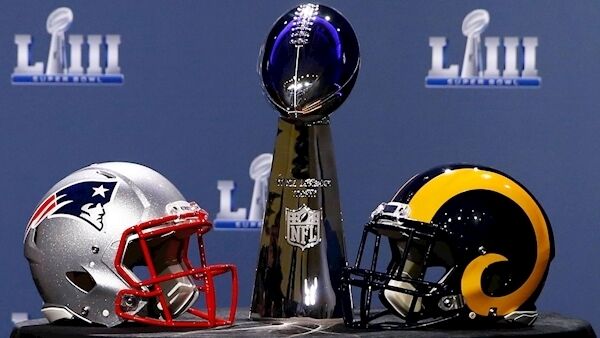
“The game itself? I see the Patriots winning 31 to 29. I say that as a Patriots fan but I did an interview last September with the Washingtonian magazine in which I said the Patriots and the Rams would be in the Super Bowl, so clearly I know what I’m talking about.”
For the sake of readers everywhere we didn’t touch on the Jerry Jones story, which will haunt me forever.
“As it should,” says Leibovich.
“People should read the book, and then they can be haunted by it too.”
Big Game: The NFL in Dangerous Times by Mark Leibovich is out now (Harper Collins, €19).


CONNECT WITH US TODAY



Be the first to know the latest news and updates