Scott Langley: ‘I was on all fours and blood was just dripping on the dojo floor’
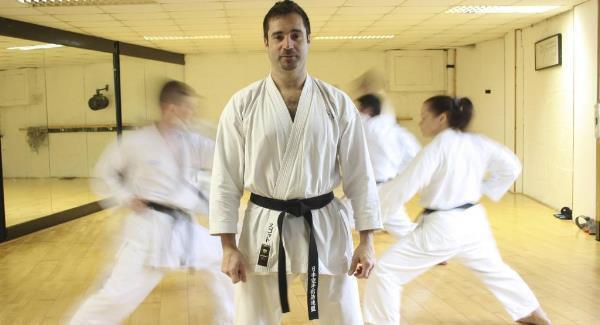
"I woke up with dread. I was constantly vomiting. Most mornings I’d either feel like I was going to vomit or vomit. From the train station to the dojo there were little alleys where I’d nip down and throw up. And it was all just to get in the door.”

Scott Langley: ‘I was on all fours and blood was just dripping on the dojo floor’

Then Scott Langley’s training would begin. Day in, day out, for two years, the Yorkshire native walked to the notorious Japanese Karate Instructors’ Course to receive two hours of physical and mental punishment that, in any other context, should lead to hospital stays, headlines and court cases.

The remainder of each day was spent stopping the bleeding and psychologically steeling himself for the trip to the dojo the next day.

Of the few who have graduated the course — fewer than 100 in the 50 years before Langley entered — all have some sort of superpower. One had the world’s hardest bones, like Wolverine, while another was a Hulk-like mountain of strength. Langley believes his superpower was the ability to heal.

“I’d be black and blue from blocking and I’d lie on my bed willing my arms to heal overnight,” says the Sensei, who used have to sleep with his arms spread above his head. “I’d wake up the next morning and they’d not be fine, but functioning, and I often thought, ‘That’ll get me through, this ability to sustain more punishment.’”

That ability to heal was much needed as his body and mind were tested for imperfections, as if in a wind-tunnel, through constant repetition under intense pressure to purify technique to minute detail.

Not that his seniors were necessarily invested in the future of their recruit: “They didn’t want to teach something,” insists Langley. “The only way to survive was to train really hard and become good. They weren’t particularly interested in making you good. They were just interested in having you survive
 well, no, they weren’t even interested in that; they were very interested in seeing if you would survive. And if you did, you earned their respect and you were one of them.”

Before meeting Langley for this interview, I was handed a rectangle of paper listing three topics to discuss: Severe Beatings. Near-Death Experience. Pushing to the Limit.

Throughout, Langley speaks openly on these topics with an arresting humour and humility, recounting his darkest day almost as if it were an out-of-body experience:

“You always get one big beating and it’s always in the summer of the last year. We’d done this one-two combination and my footwork was slightly off. One of my senpai, my seniors, took offence about how I was doing this so he got the tubes around my waist to do this combination. ‘OK, do it 100 times,’ he said. So I did it 100 times and he had the big shinai — a Japanese bamboo sword — and every time, whack.

“So I’d do it, come back, ‘again’. Do it, come back, ‘again’. And this is after an hour and a half of normal training in the middle of the summer— 36 degrees, 100% humidity. I was completely spent.

“‘OK, tube off. Another 100 times without the tube.’ And again, the shinai pounding me every single time. So I did that another 100 times.

“Then it was, ‘OK, pair up with Inada,’ who I did the Instructors’ Course with. He was current freestyle world champion and probably pound-for-pound the best fighter in the world at the time.

‘OK, do it.’ I could barely hold my arms up and I just got battered on the dojo. There was blood everywhere.”

Langley learned the fleeting nature of pain from this horror, retreating to his mental escapes to cope with the incessant battering.

“I distinctly remember, I was on all fours and blood was just dripping on the dojo floor, and my senior was giving Inada — who had just beaten me up — tips about his fighting style. And I thought, does he really need tips? I think he’s got it! Then I started thinking, ‘oh, that’s quite funny,’ and was almost chuckling to myself.

“Then my senior kicked me really hard in the ribs and said, ‘don’t bleed on the dojo floor. What are you doing? Have respect for the dojo floor.’”

It is only comparable to SAS army training, where all the work on fundamental principles of combat is carried out with live ammunition. No punches pulled. Nobody spared the fight against their own mortality.

One of Langley’s contemporaries was a Mexican and All-American champion who had left his wife and full-time club to train in Japan. He used a wall calendar, colouring in the good days in blue and the bad days in red. Even after a week he was faced by a wall of red. He lasted 10 days before sustaining a fractured neck and leaving.

“People either develop coping mechanisms or they crack, and probably 75% of people on the course crack and leave,” says Langley, who was only the fifth non-Japanese karateka to complete the course.

But like most of the others, he developed psychological problems. His was severe OCD.

Unlike his Mexican colleague, Langley had opted for a tear-away Simpsons calendar during his stay in Japan, just another mental trick of endurance as he watched the year get thinner and thinner with each passing day.

“That’s how you do it: You just go one more step. You never ever look at the long play. It’s literally down to fractions of time and all of a sudden it’s over: The day is over, the week is over, the course is over.”

For five years between 1997 and 2002, he lived like a prisoner to his life’s craft and the Dojo Code, completing the Instructors’ Course in the latter two years.

But upon leaving he relived his daily struggles by writing a book, ‘Karate Stupid’, putting into print the internal dialogue that saw him through the course. The former world champion considered it a loving account of Japan, balancing the worst of the tortures with the fundamental life lessons he gleaned: The transitory nature of physical wounds, the empowerment in seeing the humanity of his heroes, the knowledge that by training he could equal them and do so without repeating their sadistic zeal.

Yet his seniors’ abusive streak resurfaced after Langley finally released ‘Karate Stupid’ last year, as his former masters expelled him, refused foreign entrants to the Instructors’ Course and sought to destroy him personally and professionally for breaking what they saw as a traditional vow of silence.

“I had a very clear exit strategy [to move to Ireland and become a karate instructor], so all I wanted to do was survive, graduate and leave. I never had that burning desire to beat them. But by surviving, in essence, I was beating them because that’s what they were trying for me not to do.”

Now he is beating them by being busier than ever, as Technical Director of the WTKO [World Traditional Karate Organisation] for Ireland and the UK. He finds a greater satisfaction in teaching, as he continues to aim to be the best he can be while pushing others to do the same.

He will return to Japan for the first time since Karate Stupid this autumn — but will do so on his own terms.

More in this section

Cookie Policy Privacy Policy Brand Safety FAQ Help Contact Us Terms and Conditions

© Examiner Echo Group Limited