Ankrom is in for the long haul
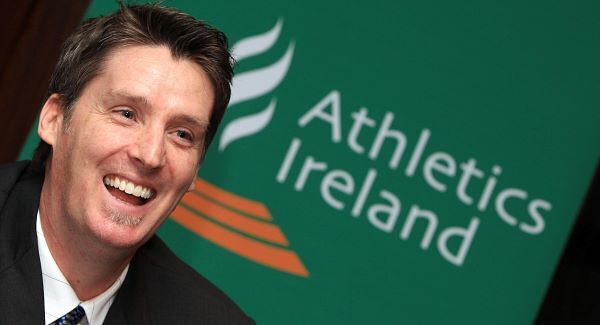
That was the case as recently as last month when he took in the announcement at the Westbury Hotel in Dublin that the Government was allocating extra funding for a number of sports as they fine-tune preparations for next year’s Olympics.
This was, after all, the same day that Ankrom and 17 others were named as team leaders for their individual sports at the 2016 Games, which is one reason why he wasn’t sweating over the fact that his contract with Athletics Ireland was due up as of midnight on the 31st.
“Nah, we have been talking about it for a while,” he explained to the Irish Examiner at the time when it was suggested the new deal was being left rather late. He has, in fairness, always made a point of insisting his brief would encompass the big one in Brazil.
Ankrom has known some bumpy stretches of road since taking up his current posting in 2011, some of his own making, but then complications and controversies have always come with the territory for those governing track and field here.
He has had to withstand storms whipped up over issues concerning funding, salaries and selection policies, as well as one particularly ill-timed brouhaha when he criticised Derval O’Rourke and Paul Hession for staying away from London in the run-up to the 2012 Games.
He has held his hand up and admitted athlete communication is one thing he could do better but Ankrom remains positive about the direction the ship in general is taking as the second half of the current Olympic cycle continues apace.
Ankrom laid his ambitions out in black and white in May of 2013 when Athletics Ireland unveiled their latest, three-year, strategic plan with a target of 24 medals set for the period post-London and up to and including Rio.
This was no pie in the sky. “I have done my homework,” he said at the time. Twelve medals alone were forecast for 2013 but it is only now that 2015 has dawned that the sport is looking to get stuck into the second dozen.
“We looked at about 24 medal opportunities and with (the women’s team bronze at the European Cross Country two weeks ago) we are halfway there, around 12,” said Ankrom. “The 2015 year will be another opportunity. You’ve got (European) Indoors, (European) U23 so it could be a big medal year, potentially. I always think in terms of 33%. If you have three opportunities and you get one you are probably there.
“That’s our job, to not only get to the competition, but to get to the medal stand. That’s the transition that we are facing with these young kids coming up. Derval and (David) Gillick, these were seasoned veterans who knew how to win medals. We’ve got to teach these kids over the next two years how to win medals and that’s a challenge.”
Ankrom came to Ireland on the back of a nomadic career that has taken him from the collegiate level in the US to Bahrain, Hong Kong and New Zealand where he was in situ when the country’s athletes put down their most successful Olympics in 20 years.
A best showing at the Commonwealths in four decades followed and, though Ankrom’s time in charge started just a year before that Olympic success in Beijing, it still made for a CV that Athletics Ireland found impossible to resist.
From day one he has spoken about the long game. Athletes zoning in on London, he said at the time of his appointment, would be supported but, “most importantly”, so would those for whom the ambition of making an Olympics would take four more years to ferment.
Those long-term projects are now the immediate priority. A generation of older and highly successful athletes have retired and attention has shifted to the likes of Mark English, who claimed a bronze at the European Championship in Zurich last summer.
That medal franked an encouraging display by the 24-athlete team with an average age of 23 and even the World Indoors in Sopot, Poland last February provided reasons for cheer despite the early elimination of all five competitors.
“The World Champs (in Beijing next August) will give us a good indication of the possibilities based on previous years, but everyone has to understand that winning a medal with Mark English at the Europeans and winning a medal at the Olympics is a big jump.
“There will be a big expectation on those young athletes, but you have a good group coming through. The expectation we have to start to set is that ‘listen guys, if we can be successful here it sets us up for another possible successful 2020 team’.
“Because what’s coming behind that is hopefully a constant flow and we had a big drop. Managing that expectation … everyone is going to be thinking medal, medal, medal for Mark English, but Mark needs to crawl, walk and then run.”