Geared for one last Rás
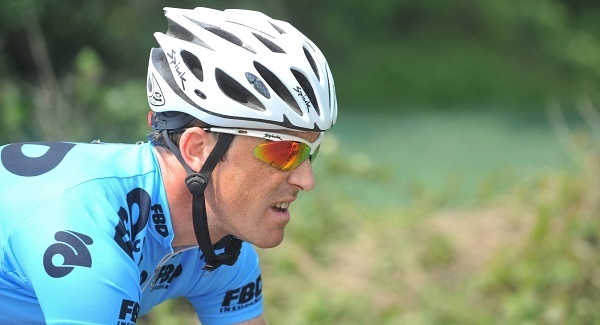
Ciarán Power was putting the kids to bed one evening when something had to be aired urgently, which is how everything is aired at bedtime.
“The small fella said, ‘remember when you used to cycle, one time you had to go away for seven days.’ “It could have been seven months, but that’s all he remembers.”
That was Power’s life for almost a decade as a professional cyclist for European and American teams until he retired in 2008. Long absences. Piercing denial.
“As a pro you’re always thinking of tomorrow. If you’re training, you’re thinking of what that session will do to bring you closer to your goal. I’d have pushed myself hard and focused on the benefits of what that brought.
“And that’s what was hard towards the end of my career. You were pushing yourself as hard as ever while trying to balance a family life as well as everything else; early in my career it was all about the next step, getting to the Olympics, then getting to the Olympics again and doing better the second time and so forth.
“You let your hair down every now and again but it was pretty full-on. That’s not to say I didn’t enjoy it. I did. I got to see the world, for instance.”
That “full-on” can be quantified pretty easily. Take diet.
“I’d weigh myself every week, on a Monday morning as a pro,” says Power.
“If you had a bad day during the week you’d be better the next day and not eat as much to make up for that.
“During the winter I’d let myself put on 2kg — the first week back, eating rubbish and going to the pub — but 2kg wasn’t hard to lose.
“When I started, though, I’d put on 10kg when I’d come home at Christmas, and that would take longer to get off. You learned as the years went on.”
Leaving the pro game was easier than it might have been. He made the decision rather than having his exit imposed upon him.
“I knew it was coming — I’d signed with an Irish team but from early on in that process it wasn’t going well so although I had another year on the contract it fell apart.
“I had no money coming in to pay the mortgage, so it was an easy decision, and I was lucky enough to get a job the day after I retired.
“It made it easier because I knew it was coming, and I wasn’t enjoying it.”
Coming out of professional cycling, were performance-enhancing drugs ever a consideration? “I was a professional and managed nine years and finished with no money, whereas someone who did go down that route might have finished with a nice house, a nice car and a lot more money in their pocket.
“Then at the end of the day, they don’t know what health risks they’ve taken — or what might come out about them in the press. Those are things I don’t have to worry about.
Does it ever rankle — that he might have accomplished more if he’d taken something?
“When you see what you could do... I finished 13th in the Olympics and was only 20 seconds off the winner. You’d think, ‘if you were 20 per cent better...’ which presumably doping would do for you, what could you achieve? The other side of that, though, is would you really be achieving it? For me it was always about pushing the boundaries of my ability — when I was U16 I wanted to race junior, as a junior I wanted to race senior, as an amateur I wanted to race as a professional.
“But drugs? I don’t blame my mum and dad for not taking drugs — blame isn’t the right word — but maybe if I’d had a different upbringing I might have taken something.”
Civilian life took adjustment, he says. He hadn’t had a job “ever, really, and I was 32,” but he enjoyed himself as well.
“I got to see what the Friday feeling was, for example; as an athlete I was probably training harder on the weekend than during the week, so to finish work on a Friday and have nothing to do but play with the kids and chill... that was amazing.
“I enjoyed that sense of walking away from a job and not having to worry about it, compared to life as a cyclist when you were always thinking, ‘can I have another glass of wine, can I eat that’.
“Everything was equated to how you’ll feel on the bike the next day, so that was a big change.”
Mentioning money... the notion of professional sport can be skewed by the telephone number salaries paid in the Premiership. Power has a different perspective.
“I wasn’t in it for the money. You’d want to bring your career to the next level, winning or helping someone else to win. Travelling all over the world you’d think at times, ‘I’d hate a nine to five job’ but looking back it was the best thing I ever did. Luckily enough I found a job and I love working for myself.”
Before the 2004 Olympics Power met John Sharkey at an acclimatisation camp in Cyprus. Sharkey, a neuromuscular therapist, impressed Power: “I studied while working and it was tough enough, but the work ethic I had as a cyclist, having a goal, all of that helped to drive me on. And having been a two-time Olympian didn’t hurt either.”
His physio business in Waterford city is going well, but now he has another target. When he packed in cycling, he didn’t darken a saddle.
Why is he racing the Rás? “My wife went through breast cancer last year, and just finished treatment recently.
“I was out of shape, eating rubbish, and felt I’d need to do something to help myself, so when we were talking about doing something positive, she said, ‘why don’t you ride the Rás’.
“I couldn’t see myself doing that. I hadn’t ridden a bike in years. I completely stopped. For two years I did nothing. I wasn’t keen on going back, as a two-time Rás winner, and doing myself an injustice, maybe finishing 20 minutes down.”
Lisa, his wife, persisted. She told him to take a half-day on Wednesday for his long mile sessions, and Power started again. He cast around on Facebook and rustled up some other former pros for a team effort: the likes of Morgan Fox and Michael MacNena are aboard.
Now they’re fine tuning the training for the event itself which starts in Dunboyne on May 18th.
“For the kids — for all of us — it’s something positive after a crappy year, it’s great, and it’s for charity as well.”
No going away for seven months either. Everybody wins.
CONNECT WITH US TODAY



Be the first to know the latest news and updates