Colin Sheridan: Masters mythology trains us to forget the ordinary
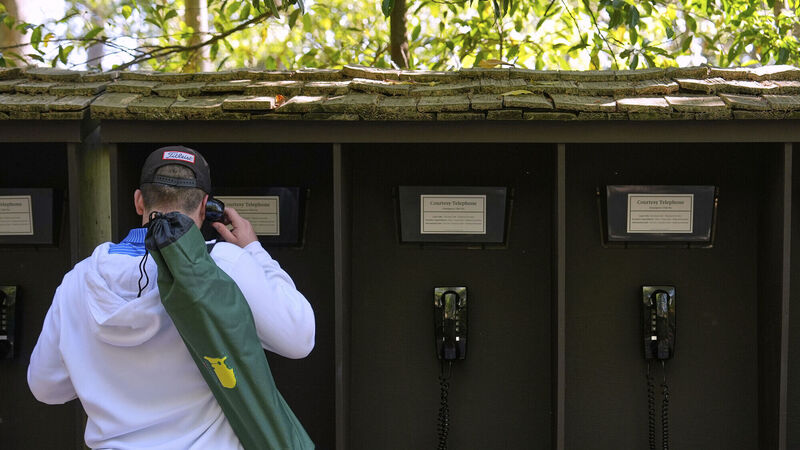
LAND BEFORE TIME: A patron uses the courtesy phones during a practice around at the Masters golf tournament, Wednesday, April 9, 2025, in Augusta, Ga.(AP Photo/Julia Demaree Nikhinson)

This US Masters is a golf tournament that could never be accused of creeping up on you. It does not arrive; it announces itself. Weeks out, the promos begin to seep into your evenings - slow pans across dew-kissed fairways, syrupy piano notes, and camera work afforded more care than a Federico Fellini picture. Even the schedule bows in deference. The PGA Tour effectively tapers like a marathon runner: nothing too strenuous, plenty of rest, a collective exhale before the pilgrimage to Augusta National Golf Club.
If there is an art to the Masters, beyond the golf itself, it is nostalgia - not the accidental kind, but the curated, weaponised variety. Nostalgia, by definition, is a sentimental longing for the past, tinged with a pleasing melancholy. The Masters has industrialised it. Unlike the other majors, it does not roam from venue to venue. It stays put, rooted in the same Georgian soil, allowing memory to settle and compound interest to accrue.
And so the archive becomes bottomless. Larry Mize holing out in ’87. Jack Nicklaus, 46 years young, defying time in ’86. Phil Mickelson carving a miracle from the pines in 2010. Tiger Woods and that chip on 16 in 2005, hanging on the lip as if whispering to the world - “you thought I couldn't do it?” Each moment comes pre-scored - commentary so perfectly pitched you’d swear it had been written in advance - and underscored by birdsong so pristine you can almost hear the leaves whisper. These are not just memories; they are emotional product placements. The Masters economy does not simply replay the past - it packages it, polishes it, and sells it back to you.
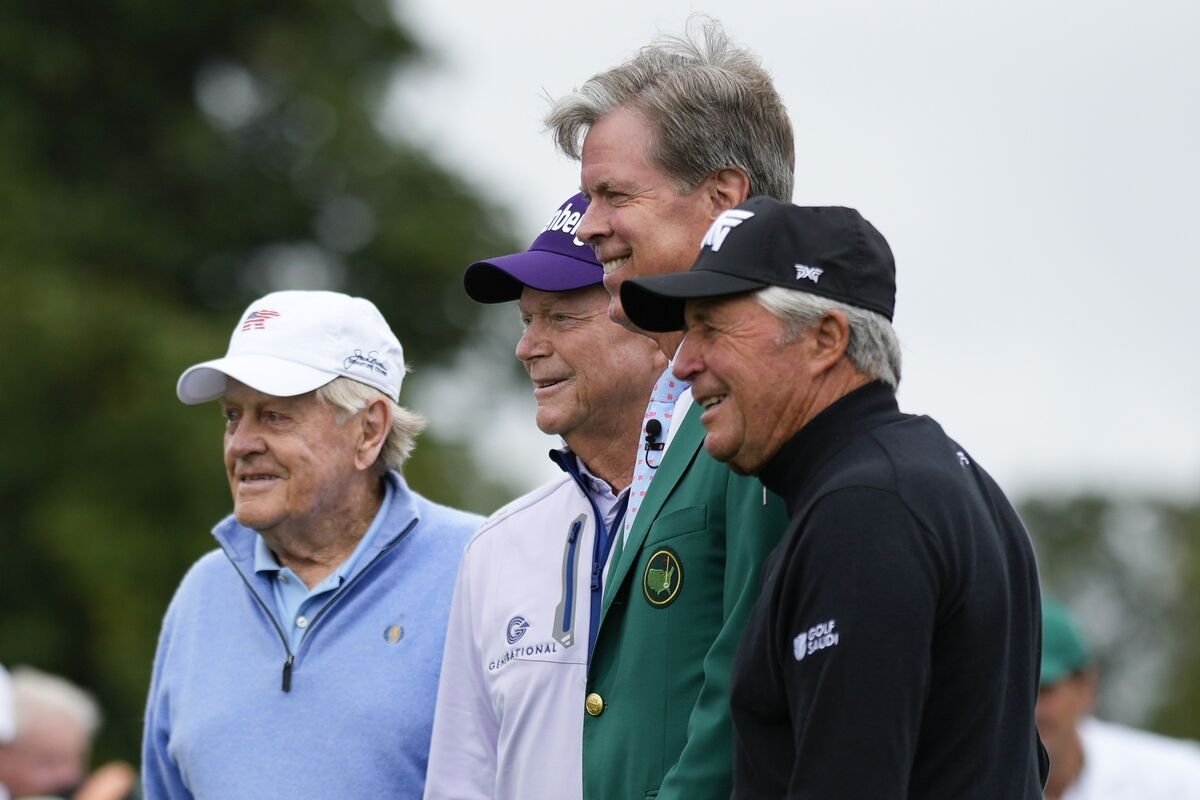
I found myself indulging this week. Not through the official channels, but via the algorithm’s lottery: a grainy clip of Nick Faldo’s second shot into the 13th during the final round of the 1996 Masters Tournament.
As a teenage acolyte of Greg Norman it was a round of golf I had largely scrubbed from memory, so traumatic was its unfolding. Norman’s brilliance, particularly at Augusta, mirrored that of my beloved Mayo footballers. So too, regrettably, did his habit of falling just short. It took me longer to process that Sunday evening than it likely did Norman himself. And Faldo, efficient and unflinching, became the villain by default.
Watching it back now, though, there was something else. I could see myself again - 15 years old, in the clubhouse at Claremorris, fresh from winning a modest local 18-hole stableford, willing Faldo’s ball into Rae’s Creek as Norman had done moments before. Back then, I was blind to anything that didn’t align with my heartbreak. Now, with the benefit of distance - and perhaps a little maturity - the genius was unmistakable.
Faldo begins with what looks like a five wood, a bold choice with the ball above his feet and Rae’s Creek waiting patiently below. His caddie, Fanny Sunesson, is the picture of calm - as if advising on coffee rather than consequence. Faldo rehearses like a man painting a canvas. A flicker of wind. He steps off. Again, he resets. The patrons murmur. Then, at the last possible moment, he changes tack - not to safety, but to something subtler. A two iron. Controlled aggression. The shot lands, obediently, at the back of the green.
If Norman won hearts with daring, Faldo won majors with poetic restraint. It was, at the time, infuriating. Now, it feels like a masterclass.
And here lies the contradiction. In revisiting it, I am doing precisely what the Masters encourages - luxuriating in its mythology. The difference, perhaps, is that the moment itself is enough. It does not need embellishment, nor a swelling soundtrack, nor a narrator straining for profundity.
Yet that is where we are. This past week alone delivered not one, but two documentary-style retellings of Rory McIlroy’s triumph at the 2025 Masters Tournament. Two. Less than a year removed. One, an over-produced offering from Amazon; the other, a more restrained - though still reverential - piece from the Masters’ own in-house team. There is no disputing the drama or significance of McIlroy’s win, but a double helping of adulation so soon after the fact feels excessive, even by Augusta’s standards.
What, then, of the present? What chance this year’s edition proves routine - a six-shot procession for Scottie Scheffler, or a wire-to-wire victory for Maverick McNealy? It happens more often than we care to admit. Yet the Masters, by both accident and design, trains us to remember the exceptions and forget the ordinary.
Whichever way it unfolds, they have us. Emerging, bleary-eyed, from winter’s grip, the billiard-table greens and blooming azaleas offer something close to comfort. A placebo, perhaps, but an effective one. The Masters does not just sell golf. It sells feeling - memory, hope, renewal.
And, whether we like it or not, we keep buying.
For a move once framed - in some quarters - as a step sideways, if not backwards, Harry Kane’s departure from Tottenham Hotspur now looks less like a gamble and more like a coronation of his otherworldly talents. There was a strain of opinion, particularly in England, that Bayern Munich represented comfort rather than challenge. A dominant force in a less competitive league. A place where goals would come easy, but meaning might be diluted. Kane, the Premier League’s most reliable constant, was supposedly trading jeopardy for inevitability.
Except inevitability, it turns out, can still be extraordinary. As of early April, Kane has powered Bayern Munich’s season with numbers that feel almost excessive - over 50 goals for club and country, 31 in 26 Bundesliga games, and counting. He is not merely scoring; he is orchestrating, drifting deep, dictating tempo, before arriving - inevitably - to finish. If Bayern has amplified his strengths, Spurs have, inadvertently, amplified the decision.
While Kane chases records in Germany, Tottenham continue to lurch between promise and regression. Managers come and go, systems shift, but the absence of a focal point - a guarantee - remains glaring. Goals, once bankable, now feel negotiated. Where Kane offered certainty, Spurs now deal in possibility. It sharpens the contrast. One club streamlined around its most decisive player; the other still searching for theirs.
And so the narrative has flipped. What once looked like a soft landing now resembles elite alignment - a world-class striker in a structure built to maximise him. The Bundesliga record of Robert Lewandowski is within reach. The Ballon d'Or conversation is no longer fanciful. Perhaps it speaks, too, to the enduring hubris of English football. It’s somewhat acceptable to leave the “best league in the world” for Real Madrid, but anybody else? Leaving Spurs for Kane was never about retreat. It was about removal - from chaos, from compromise. And, in the end, from doubt.
Dublin senior football manager Ger Brennan may well wonder if the universe is conspiring against him, with the GAA’s Central Hearings Committee upholding his 12-week suspension following an altercation with a Galway backroom member. The ban, stemming from 'physical interference' during a league clash, will sideline Brennan for the entirety of Dublin’s Leinster campaign and the start of the All-Ireland series. On the face of it, it feels heavy-handed. Yes, there was a coming together. Yes, it warranted sanction. But a three-month ban - particularly when both parties were involved and emotions were running high - seems excessive unless there are details not yet in the public domain. In a sport that prides itself on context, this feels notably lacking in it.
Tensions flared in Manchester last week as Gian 'the Giant' van Veen labelled Luke Littler “out of order” after a heated Premier League clash, accusing the world champion of celebrating a missed dart and mocking him in defeat. For most of us - casual, passing observers of “the darts” - it’s oddly compelling. Littler, the prodigious golden boy, now flirting with pantomime villainy. The gestures, the needle, the online barbs - it’s pub sport leaning into slapstick theatre. Darts has always thrived on personality, on not taking itself too seriously, but this feels different. A superstar discovering edge. And, perhaps, a sport discovering it quite likes it.