Colin Sheridan: Even I'll miss rugby if game fails to adapt and survive
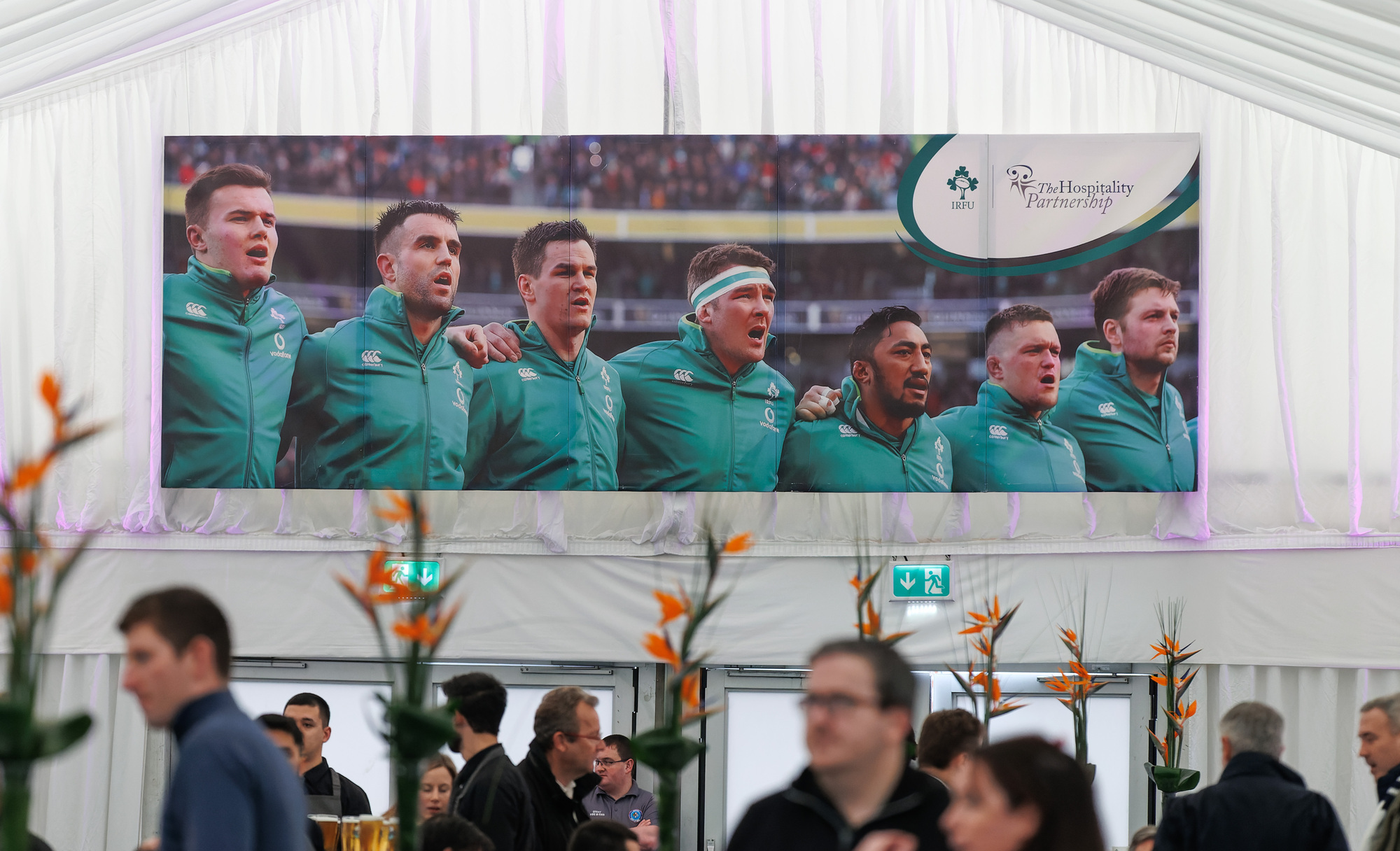
MARQUEE NAMES: A view of the Official IRFU Hospitality at the Marian College Marquee on Saturday. Picture: INPHO/James Crombie

It’d take a brave or particularly stupid man to dare take aim at the Irish Rugby fraternity this Monday morning. As the adage goes, it’s their world, and the rest of us are working as indentured servants in it, paying extortionate rents and fearing eviction. Number one in the world and slaying all before them, not with the cautious, death-by-a-thousand-cuts dominance of before, but with wild expression and bombast, this Iteration of Ireland is the envy of the (rather small) rugby world. They play with a swagger unbecoming of our staunchly catholic upbringings, making them a team that nobody wants to play and everybody wants to support. Everybody who can afford it, that is. Tickets were going for $1,000 on Saturday, and as the bandwagon rolls towards France and the World Cup this September, new carriages will have to be added. Loving rugby has once become - how shall I say it - de rigeur!
We have, of course, been here before, and more than once. Contemporary Ireland’s love affair with the oval has run parallel with our emergence as a modern, relatively liberal nation. For those of us brought up watching Jim Staples and Simon Geoghegan regularly get hypothermia in Murrayfield in the early nineties, the emergence of rock-star talents like Brian O’Driscoll and Girv the Swerve was novel and exotic. Chicken and egging the Celtic Tiger (rather than truck and trailering it), Ireland and rugby went hand-in-diamond encrusted glove with models and members only night clubs and private schools and after-work pints, all things that existed before, but with much less sex appeal. Unlike Gaelic games and boxing and soccer, you could and still can support the Irish rugby team, no previous experience required. You don’t need to be a seasoned Sundays Well fan or a retired outside centre. Hell no, all you need is a fistful of fifty euro notes, a place to stay in Clonskeagh and a glossary of terms, and you have yourself a tribe, no induction needed. Even a cynic like me dare not deny the appeal of a Six Nations Saturday in Dublin, with or without a ticket, if only to bask in the people watching and gorge on the energy of a town overrun with hope and hubris. It was like The Années folles, but instead of F Scott Fitzgearld and Salvadore Dali drinking absinthe in Parisian speakeasies, you could rub shoulders with Barry Egan and Guggi in the Horseshoe Bar.
Ireland won a lot of games then, but they also seemed to lose quite a few, too. And there was always the bloody World cup, stinking around like Chechov’s Gun, perennially perched in the periphery of our vision, reminding us that however much we thought we had done, there was always more to do. As O’Driscoll’s body finally tipped its cap to time, the country too, shelved its stilettos and sobered up. Joe Schmidt was an appropriate shepherd, guiding the team through austerity with a devotion to order becoming a Jesuit. The team was good and sometimes great but the sex appeal was gone. Rugby was less a societal force, more just another sport. The music was loud in the Aviva but the crowds were quiet, not just for penalty kicks but for restarts and scrum time as well. Cracks were showing. Was this the end? If it was, we’d always have Soldiers Field.
Sensing shifting sands, Scmidt did the honourable thing. Like most rugby people - those who play and coach and write about the game - he seems an honourable man, unaffected by the sycophancy and hysteria that bounced around Slattery’s with the ubiquity of Moncler coats. Conversely, he often seemed confused by it.
In stepped Andy Farrell, an English man with Irish sensibilities, yet cut from very different cloth from those he now coaches. As the Irish soccer sputtered and stalled in their progression, Farrell has managed to forge a fresh identity for a team in a sport where you play the same opposition every single year. In that context fatigue and tedium are the enemy, not just for the team, but for the public who float them. So far, Farrell, the unassuming Englander, has revived a tired beast. You can take my cynicism and sarcasm and ball it up and spiral kick it to touch. This team may well win a World Cup. Every caveat I and others like me may place upon that achievement shouldn’t deny its significance. As Saturday showed, Irish Rugby - as an idea - has reached its Belle Époque.
As a sport, however, its health has never been as poor. Forget the bullshitters in bars hushing patrons during conversions, they will never damage the sport as much as it seems to be damaging itself. The interpretation of Uni Antonio’s hit on Rob Herring the latest example of a sport intent on self-immolation. VAR will never do to soccer what regulated, unpunished violence is doing to rugby. Even if the sport survives another twenty years, there may be no players left to play it.
Which, even for a dissident like me, would be a very sad thing. Watching Antoine Dupont stand up Mac Hanson was as pure a herculean sporting moment as anyone could ever wish to see. If rugby's current trajectory continues, it will be gone like the snows of yesteryear. If it is, even I will miss it.
“I’m a drinker with writing problems”, said Brendan Behan, born a century ago last week, who, dead at 41, left everyone pondering the what-might-have-beens for a tortured genius seemingly touched by God. Fitting that the Mayo football team should provide a display in the Gaelic Grounds, Armagh last Sunday, so erratic it may have been an homage to Behan, looking as they did, like a collection of characters with footballing problems. Their Lazarus-like comeback and subsequent collapse was consistent only with their inconsistency, and while new manager Kevin McStay will have undoubtedly be frustrated with their game management in the clutch, he will take arguably more positives than negatives from a display which saw Aidan O’Shea utterly dominant for spells in his dual roll of wrecking ball at full forward and quarterback in the middle of the field. His return to the team comes at a time when many in Mayo and beyond were beginning to wonder where the big man fits in this latest version of Mayo. It’s an annual thing, that debate, as routine as the changing of the clocks. Ever since his emergence as a gargantuan minor of huge potential, “what to do with Aidan” has filled hundreds of inches of newspaper columns and kept snugs open well past closing time. What much of it ignores is O’Shea’s remarkable longevity - this is his fifteenth senior intercounty season - as well his willingness to adapt and often sacrifice his ego for the good of the team. The debate will continue, but my money's on O’Shea once again being at the very centre of things for Mayo this summer.
Mayo in Armagh, Tipp in Nolan Park, massive crowds and brilliant games all still treated with a hint of “off to Sunday mass”. National League games are the on-ramp for so many people, especially young and old, to Gaelic Games. Yet, the occasions themselves are too often pitched as a winter chore rather than a celebration of community and sporting prowess. The Super Bowl may be a world away from Galway versus Cork in the National Hurling league in Pearse Stadium, but we could perhaps learn something from the pageantry American sports so readily attach to selling their games. Arts and crafts, local food markets, music and theatre could all add colour to these occasions, which are already good, but could be much, much better.
However he actually does get paid by his employers, you can’t but admire the way Pep Guardiola goes to bat for those he works for. His defence this week of Manchester City and the club's owners, Abu Dhabi United Group, was a study in his zealous commitment to everything he does. There were no awkward silences, no mumbled excuses, but plenty of fighting talk. Imagine him in politics? You may not love his policies, but you’d know exactly what he meant and where stood. How novel.