Colin Sheridan: Running in search of peace of mind
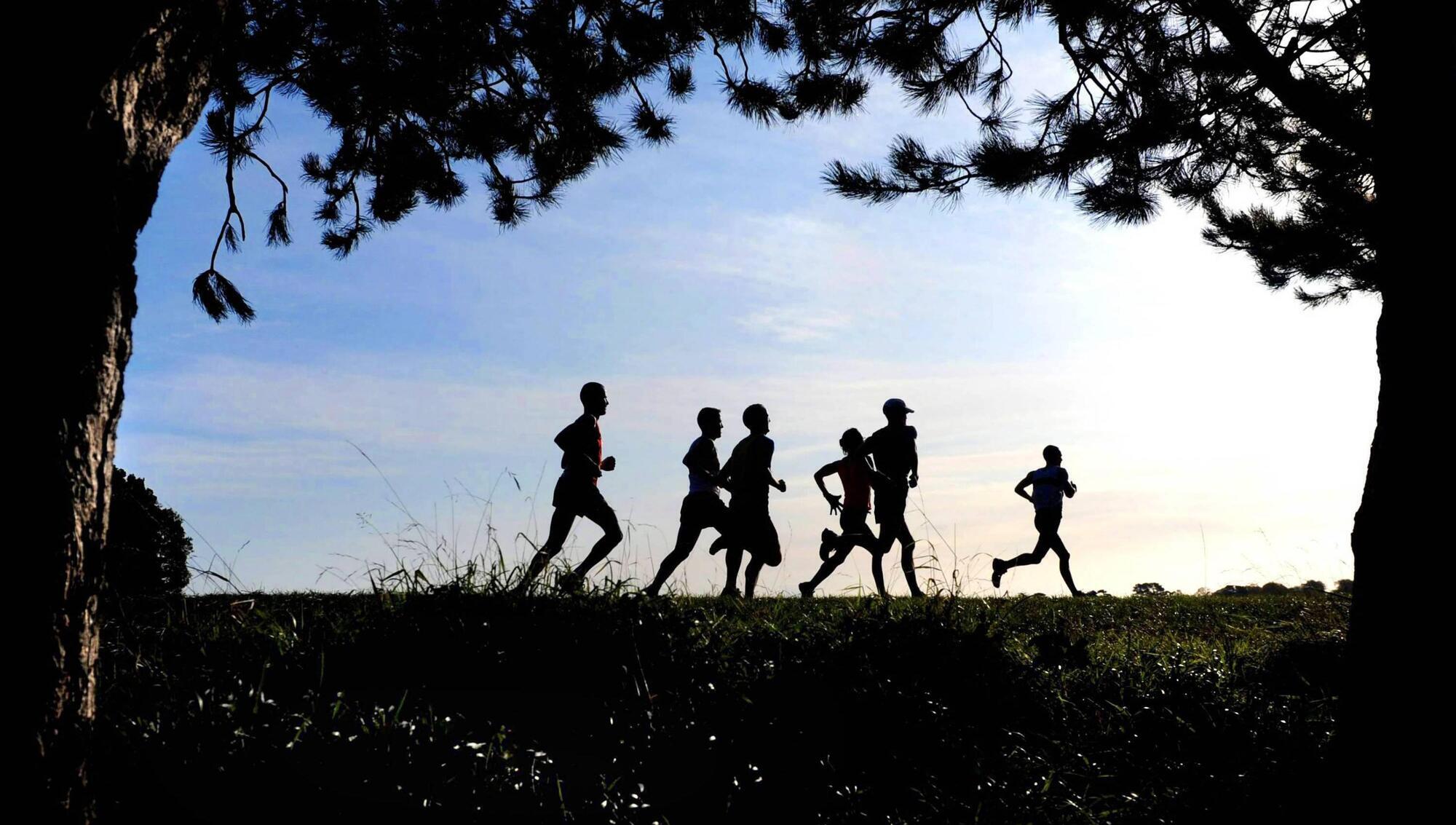
RUNNING: 'I run. Not quickly. Not to win anything or to prove a point to anyone. I run mostly because I can.' File pic: Stephen McCarthy/Sportsfile
I run. Not quickly. Not to win anything or to prove a point to anyone. I run mostly because I can — still can — and because many others I once played team sport with can’t. I feel I owe it to them and to myself, because their bodies are broken and their knees and backs are shot and their hip flexors are tighter than timing belts, and mine, somehow, are not.
Maybe I wasn’t good enough to get hurt, if that makes any sense, but whatever way it worked out, I can still run, on the road and on the track and on forest trails and gym treadmills. So, I run because I can and deep down, even though it hurts, I know there is some good being done — spiritual, physical, metaphorical — and people much smarter than I have forever told me it is good.
So I run, and it hurts. Short and long runs, fast and slow — every single one of them hurt. I think that’s one of the things I have come to love about running — everybody hurts; from the athlete to the plodder (I am the latter). The only difference is the time it takes. But, everybody hurts.
What I think about when I run is another matter. The first time I saw the book by Haruki Murakami, I genuinely thought, who the f**k does this chap think he is? If Murakami thinks about gently flowing streams outside Kyoto and cherry blossoms in Japanese gardens, well, he can keep it to himself. Because what I think about when I run is rich and varied. It's often tortured and it’s rarely soft and soothing. I say things like “it’s good to clear the head”, because, honestly, that’s what people say, and I often say what people say just to say something.
I don’t find running clears my head. I feel the opposite. I find it fills it to the point of overflowing — with ideas, good and bad, ruminations and regrets, hopes and fears and never to be remembered brilliant lines of prose. Before, when I ran, I spent too much time trying to quieten the radio in my head. Now, I just hope to tune it to an acceptable frequency.
So, I never bought Murakami’s book on running. Not for a long time anyway, not until it showed up again like a bad penny, as only some books can, books that demand to be read, and I accepted the serendipity of the circumstances and succumbed. I’m glad I did because it turns out Murakami was no better than me. Not as a runner anyway. No faster. No more disciplined. No less tortured. His book on running was no more about softly flowing rivers in Kyoto than it was about cryptocurrency.
No, this was a book about owning shitty jazz bars and financial worry and professional angst and self-doubt as a writer and…well…running. Sometimes slowly. Rarely quickly. It was a book about running and a book about relationships and a book about re-tuning the radio in his head.
I thought of Murakami at Christmas. I thought of him because I saw a picture of a man called Luke Beresford, a young soldier in the Irish Defence Forces. Beresford is currently deployed overseas with the 121st Bn in South Lebanon and on Christmas eve he decided to run a solo marathon around Camp Shamrock to honour his colleague Sean Rooney, who was killed in such tragic circumstances two weeks before.
I don’t know Luke, and could tell by a quick glance that running was likely much more a natural effort for him than it ever was or will be for me. What I think we do share, however, that is what all of us who ever lace up a pair of running shoes and hit the road share, is the pursuit of peace. I don’t even mean in the literal or profound sense. That goes without saying. But, one can only imagine the state of mind of Beresford and his 300 other colleagues, a long, long way from home at Christmas, in a strange place and in a very foreign state of mind. An entire zeitgeist amplified and complicated by a myriad of opinions and questions and reports and testimonials. And loneliness. And grief.
Running may not silence any of that noise for Beresford and his colleagues, but I believe it will certainly make it more bearable.
The GAA split season has — we hope — achieved many things for players for both club and county. Since David Clifford and Shane Walsh had their legendary duel in the sun last July, there has been plenty of club football and hurling to keep us entertained, but the tempo has been low, almost pedestrian, save for those lucky few still fully invested in the business end of the club championship.
That’s all about to change. January sees the return of the Sigerson and Fitzgibbon cups, competitions that draw heavily upon the playing populations of inter-county teams. By the end of this month, the national leagues will have recommenced. Any sceptic who dismisses the league as unimportant has been living on Rockall as there exists an entire subset of teams whose entire seasons centre around chasing promotion or avoiding relegation.
The ground will have barely firmed up when, just 14 weeks from now, the provincial championships begin on the second weekend of April. In the space of one month from today we will have gone from near famine to a moveable feast. From the perspective of the media and fans, you will likely hear little complaint, but the true merits of whether a split season is working or not won’t be apparent until the end of this 2023 season. Any audit before then is premature and incomplete. Whatever the outcome of that, January to July is jam-packed. It has the feel of an NFL season, except nobody’s expecting Patrick Mahomes to go play junior championship against Listry the weekend after winning a Superbowl. I guess that is what makes it so great.
It's hard to love regular-season NBA games, as there are so many of them and they seem so inconsequential to what happens at the end of the season. But, if you can find one player doing something as magical as what Luka Doncic of the Dallas Mavericks is doing right now, it's worth tuning in whenever you can. The Mavs will likely burn out early in the playoffs, but the Slovenian's complete disregard for precedent is making him the most compelling star in a galaxy of them. Like the great indie band about to make it big, catch him while you can.
Why must Arsenal titillate us so? Manchester City's rather philanthropic outlook to this season thus far has at least stoked the embers of possibility that there will be a title race. That's not to say Pep's peeps won't yet go on a 15-game winning streak, but, the Gunners deserve great praise for their unwillingness to revert to recent type. The longer they forget who they were, the more likely it is they can create a new identity. Collective amnesia can be a potent tool.