Eimear Ryan: If you have never been humbled in your career, how do you accept its end?
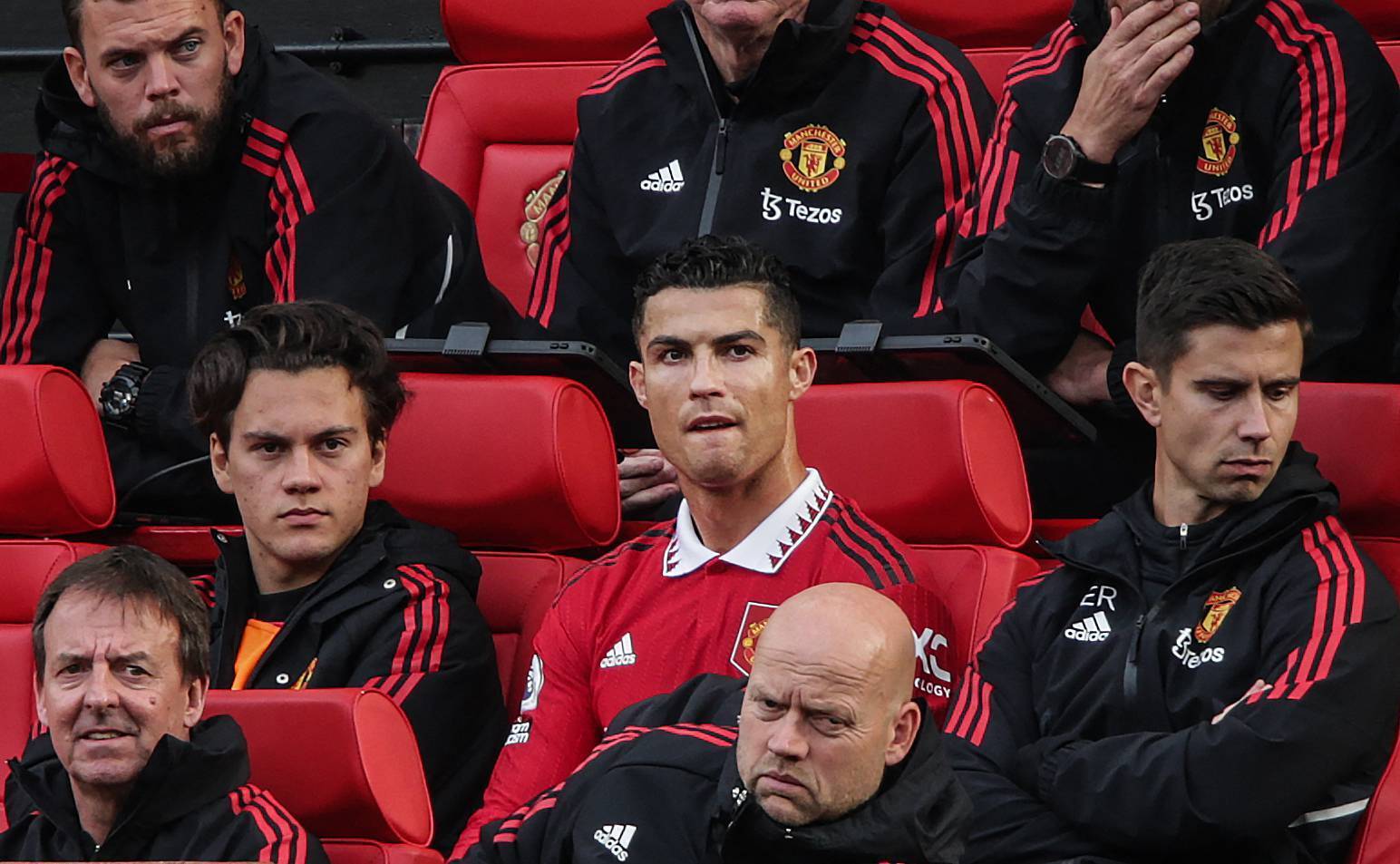
Manchester United's Portuguese striker Cristiano Ronaldo sits on the bench There is no Junior B option for him. (Photo by IAN HODGSON/AFP via Getty Images)
Bowing out gracefully: it’s an artform. Whether it’s in work, sport or (whisper it) politics, picking the right time to depart the stage is never an easy decision. You need to have enough humility to know the jig is up, but enough pride to do it in the most flattering way possible. You want to stomp off the stage, not quietly slink. Most importantly, you want to leave with your reputation intact, while knowing you still left it all on the pitch.
All of which to say, I have some sympathy for Ronaldo’s current predicament in his standoff with Man Utd manager Erik ten Hag. (Yes, Ronaldo – multi, multi-millionaire, more Instagram brand than human, more icon than player.) His relentless pursuit of, and prioritisation of, individual greatness within a team sport has served him well in his career, but ageing on a team inevitably means shifting to a supporting role – something he is temperamentally unprepared for. (As anyone who’s ever sat on a sub bench knows, it can be hard to take when the team does brilliantly without you.)
Now 37, he was Man Utd’s top scorer last season, but in the endless cycle of sport, you’re only as good as your last game. He has never not been the best. He is unprepared for the decline which comes for all of us eventually. If you have never been humbled in your career, how do you accept its end?
Maybe the only way to control the narrative of retirement is to be an individual athlete: that way, you get to retire yourself, rather than the decision being in the hands of management. In recent months, Serena Williams and Roger Federer gave masterclasses in stepping away not quite at the peak of their careers, but just as they were beginning their respective declines. Serena announced her retirement in a cover story – underlining the fact that modern sports stars are also celebrities and fashion icons – and paid an emotional tribute to her family as she addressed the stadium after exiting the US Open: "I wouldn’t be Serena if there wasn’t Venus."
Federer was similarly dignified, taking the court one last time for a doubles match with longtime rival and friend Rafael Nadal, an event that felt like a testimonial.
There is something very moving about seeing great athletes at the end of their careers – a reminder of the humanity and vulnerability that resides within the legend. As Elizabeth Nelson recently wrote in the : "For the ageing athlete to continue grinding away, even as their physical prowess begins to fail them, is in some ways a noble act of self-effacement, an abandonment of personal vanity, a repayment of the karmic debt of their natural abilities."
With 2022’s other high-profile tennis retirement – world no. 1 Ashleigh Barty, who retired at 25 – there was no such poignant moment. Barty retired at the height of her powers, which is probably the exit that most athletes imagine for themselves. But for the fans, it feels like a truncated narrative; how much more moving is it to witness an athlete’s natural trajectory?
Occasionally, it feels like a sportsperson is outstaying their welcome, only to surprise us with yet another chapter in their career. Everyone doubted Tom Brady, now 45, when he left the New England Patriots in 2019 for the Tampa Bay Buccaneers. It seemed like he was being tenacious to a fault – only to silence critics by winning the Super Bowl in his first season with the Bucs. His February 2022 retirement seemed like the right time, but a little over a month later he had changed his mind, confirming that he would play in the 2022 season. This year, he became the oldest quarterback to ever start in NFL history.
At the time, his return to play put me in mind of DJ Carey’s 1998 retirement and later reversal, but on reflection there’s no real comparison. Carey was just 27 when he first bowed out, citing stress and the disproportionate pressure of being a top amateur player while also trying to run a business; Brady was 44. Carey had plenty of good years left, going on to win three more All-Irelands, five in all, before quitting for good in 2006; with seven Super Bowl titles, multiple quarterback records and unfathomable wealth, what else can Brady hope to achieve?
Brady’s doggedness is in some ways understandable. When you’re a Tom Brady or a DJ Carey – one of the best your sport has ever seen – there is no nice graduated exit. There’s no Junior B. You either keep going at the top level or you jump off the cliff of retirement. And when you get to a certain age, every interview you do involves a question about the R-word.
In the run-up to Saturday’s fight against Karen Elizabeth Carabajal, Katie Taylor – 36 years of age, 25 years in boxing, six of those as a professional – has had to field this question multiple times. She told sports streaming platform DAZN: "I obviously know I can’t do this forever; I don’t know if I want to take punches for the rest of my life." Nonetheless, she’s still enjoying what she’s doing: "I absolutely love my sport, I love training, I’m not sick of the early mornings and I’m not sick of the cold mornings, the running sessions, the sparring sessions."
It’s hard to walk away from something you love, but Taylor’s legacy is secure, not just in her personal achievements but in the emergence of Ireland as a power in women’s boxing, as evidenced by the superb performances of Amy Broadhurst, Tina Desmond, Caitlin Fryers, Kellie Harrington, Aoife O’Rourke, Shannon Sweeney and Michaela Walsh at the recent European championships. It’s one thing to make your personal mark, something all sportspeople reflect on at some point; it’s quite another to inspire a movement. Such a figure could never outstay her welcome.