Paul Rouse: Without vision and change, sport will remain big part of climate problem
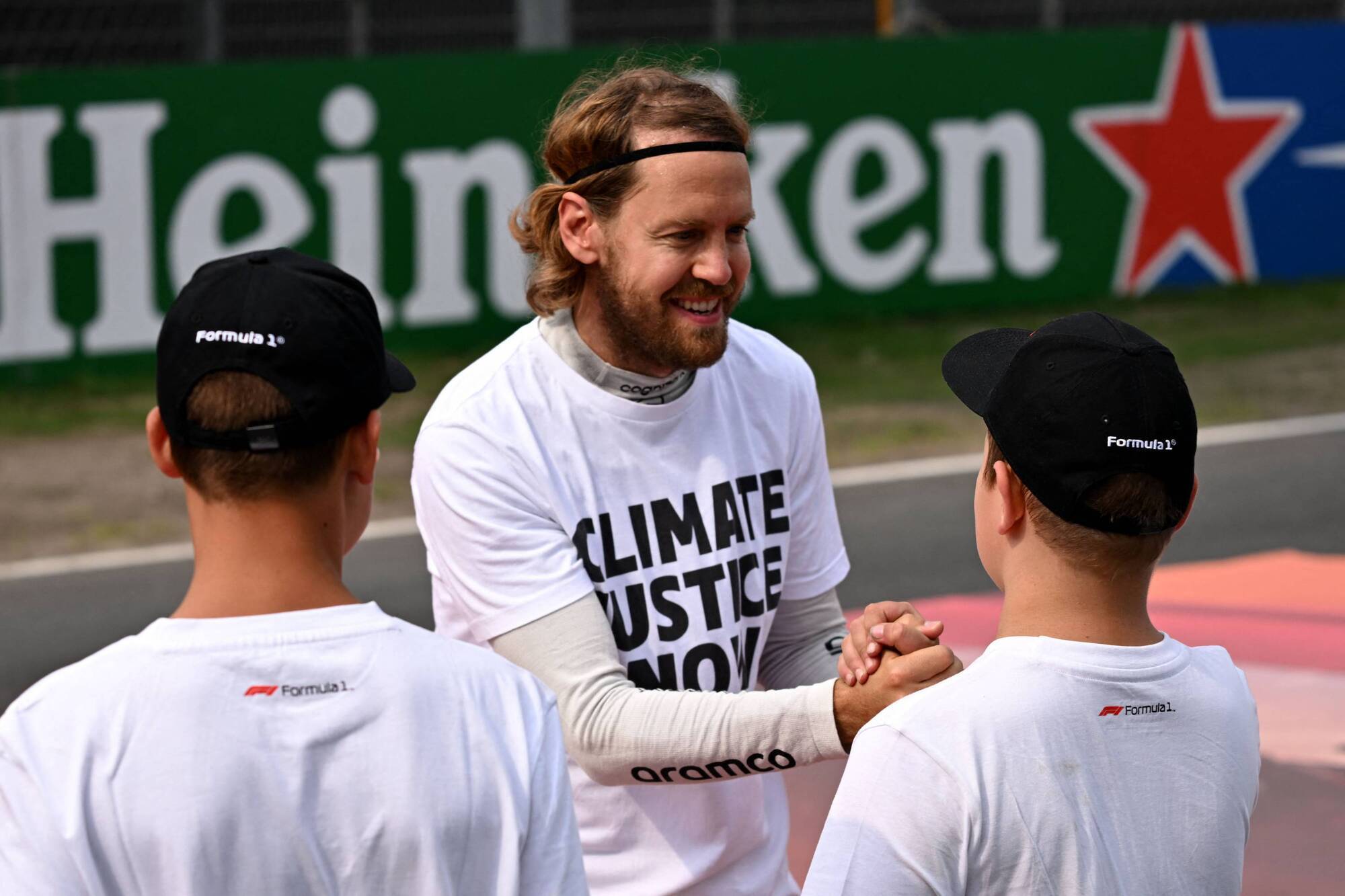
RUNNING ON FUMES: Aston Martin's German driver Sebastian Vettel salutes supporters before the Dutch Formula One Grand Prix.
Picture:Â CHRISTIAN BRUNA/POOL/AFP via Getty Images
There was a brilliant interview on CNN this week with Sebastian Vettel, the Formula 1 racing driver who is retiring at the end of this season.
Vettel is one of most thoughtful and interesting interviewees in sport. He has won the world championship four times and is unafraid to say things that others baulk at.
He addressed the manner in which his sport in responding to climate change. And he made plain that not enough was being done and that what was being done was not happening quickly enough.
This is a statement that fairly describes the response of almost the entire sporting world.
Vettel was referring to how Formula 1 are introducing new engine regulations in 2026, when a new generation of cars will use engines that will use significantly less energy, will use âfully sustainable fuelsâ and will produce net zero exhaust CO2 emissions.
Vettel wants the changes introduced sooner. He said âthe problem we are facing is bigger than we maybe understand. Obviously, to exercise our passion, we burn fuel and that's what people see. And if people criticise that, it's fair.âÂ
He continued: âIt needs systematic change. It needs regulations and rules that don't allow you to hold the event unless you do certain things and you tick certain boxes.âÂ
What is clear is that the world of sport as a whole must face up to climate change. Indeed, with one-third of Pakistan currently under water and stories of climate disasters repeated across the world, the environmental crisis will inevitably shape the future of sport.
As the temperature rises and resources of, for example, food and water become more pressurised, how will sporting bodies and eventsâ organisers meet the challenges of sustainability?
The United Nations has addressed this matter and pointed out just how significant sport is in contributing to global warming: âThe global sport sector contributes the same level of emissions as a medium-sized country. The carbon footprint from transportation to/from events, the construction and use of various sporting venues, and the supply chains for sport-related equipment all play an important role in affecting the worldâs climate. For example, it has been estimated that the 2016 Rio Olympics released 3.6 million tons of carbon dioxide, while the 2018 Russia World Cup released 2.16 million tons.âÂ
The thing about it is that these estimates are most likely a significant underestimate of the scale of sportingâs carbon footprint. It does not include the water and energy used during events, or the mountains and lakes of food, plastic and more general waste produced.
No serious policy or strategy or vision for the future of sport can avoid this issue; it is clear that it is the context of wider environmental change that will ultimately define much of how people play sport.
Despite this, as the United Nations noted, âsport organisations often have narrow views in assessing their environmental impacts, focusing on facilities and events, while overlooking related external factors such as transportation of teams and fans, or interlinked industries with a sizable carbon-production, such as broadcasting and sportswear industries.âÂ
But it is now apparent that this is position that is both luxurious and unsustainable.
At its most basic, global warming is going to have an impact on mega sporting events in the immediate future. A great example of this is the Winter Olympic Games. Such is the impact of greenhouse gases that just a little over half of the more than 20 cities that have hosted the Winter Games will be certain of being able to act as host by 2050.
How does sport react to this? The installation of snow-making machines and of snow-farming might allow winter sports survive, but there is an environmental cost in terms of use of water and energy resources to allow this happen, which exacerbates the problem that already exists.
It is equally the case that grassroots sports is going to have greater numbers of events that cannot be held because of weather-related issues. Nobody is going to be untouched by the reality of what is already happening and is quickly worsening.
And sport is contributing to the worsening.
A really interesting way of looking at this is through the sale of sports equipment, which, of course, includes the âfast fashionâ of sports clothing. The global sports equipment market size was valued at more than $330bn in 2021 and is projected to continue to rise and pass $600bn per year by 2030.
That marks it out as a growing sector of the world economy. And the economics of sport depends on the sale by organisations of merchandising and the building of more grounds.
But it is also the case that this is precisely the type of consumption that is unhelpful to attempts to fight climate change.
When it comes to global warming sport is both casualty and a cause. So the question is: what can sport contribute?
The ubiquity of sport means the organisations, clubs and athlete can play a significant part in combatting global warming and related environmental issues.
There are practical everyday initiatives that can make a difference, as well as potential advocacy and exemplary roles to be filled.
For example, the Bayer Leverkusen soccer club in Germany uses only clean energy and has hugely reduced the use of single-use plastics.
This seems to something that could be adopted by every sports club in Ireland. Why are so many plastic bottles used by Irish sports teams? It is depressing to see the sidelines of too many pitches littered with bottles that are single-use plastic and left as litter.
Is there an appetite out there for some organisation or club to take the initiative here? Of course, there are some who are dabbling in change, but is any sports body or sports club in Ireland truly seized with a passion to make the necessary difference?
Surely people can see that there is a contradiction between the supposed show of humility and respect that is associated with sweeping out dressing-rooms after you use them but at the same time polluting the planet with single-use plastic?
It is not enough to wait for governments to set policies and or provide incentives to encourage sport to become sustainable, or to use sport as a tool to raise awareness about climate change. Sports people should themselves take the lead.
As the United Nations pithily put it: âThe urgency to address climate change is growing every day. Sport can be part of the solution.âÂ
As things stand, it is part of the problem â and so are all of us who are involved in it.