Eimear Ryan: Class is permanent in the rivalry that defines modern camogie
Camogie has never been played at a higher standard, and yet the sport has become predictable. Every iteration of the final since 2013 has involved some combination of Cork-Kilkenny-Galway
Eimear Ryan: Class is permanent in the rivalry that defines modern camogie

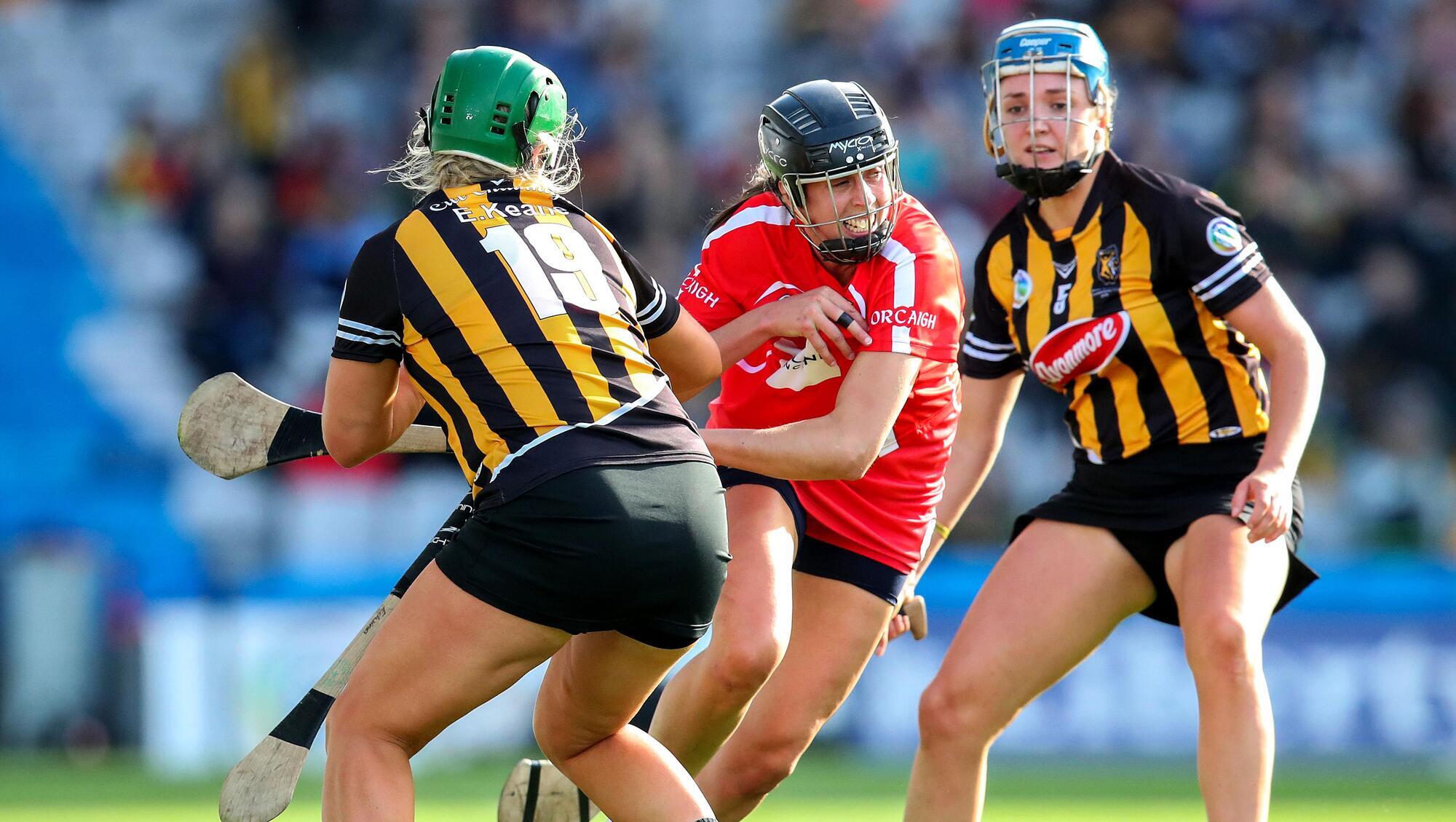
TRILOGY: Cork and Kilkenny played out a trilogy of thrilling finals from 2016 to 2018. Here Cork's Orla Cotter and Edwina Keane with Claire Phelan of Kilkenny battle it out during the 2018 final. Pic: INPHO/Bryan Keane

Women’s team sports are having a moment right now, a state of affairs that is both exciting and frustrating. It’s exciting because I love overhearing people talking about the Lionesses at the Euros (even if it’s just to give out about England winning something); because I was able to watch a surprising amount of women’s softball on the screens in sports bars on my recent travels to the US; because it’s heartening to read that half a million people tuned into TG4 to watch Meath win back to back All-Irelands. 

It’s frustrating because one would never have to utter the same phrase about men’s team sports ‘having a moment right now’ – it is never not their moment. But with a tantalising All-Ireland camogie final on the slate this weekend, women’s sports are hanging onto column inches and podcast airtime for another while yet. Here are five talking points ahead of the decider:


1. Familiarity breeds fierce rivalry 

This is the rivalry that defines camogie in the modern age. Cork and Kilkenny met in a trilogy of thrilling finals from 2016 to 2018, a period that coincided with RTÉ significantly stepping up their television coverage of the camogie championship. In 2016, Ann Downey’s Kilkenny won their first All-Ireland since 1994 – when the cup was lifted, incidentally, by Ann Downey. 

2017 was the iconic final of Gemma O’Connor’s monster equaliser and Julia White’s how-did-she-manage-to-get-the-shot-off winner. And in 2018, Cork once again edged it by a point in a tense, tactical affair that ended up being a masterclass in freetaking by Orla Cotter, Chloe Sigerson and Denise Gaule. 

The personnel – both management and players – have changed significantly since this trilogy of finals, but the rivalry remains fierce, as evidenced by last year’s semi-final; this time, it was Linda Collins’s turn to break Kilkenny hearts deep into injury time after coming off the bench.

2. Teams in transition – but class is permanent 

Both teams have battled to the final despite losing several key players through injury and retirement, managing to sustain a winning culture in a time of transition. In his first year as manager, Matthew Twomey has had to contend without the likes of Orla Cronin, Pamela Mackey and Linda Collins from last year’s panel; although new finds Emma Murphy and Sorcha McCartan, both crucial in Cork’s semi-final turnaround against Waterford two weeks ago, should bolster the Cork attack. 

Meanwhile, Brian Dowling is without sisters Kellyann and Aoife Doyle – both, coincidentally, out with cruciate injuries – and defensive stalwarts Colette Dormer and Davina Tobin, who both retired after last season. But back in the fold is Julianne Malone, Player of the Match all the way back in the 2016 final, who has been living in Australia for the past few years; she popped over four points from play in Kilkenny’s defeat of champions Galway in a pulsating semi-final. Meanwhile, goalie Aoife Norris, corner-back Michelle Teehan and newly-minted centre-back Grace Walsh are emerging as defensive leaders. As John Kiely would say: next woman up.

3. The Ashling Thompson factor 

Two weeks ago, Cork got a fright against a determined and focused Waterford side, who made the most of their first semi-final since 1959. Waterford’s game management was excellent and after 20 minutes, Cork hadn’t registered a single score. Enter Thompson, whose availability on the day had only been determined that very morning, when her two-match ban incurred in Cork’s round-robin loss to Tipperary was overturned. 

She dropped to sweeper, freeing up centre-back Laura Treacy to pick up Beth Carton, who had been making hay up until that point. Thompson’s experience, aggression and distribution were crucial to Cork’s ability to steady the ship, although they still only took the lead for the first time four minutes from the end, piling on point after point to win by five. Brinkmanship, or a gutsy recovery to dig out a win? We know which narrative Davy Fitz will be going with.

4. Kilkenny’s savage workrate 

Kilkenny have always had the players, but there have probably been years when they lacked that ruthlessness and refusal to lose that we associate with the cats. There’s an extra sting to them this year, however, that could nearly be described as Codyesque. Brian Dowling is tilting for his second All-Ireland in three years of being in charge, and he – along with his backroom team of Philly Larkin, Pat O’Neill and Tommy Shefflin – is steeped in that ferocious Kilkenny hurling culture. 

It’s that ‘forwards are the first line of defence’, hooks-and-blocks approach, and the Kilkenny women have never looked more ravenous for the ball. They are as yet unbeaten this year: this fact, and their defeat of the champions in the semi-final, should have them brimming with confidence.

5. Looking ahead: who will break the Cork-Kilkenny-Galway trifecta?

Camogie has never been played at a higher standard or tempo, and yet the sport has become predictable in some respects. Every iteration of the final since 2013 has involved some combination of these three counties. Periods of domination don’t last forever, but the longer they go on, the harder it is for an outsider team to break through. Winning begets a winning culture, but emerging teams have to carve out a new route.

In recent years, Tipperary and Waterford have pushed the top three hard, and on occasion come close to overturning them. Last year, Tipp were within two points of eventual champions Galway before conceding a late goal; Waterford went three points ahead in the 46th minute in this year’s semi-final, but failed to score again.

It’s often those closing stages when experience shows. Young emerging teams focus on explosive starts, but experienced teams think about the last five minutes: you might be ahead, you might be behind, you’re tired – what are you going to do? It’s this extraordinary resilience that has brought these two great rivals to the final, and I for one can’t wait to watch how it all unfolds.

x

More in this section

Sport

Newsletter

Latest news from the world of sport, along with the best in opinion from our outstanding team of sports writers. and reporters

Cookie Policy Privacy Policy Brand Safety FAQ Help Contact Us Terms and Conditions

© Examiner Echo Group Limited