Colin Sheridan: Why is sports administration, like Middle Eastern politics, so hard?
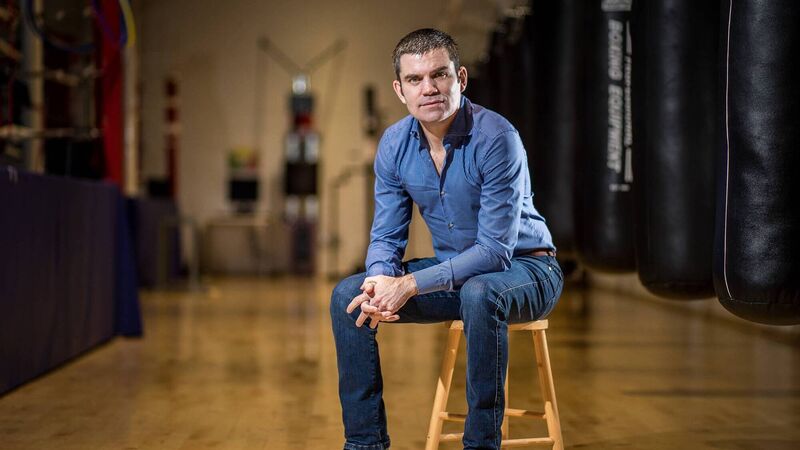
***REPRO FREE***PRESS RELEASE NO REPRODUCTION FEE*** EDITORIAL USE ONLY SAS & Sport Ireland Institute Media Event, Sport Ireland Institute, Dublin 26/11/2019 Bernard Dunne – Irish Athletic Boxing Association High Performance Director, and Irish former professional boxer and a former WBA, and European Super Bantamweight champion was speaking on behalf of SAS, the leader in analytics software and services, and the Sport Ireland Institute. SAS is the Official Analytics Partner of the Sport Ireland Institute (SII) and is providing software and consultancy services to help SII be a more data-driven and insights-led organisation, particularly across boxing and swimming. For further information visit www.sas.com. Mandatory Credit ©INPHO/Laszlo Geczo
Its election week in Lebanon, a country that, over the past three years, has suffered unprecedented economic collapse, a revolution, and an explosion in its capital city Beirut that killed well over 200 people and injured thousands more. It’s political tapestry, much like that of Northern Ireland, is an intricate and delicate web, somehow held together by the most tenuous threads of silk. Julian Barnes’s definition of a net springs to mind: “...a collection of holes tied together with string…less a country than a mesh of voids, bound together by self interest”.
Given Lebanon’s precarious place in the world, sitting as it does between Israel and the East, its political makeup is a complex one. The Taif agreement, the treaty which ended the civil war in 1989, gave the three main religious groups - the , Shia, Sunni and Christians - equal agency within the executive. Each now has a seat of power, respectively the Speaker of the House of Parliment, the Prime Ministership and the Presidency. Like pretty much every post-conflict agreement, its intentions were good, but given the turmoil that has shattered the country in the decades since, its good intentions are arguably no longer fit for purpose. In that context, the desperation for change in this election is palpable, the likelihood sadly slim.
We in the west often smugly tut-tut over what we perceive as our superiority when it comes to governance, compared to those from what we might arrogantly view as more troubled parts of the world, but if governance, like charity, starts in the home, we have little to be overly proud about. This past week represented another in a litany of bad weeks for sport administration, as former super bantamweight world champion Bernard Dunne resigned his position as High Performance Director of the Irish Athletic Boxing Association (IABA), following an unresolved row between Dunne and his employers.
The genesis of that row, reported to be an unsigned 'SWOT Analysis Position Paper' instigated ahead of the Tokyo Olympics, was allegedly undertaken without Dunne's participation or knowledge, and was, he claimed, highly damaging to his position. The paper in question - unauthorised by the IABA - was circulated at board level prior to the Games. Dunne subsequently lodged a complaint, citing two volunteer members as being responsible for the letter - a document which the IABA itself labeled as "as malicious and an appalling attack on a member of staff and on the High-Performance Unit."
After a proposed hearing into his complaint against the two board members was postponed last Wednesday, Dunne resigned. By doing so, he became the third High Performance Director lost to the IABA since Billy Walsh went to America in 2016.
The Dunne story evoked the cause and effect of an almost forgotten scandal in British politics dubbed the Trojan Horse Affair, the fallout from an anonymous letter sent to Birmingham city council in 2013, that alleged a plot to take over and run local state schools according to strict Islamist principles (the plot was a hoax). The episode was the subject of a recent New York Times/Serial podcast, which presented its version of the story with typical panache. Comparing the Trojan Horse Affair to the dispute between volunteer members of a national boxing board and its paid director may seem sensational, but speaks to the broader point of the fickle net of governance - of pretty much anything - being little more than a collection of holes tied together with the flimsiest of string.
It’s an all too familiar story that begs the question; why is sports administration, like Middle Eastern politics, so hard? As Dunne was undoubtedly considering his options last week, a row was brewing in Mayo GAA circles over the use of the county ground, the recently resurfaced Hastings Insurance MacHale Park. The row followed a submitted request from Mayo Hurling Board chairman, Jimmy Connor, to allow the county senior hurling team to use the Castlebar venue rather than the pitch in Ballina for their Christy Ring fixtures, a request he said was denied by the county board, on the basis that the new pitch was “being minded”, despite no guarantees the senior footballers would have another home fixture this calendar year.
For their part, the county board refuted any talk of preferential treatment of the football team over their hurling brethren. “We are following to the letter,” board secretary Dermot Butler told the Mayo News “ the recommendations of Stuart Wilson, the head-groundsman in Croke Park, in relation to the surface being protected”, before possibly disqualifying that argument with the unfortunate kicker “the senior footballers are our ‘million dollar’ team, so we have to be cognisant of that fact too”.
In another blatant case of two sides believing themselves to be absolutely correct about something, despite them both supposedly working toward the same end goal, the most recent Mayo dispute highlights the almost unfathomable difficulty agencies have in helping each other. There are GAA clubs across the country divided in two, between hurling and football, despite working under the same administrative umbrella of the GAA. Two distinct clubs, often in conflict, drawing from the same pool of players, vying for gym time and pitch time and, well, actual time. Far from preaching togetherness, many prefer to invoke George Bush when he said “you are either with us or against us”. In many instances, it is the long established footballing fraternity viewing with deep suspicion the “hurling-ification” of clubs. Sound familiar?
It’s a tale as old as time, but it needn’t be that way. Last year, a small parish in Tipperary won senior titles in both hurling and football in consecutive weeks, pulling from the same pool of players and using the same trainer. They hurled on alternate nights. There were no Trojan horses. No unsigned letters. No mesh of voids, bound together by self interest. Just people pulling together, united in purpose.