No free pass for basketball under virus guidelines
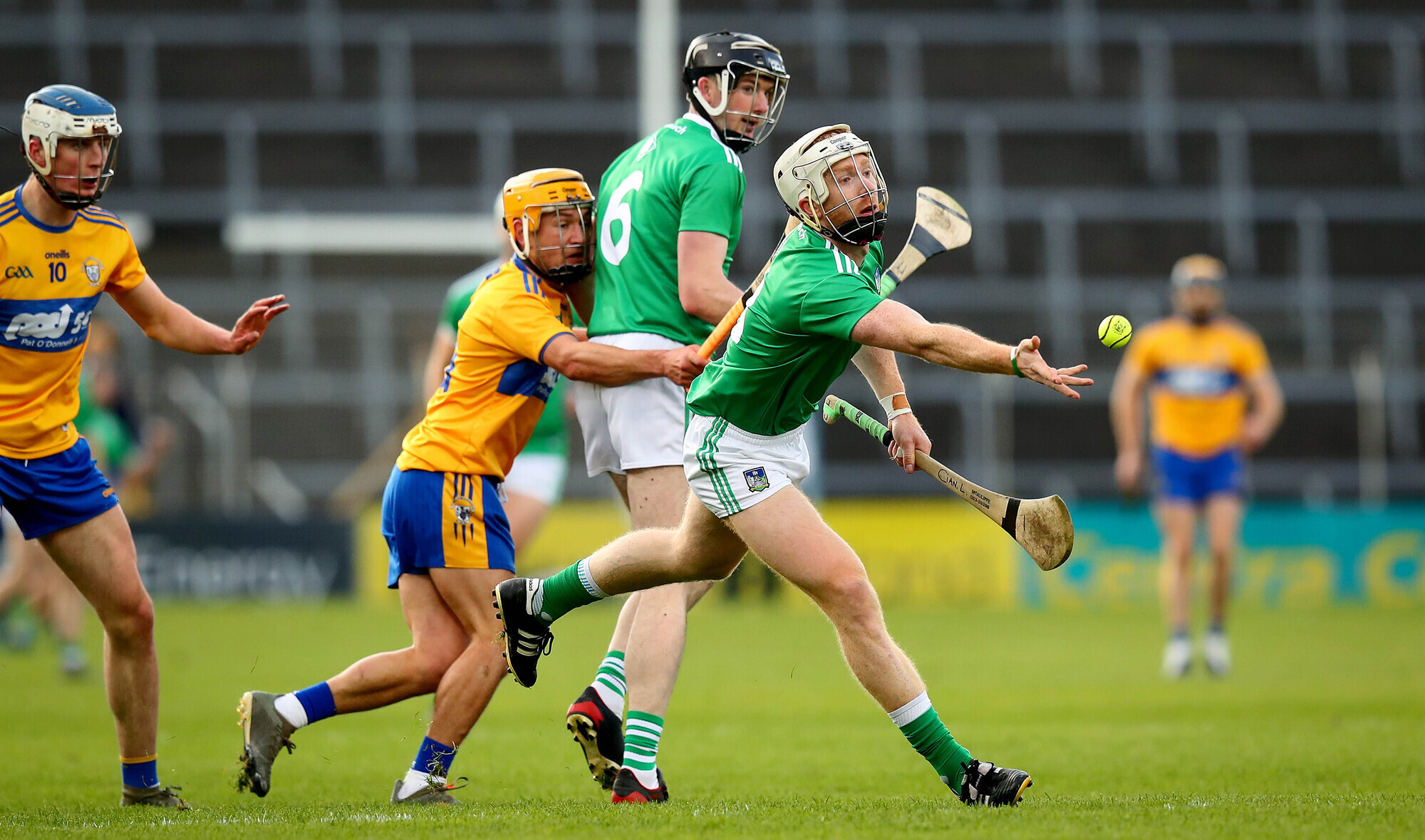
Just as we thought nothing of Cian Lynch literally throwing a ball out to a team-mate in Thurles the other day; the only reason it raised any eyebrow was that the ref actually pulled Cian up on it and blew for a free. Picture: INPHO/Ryan Byrne

To pass or not to pass? That is the question. Or rather, is it safe or not for them to pass?
For a while there we assumed it was all good for Jonny Sexton to be throwing the ball out to Conor Murray this Saturday in Paris; that the risk would be in the pass being incomplete rather than it actually coming off.
Or that Tyrone and Donegal, two sides long renowned-notorious for their inclination to move the O’Neill’s more by hand than by foot, could indulge to their hearts content in a fest of handball next Sunday.
Just as we thought nothing of Cian Lynch literally throwing a ball out to a team-mate in Thurles the other day; the only reason it raised any eyebrow was that the ref actually pulled Cian up on it and blew for a free.
While all of the aforementioned partake in not just any contact sports but ones that constantly pride themselves on the physicality of the Six Nations and the Ulster football championship and Munster hurling, we still presumed any threat to their safety would be confined to any slippage in transport or dressing room or hotel protocols rather than the players being in the middle of any rucks next weekend — and that’s just Tipp-Limerick we’re thinking of.
But now it emerges that that they could possibly be taking their lives into their hands by taking a pass from a team-mate into those same hands.
Basketball — a sport that cynics will confuse events from Ballybofey for — has had it rougher than most in 2020. Although back in March it was the first sport in the country to halt all its activities and the recent NBA bubble showcased the inherent safety of the sport itself by not having a single positive test over the duration of its 95-day-stay in Orlando, it has received little love or empathy from government agencies here.
The sport itself took a cautious approach. While its equally-responsible cousin, volleyball, still allowed for underage competitive games at level 2, basketball did not; indeed 5v5 scrimmaging — internal games — was also prohibited at any level outside of national league.
When the country moved to level 3, basketball — apart from its 51 national league teams — consequently had to move outdoors, with teams again not even allowed to have a game among themselves at training.
On top of that, though the sport had been previously assured that its semi-pro national leagues would be allowed to take place at any point below level 5, three days from the commencement of its season it received a terse directive from Sport Ireland’s Return To Play Expert Group that its leagues only ever had “senior club championship” status and not elite status and thus had to be halted, even though the country was still at level 3 at the time.
Now that we’re at level 5, those Superleague teams, with American pro players on their payrolls, can’t even train outdoors. Underage players can, but as Colm O’Connor of this parish established in a fascinating online interview with a very measured but occasionally exasperated Basketball Ireland chair Paul McDevitt last Friday, it’s not enough that every kid brings their own ball to training and regularly sanitises it throughout the session as well maintains social distancing from their team-mates. They can’t pass that ball to a team-mate. The Expert Group have said so.
If that was news to the basketball community as well as O’Connor, it was news to the wider sporting community as well. Sport Ireland and its Expert Group had not relayed the same directive to other sports bodies like the GAA and the IRFU, mainly because, unlike basketball, they hadn’t sought such clarification. O’Connor followed up the story though, and as you’ll see elsewhere on this page, it emerges that the basketball directive “applies across sports”; Sport Ireland and its Expert Group have “advised” that children should not “share equipment”, such as a ball, when at their outdoor training sessions.
And so all those clubs that have been providing those kids with some outlet in these dark days were mistaken to allow all those balls to be passed and shared this past weekend.
Maybe they thought they were okay because at this time of year most footballers are wearing gloves. Or maybe the basketballers were missing a trick by not putting on some mitts themselves. Maybe soccer is exempt only goalies aren’t allowed to handle the ball anymore while we’re in level 5. Or maybe it’s more a case that Sport Ireland and the government and its Return To Sport Expert Group have been no experts in either explaining or communicating their directives and recommendations.
They’ve baffled and frustrated every sport at some stage this past week alone. Last Wednesday golf and tennis, about as safe and as vigilant sports as you can get, were unsure if they had to close their grounds until they were put out of their agony — yes indeed, just like the gyms, their gates would have to be padlocked.
Volleyball Ireland has perceptively decided that “for the avoidance of all doubt” that all their activities will be suspended at level 5, even if they’ll keep the sport alive by running a series of virtual courses and events. Hockey is up in arms with its own governing body as much as the government and the expert group that its national leagues don’t qualify as elite status, even though all but one of the team that has won qualification for the Olympics now play domestically. Squash Ireland has expressed its “extreme disappointment” that it has to close its courts to its professional players who fail to qualify as elite athletes under Sport Ireland’s criteria.
While there has been increasing scepticism about how representative Nphet and other decision-making bodies are in the wider current crisis, similar scrutiny should extend to the Return to Sport Expert Group. Sinn Féin TD Chris Andrews has been a rare dissenting voice, rightly pointing out in the Dáil last week that its makeup is “far too narrow”.
That body, established in May by outgoing sports ministers Shane Ross and Brendan Griffin, is made up of three members from the Department of Sport, five members of Sport Ireland, and then four members from the rest of the “sports sector”, three of which hail from the Big Three sports: Fergal McGill, the GAA’s director of games administration, the FAI’s medical director Dr Alan Byrne, and the IRFU’s Dr Rod McLoughlin.
The other medics on the group either come predominantly from GAA backgrounds – like former Limerick footballer Dr Jim O’Donovan – or deal mostly with carded ‘elite’ Olympic athletes – like Dr Una May. As Andrews asked: “Where is the diversity?”
He went on to namecheck voiceless sports like tennis, golf, swimming, athletics and hockey but he could have gone on. Indoor sport has virtually no representation, and as a result will sd. No one in power seems to realise or care that indoor sports are predominantly winter sports. If they’re not played this winter, a lot of kids will never play them again.
But the Expert Group seems to be working on the premise that indoor sports are either too risky or too unimportant, if not both.
That’s not good enough. As Andrews pointed out, the expert group needs to explain the science and rationale behind its decisions. They shouldn’t remain a secret. The group needs to be more accountable and transparent. And representative. With all he had going on last week with whether Cork would be going to Longford or if Waterford would be making their way up north to play Louth, Fergal McGill would be struggling to care or follow or explain why basketball or golf had to stop.
The Big Three haven’t got it all their own way. After a day of ambiguity, only senior inter-county GAA is currently permitted as minor, intermediate and U20 GAA hardly satisfy the national mood or interest argument the way the chase for Sam or Liam does. But they’re doing well enough as it is. Basketball had a women’s national league before ladies football had one. As the former Irish hockey coach Dave Passmore points out, it makes no sense that the FAI can play their women’s national league while hockey, with players that reached a World Cup final, can’t continue with its.
Although the papers and TV will have as much sport this weekend as ever, there is more to Irish sport than the Big Three and whoever Sport Ireland think might land the country a medal at the next international championships. That has not been reflected by successive governments, including this one, and in its Expert Group. But when we finally emerge out of Level 5, that must change.
The other sports will suck it up until then. But come December 1, sports outside of the Big Three need to be stopped being treated as if they’re the little people.