Michael Moynihan: Diary of sports fan in time of corona
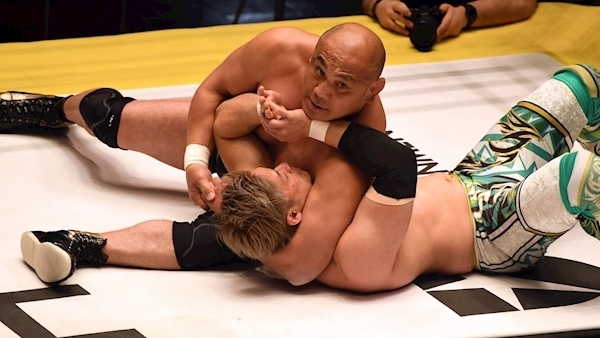
The Coronavirus has put sporting events at home and abroad on-hold for the foreseeable future.
Here, shares his diary entries in the time of the Covid crisis.
Awake to silence and darkness, mysterious, all-pervading. Then remove pillowcase from head. Rush to check results, coverage, analysis, reaction even — even! — the Five Things We Learned in the morning’s paper. Nothing. Pillowcase back over head. Life partner points out that driving with vision thus impaired “not optimal”.
Up with positivity and determination. If sport can’t come to the mountain, then Muhammad will go to the mountain and find the sport there, on the slopes. Or something.
Determine to find sport in everything. Realise neighbour’s dog can be timed running from the front door to the gate, and those timings can be compared . . . give up when the dog just wants to lick my face. What kind of competitor is he?
Early rising. Where else for sport and diversion? Kid’s football rests out on the road.
In my mind I construct a backstory for the ball: manufacture, purchase, golden days of games on the green, the sweetness of nestling in corner of the net.
The universe passes through my eye and into the life of the ball, revolving like a planet. Have I accidentally discovered the meaning of life in a Puma Big Cat? Woof. Next door’s dog is back, pawing at my leg.
Out with the dawn, the cool sun invites me to step out. Observing strict social distancing — stay on your side of the road, please, Mrs Murphy — I trip down to the nearest sports field.
The grass is growing, the goal posts shining bright. I pull on gloves and go down to caress the posts, to show them I haven’t forgotten them.
Then I notice Mrs Murphy on her phone at the top of the field and scuttle away in case she’s calling the guards on me, wrapped around the goalposts.
Flick on the TV for a replayed game. Enjoyable. Diverting. Find self beginning to shake head at the casual attitude of players, though, just before significant scores are conceded. Can’t they see that there’s a goal coming?
That player loitering out on the wing, he’s going to scythe through in a second: Why don’t they mark him more tightly? Realise it’s not knowing the scoreline that hurts the experience as much as seeing the errors which lead to those scores. Struck by a fellow feeling for players for those all-too-human mistakes, a quickening sympathy for their frailities.
It doesn’t last.
Tough day with nothing to divert. No forecasts or predictions, no events, no analysis. Pick up the phone to call a pal.
He wonders aloud whether this is an opportunity to build our emotional intelligence — to stop hiding behind inconsequential and fleeting sports-chat and to move to a deeper understanding of each other, to a meaningful conversation about how we truly feel about what really matters to us.
Silence on the phone. Then he asks what kind of Championship format would work in a July-August scenario.
Out to car with backpack.
Backpack ingredients include but are not limited to: Laptop, notebook, voice recorder, pens, batteries, another notebook, more batteries, three unidentified plugs, ID card, one unfinished book about walking the rivers of England, one finished book about baseball players of the 50s, water bottle, emergency supplies (unopened double-box of Jaffa Cakes, best before August 18), earphones, sheets of paper with long-forgotten names scrawled sideways on them, more earphones including one set with compacted wax in right bud, a CD cover with a blank display but believed to contain a Sondheim musical, and an ancient satsuma.
No games, so nowhere to go with backpack.
Up early. Sleep broken by dreams of Mrs Murphy winning the Laurels out in Curraheen Park with next door’s dog.
Observing return-to-play protocols
One point worth making, though, is that a gradual return to play may be needed.
In conversation recently the point was made to your columnist that it’s not a case where the lockdown is ended at 5pm Friday and we have a full set of events starting Saturday, obviously enough.
Athletes and players across all codes are no doubt preparing diligently in isolation, but even with FaceTime and Zoom (Zoom! Before this began who had heard of Zoom?) allowing access to trainers and coaches, sportspeople will not be match- or event-ready when the all clear is sounded.
Expect a slight delay as teams reassemble to train collectively, and even then will we see a rash of soft tissue injuries when competition begins, as sportspeople of all stripes try to engage muscles that haven’t quite been calibrate to racing speed?
Imagine that: Sports venues are (metaphorically) unlocked and opened only for teams and managers to say: ‘Hang on a week or two, we have hamstrings to consider’. Imagine the exquisite torture of that countdown to action.
Aren’t you looking forward to having that as something to consider?
Why focus on fixtures, formats?
There seems to be something almost infernal about the sudden focus on schedules and formats, on fixtures and timetables. Why?
For many this is an aspect of sport that they like to leave to one side. Manipulating a spreadsheet to come out with a sequence of events that make the least number of people infuriated is a skill not many of us can claim.
(The situation is further complicated by the fact that a lot of the people who have no interest in scheduling retain the right, of course, to criticise anyone who does any scheduling.) But when everything settles down those able to bend time and space to their will in order to get competitions played off will come into their own.
Us ordinary mortals will have to bow our heads as they pass among us, golden paladins of the time-sensitive competition. But fear not: It won’t be long before you can whinge again about the iniquities of fixture scheduling.
Uncanny skill strikes
A few months ago, I wrote about Lawrence Wright’s God Save Texas, an offbeat account of that state’s recent history mixing politics, economics and the odd experience of having Matthew McConaughey living across the street, which happened to Wright a few years back.
A native Texan, Wright offers a great guide to what his home state is really like.
I don’t know if I can wholeheartedly recommend his new novel, mind you. The End Of October is about a pandemic that ravages the world, originating in Asia before sweeping around the globe.
Wright has a bit of form in this regard, by the way — he wrote The Siege, a novel about terrorists attacking New York, which was published three years before the 9/11 attacks.
Don’t take this the wrong way, Lawrence — because I really enjoyed God Save Texas — but how about a comedy of manners set in the 16th century for your next project? For all our sakes?
Email: michael.moynihan@examiner.ie