Time for Cork to escape from underneath the dark clouds
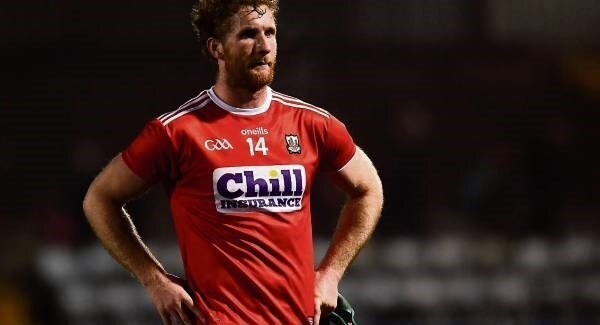
Negativity is a phenomenon that can creep up on you when you’re least expecting it and is capable of casting a shadow over everything you do.
It can linger around, it is difficult to shake off or get out from underneath.
Cork GAA is struggling with the suffocating effects of what seems like a never-ending avalanche of adversity recently and it is scarcely allowing them to breathe.
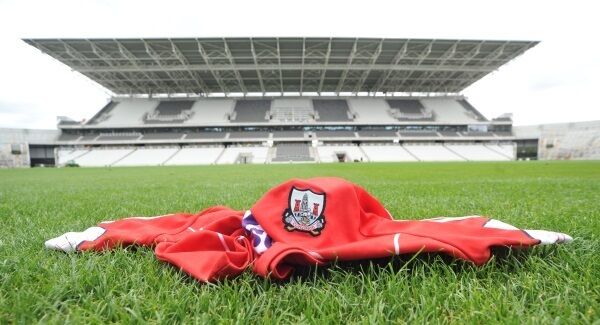
The stadium over-spend is a fiasco. Admittedly it is not in the same realm as the new children’s hospital, but it’s a significant saga in its own right.
The recent pictures of the stadium sod cutting up during the Allianz League doubleheader only fuels the embarrassment. A full relaying of the pitch surface looks the most likely outcome according to Cork chairperson Tracey Kennedy who described it as “unacceptable” in the wake of that PR own goal.
While the Páirc is one major source of disgruntlement, the performance of the county’s senior footballers is a far more worrying development.
As recently as 2015, Cork contested the Division One Allianz League final against Dublin in Croke Park after topping the table.
They went on to draw a Munster football final against Kerry in Killarney that same season, in a game where they were the better team.
Fast forward only a few short years later, and the Cork senior footballers find themselves propping up the second tier of the league with only one point to show for their efforts.
With that poor start to the campaign, they’ve left themselves facing the very real possibility of relegation to Division Three for 2020.
It is not quite up there with Derry’s skydive from contesting the Division One final in 2014 before going into complete freefall and crashing down to Division Four football just four years later.
By way of mitigation, Derry only has about 32 affiliated football clubs, while Cork, on the other hand, has about four times as many as Kerry for example. There shouldn’t be the same slippage.
It has been a staggering decline for the Rebels and one that continues to fuel the negativity enveloping the Cork GAA brand.
Like most of these situations, it isn’t something that can be rectified by just changing a manager or clearing out a group of players.
If Cork football is to ever get back to where it is capable of being, indeed where their resources suggest they should be, it will require a significant long-term culture change that will take personnel, patience, and money.
Without doubt, the footballers are where they deserve to be, the league tables don’t lie and the stadium debacle is all their own doing.
But for me, Cork GAA have taken some really significant steps towards changing their long-term future and are finally starting to share a vision of where they would like to get to and most crucially, how they plan to get there.
They’ve recently unveiled their five-year development plan and it drew plenty of scoffs from those who have little else to do other than criticise and ridicule.
Is it a blueprint to guaranteed future success?
Of course not. But from what I’ve read, it is a significant acknowledgment of a major problem and a suggested pathway towards a more positive place for Cork football. Those that would choose to deride efforts to be progressive, even if they are late in their attempt, are probably the same who mocked Dublin’s lofty ambitions when they released the ‘Blue Wave’ document a number of years ago.
‘#2024 – A Five Year Plan for Cork Football’ has some big targets of its own, principally: “Cork will be regular All-Ireland contenders in all grades of inter-county football, including club championships within three to five years.”
They’ve suggested a number of ways that can help facilitate such a dramatic change in fortunes, but a focus on coaching as well as the creation of a clear player development pathway were two that jumped out at me.
Those aspects, in particular, are concrete and sustainable.
The idea of ‘Corkness’ became the butt of the jokes, but there is far more substantive detail in the 48-page document than just that catch-all.
The success or failure of any project like this is usually determined by the quality of people you have involved, and in Conor Counihan, Brian Cuthbert, Graham Canty, and Tracey Kennedy they have assembled a forward-thinking group.
Perhaps the key piece of the new Cork jigsaw has come in the form of their recently appointed chief executive Kevin O’Donovan (below). I watched the interview he did with Marty Morrissey last week and he appeared to be transparent and honest.
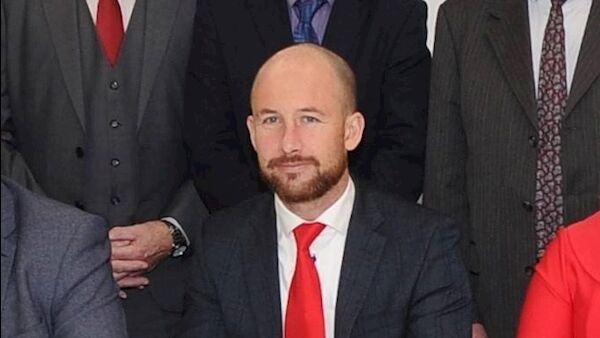
He answered questions about the stadium, finance, and anything else he was asked about, but he didn’t miss an opportunity to speak about his core values of coaching and providing games opportunities for members.
Being involved as a Games Development Administrator with Cork himself previously, he is better positioned than most to understand the real challenges facing the development and advancement of the game at schools and grassroot level right up to their flagship county teams.
Cork have also established an independent fundraising body to help generate finance independent from the stadium debt, to provide a better standard for their inter-county teams. All these are steps in the right direction and long overdue.
In the past 10 years, Dublin received just shy of €18m in games development funding and have in and around 134 clubs to support.
Cork got less than a €1.5m in the same period and have nearly 260 clubs. That disparity makes no sense.
Do Cork not have many similar challenges to Dublin? Are they not equally competing for the hearts and minds of their people against the popularity of rugby and soccer just as much as every big city?
By using Croke Park as their adopted home venue, Dublin have also been spared the expense of redeveloping their own stadium in the same way Cork and other counties have not. You’d imagine that outlay on the redevelopment is going to negatively affect their ability to significantly add to their games development staff in the short term, but that is exactly what they need to fight for.
Having a plan of how to rise up is vitally important to the further development of any organisation. The next step is getting out from under the dark cloud hanging over their heads and making their vision a reality.
Cork GAA have been long-suffering, perennial underachievers. The stadium and potential drop to Division 3 for the senior football team will ensure that the negativity keeps flooding their way.
But for the first time in memory, they are giving the impression that they not only have a long-term vision, but they might finally have the leadership capable of pulling them out of the deep hole they find themselves in by putting the structures in place to help them at least push closer to reaching their potential as a county.