Why Billy Holland is the unsung leader of the Munster pack
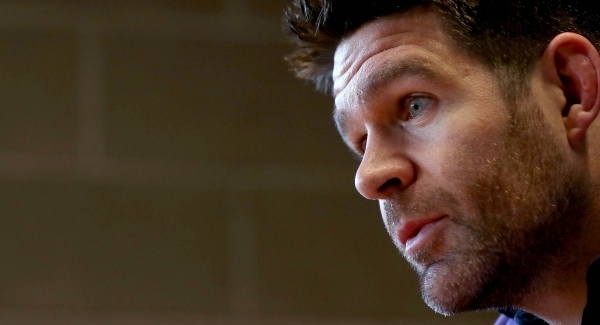

Was it any wonder new Munster coach Johann van Graan bore the look of a satisfied man in the wake of what proved an absorbing contest against Leicester Tigers on Sunday?
As he spoke to the assembled press, still coming to terms with the magnitude of his side’s achievement — the first team to inflict a double defeat on the Tigers since the back-to-back sequence of fixtures was introduced 18 years ago — one got the sense that he has already been captivated by the magic of the Champions Cup.
Is it any wonder? The last two weekends of European action have thrown up some fascinating contests. Reigning champions Saracens being obliterated by Clermont Auvergne at home but recovering to the point where they were on the brink of flipping that result at the impregnable Stade Marcel Michelin.
Leinster’s titanic contests against Exeter Chiefs also stood out with the proud English champions recovering from a rare home defeat to push Leo Cullen’s men all the way in Dublin. Apart from the Irish, the scintillating rugby produced over the last fortnight alone by La Rochelle, Bath, Montpellier, Glasgow, Ospreys, Scarlets, and Toulon was outstanding to watch.
The competitive nature of all the pools — 15 of the 20 teams mathematically still in contention for a quarter-final slot approaching the final two rounds — has served to elevate the status of this competition even further.
The tribal nature attaching to so many of the contests, the colour, unbridled passion and intensity that pours out from the terraces and stands of some really compact and atmospheric stadia right across Europe is so superior to anything the southern hemisphere has to offer in their Super Rugby equivalent.
It was a real privilege to witness all the above attributes and components on view on consecutive weekends in Sandy Park and Welford Road when Leinster and Munster, coupled with a fanatic travelling support, showcased all that is good with Irish rugby at present.
In the process, both teams clearly demonstrated they are back as serious contenders to emulate the feats of those great sides that captured five Heineken Cups between them from 2006 to 2012. Leinster have been coming for a while, with so much exciting new talent emerging while Munster, in more demanding circumstances, are beginning to reap the rewards of all the hard work that has taken place, on and off the field, over the last few years.
Thrown in at the deep end, a week prior to the pivotal back-to-back Champions Cup encounters that tend to define the direction of most European campaigns, van Graan has hit the ground running and is coming to terms with the components that make Munster rugby special to be involved with.
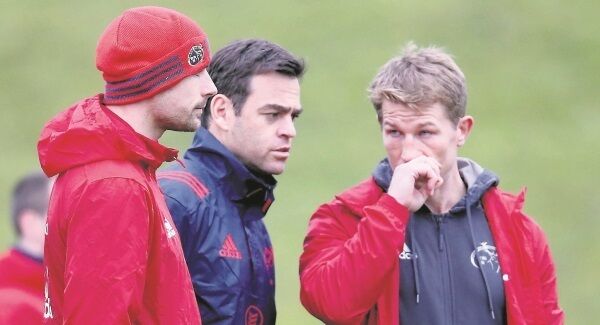
For that, much credit goes to his two lieutenants, Felix Jones and Jerry Flannery, for the way they have kept the show on the road during the challenging period that marked the departure of Rassie Erasmus and Jack Nienaber and the integration of the new man.
Credit also to the leadership group within the players, the majority of whom had to adjust very quickly after a month away on international duty, for the seamless manner with which they took on key responsibilities and handled the build-up to those crucial Leicester clashes.
When identifying the main difference between the two sides over the course of 160 minutes of action, one need look no further than the contrast in on field leadership and overall contribution from the key personnel on both sides. Leicester tight head prop Dan Cole, with 76 England caps and two Lions tours behind him, was Leicester’s most experienced campaigner and someone his players look to for direction.
Not only did he fail to make any inroads in his primary function, his direct scrummaging battle with Dave Kilcoyne and the comparatively inexperienced Brian Scott but, by conceding five penalties in the opening half alone, he was almost single-handedly responsible for his side trailing at the break.
It was inevitable he would receive a yellow card for his continuous infringements. He wouldn’t last five minutes under Joe Schmidt’s watch. Alongside him, fellow England international and team captain Tom Youngs wasn’t much better. Compare that to the impact of Munster captain Peter O’Mahony who looked in control of all he surveyed.
Apart altogether from his verbal leadership and the rapport he established with referee Mathieu Raynal from the outset, something Youngs never came near matching, O’Mahony won 10 clean Munster lineouts and two crucial steals on the Tigers throw.
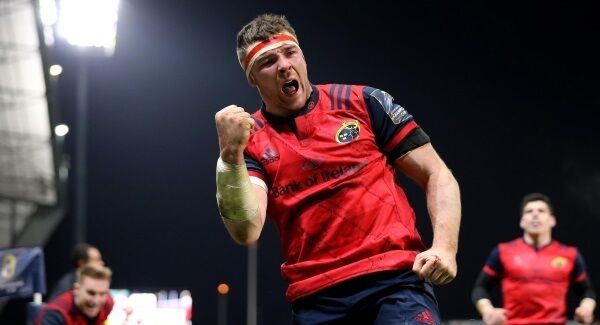
Given the absence of Munster’s first choice hookers in Niall Scannell and Rhys Marshall, a return of 94% — Munster won 16 of their 17 lineouts, the only blemish coming on the last one when fatigue was a factor — was a remarkable return. Credit here to a magnificent display from Kevin O’Byrne in his first European start but also to Munster’s lineout leader and chief tactician Billy Holland.
Holland is the unsung hero of this Munster pack and it was no surprise to hear van Graan namecheck him after the game for the hours of preparation he put into the organisation of this key phase, along with Flannery.
As the on-field coordinator, Holland has to size up the opposition, attack their vulnerable areas, and decide where to target. On days like this he also has to factor in the inexperience of his new hooker by not asking him to deliver the impossible. It was his responsibility to ease the pressure on O’Byrne early on and let him settle into the game.
The fact that Munster won a penalty from the opening scrum would have provided a huge boost for O’Byrne who, outside of his primary functions, contributed handsomely in broken play and had a far greater impact on the game than his vastly more experienced opposite number.
Holland has started all of Munster’s competitive games to date this season and constantly delivers a phenomenal work rate. He works brilliantly, in tandem with O’Mahony and CJ Stander, in directing operations up front.
Leicester had nothing approaching that level of on-field generalship. While all around them in Tigers shirts were losing their heads, that trio kept Munster on track and heading in the right direction.
With O’Mahony’s future now sorted and Stander’s hopefully to follow shortly, van Graan can plan for the future with far greater certainty. Europe still poses a massive challenge but Munster are heading in the right direction. One or two key additions could make all the difference.
Leinster are ahead of Munster in that respect and already have a squad capable of delivering European glory. Eighteen Leinster players saw game time over the recent international window and that type of exposure is invaluable. We saw that last Saturday when, despite being 14 points down at one stage and short Johnny Sexton for all but the opening two minutes of the game, Leinster found a way to prevail.
Both look odds-on to progress to the quarter-finals at this stage but securing a vital home draw will become the focus in rounds five and six. Before then the small matter of a mini inter-provincial series over the festive period.
Munster’s games against Leinster and Ulster, in Thomond Park and the Kingspan Stadium respectively, will only serve to inform van Graan even further. From what we have seen already, he appears a willing and capable student.