Camogie's struggle to establish itself has never truly been won
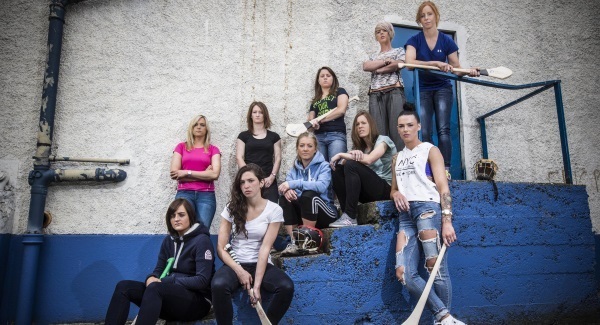
Last weekend Kilkenny won the National Camogie League. Against the clamour of a weekend of rugby and hurling and soccer, this victory went largely unremarked. It is a reminder of the enduring struggle of camogie to carve out a significant place for itself in the sporting life of the island – even within the GAA itself.
When the GAA was founded, it was pledged the new Association would be open to men of every class. Speaking at the inaugural meeting of the Association, Maurice Davin made particular reference to men from poorer backgrounds, whom, he told the meeting, seemed to be condemned to a life which was little more than an endless round of labour.
That women might also have wished to play the sports established and organised by the GAA does not seem to have crossed the minds of the founders.
The birth of camogie was an initiative which was framed by the involvement of women in the Gaelic League. The Gaelic League was founded by Douglas Hyde in 1893. The promotion of the Irish language was its principal objective, but branches of the League were also committed to the promotion of all aspects of Irish culture. Many of the male members of the League were involved with the GAA.
The Keating Branch of the Gaelic League in Dublin already had prominent hurling and football teams for its male members, when in 1903 a group of its women members, including many who had travelled from various parts of Ireland to work in Dublin, determined to play the game of hurling.
Led by university graduate Máire Ní Chinnéide, a code of rules based on hurling was devised. The rules of hurling were amended in ways that were considered to make the game more suitable to women – and this game was renamed camoguidheacht (or camógaíocht), roughly translated as ‘junior hurling’, but more commonly abbreviated to ‘camogie’ in common English-language usage.
Hurleys and sliotars were to be smaller and lighter than those used by the men. The pitch was shortened so that its dimensions were to stand between 60 and 100 yards in length and between 40 and 60 yards in width.
The number of players per team was set at 12 (in recognition of the possible difficulties in getting sufficient numbers of women to play). Unique among the rules was one which cited as a foul the deliberate stopping of the ball with the long flowing skirts then fashionable among early players.
The women of the Keating Branch began practising in the summer of 1903, first in Drumcondra Park, and later in the Phoenix Park. The founding of another club, Cúchulainns, in Dublin in early 1904, allowed for the staging of the first recorded camogie match in July of that year.
The game was played at the Meath Agricultural Society Grounds (later Páirc Tailteann), and Keating’s claimed victory by a single goal to no score. Camogie was spreading quickly: By the end of 1904, there were five teams playing in an organised league in Dublin.
The progress was sufficient to allow for the formal establishment of An Cumann Camógaíochta [the Camogie Association], with Máire Ní Chinnéide as president, at 8 North Frederick Street in Dublin on February 25, 1905.
It was a struggle to spread the game, however. There were hostile attitudes to women playing it. Early camogie players were pioneers who flew in the face of public opinion; many of them hid their hurls under their coats as they travelled to play, in order to deflect ridicule from the wider public.
One of the men who did much to assist the development of camogie in Dublin, Seán O’Duffy, a Mayo native who was a leading hurler and official with Crokes club, wrote to the press the growth of the game was largely ‘unaided and unorganised’, and hindered by ‘adverse circumstances’.
The challenges faced by those trying to promote camogie were legion, and were not always overcome. Even when progress was made, it was sometimes lost at a later date. For example, the league which was started in Dublin in 1904, fell into abeyance and the cup which had been presented initially went missing. By 1910, the sport had drifted into stagnation in Dublin.
In April 1911 letters to the Dublin newspapers signalled a new attempt to put camogie on a sound footing. A letter from one player, Cáit Ní Dhonnchadha, outlined the motivation for their endeavour: ‘We want something to supplement the ballroom and the skating rink. We want to organise the womanhood of Ireland into one grand body, whose sole object, under that of national emancipation, would be the raising of the sex from the slough of a false and foreign civilisation.’
The letter went on to invite women to a meeting at the Calaroga Hall on Rutland Square, with a view to reorganising the association, revising its rules and restoring health to the game.
[social=twitter]https://twitter.com/OfficialCamogie/status/856784183238250496[social]
On April 21, 1911, An Cumann Camógaíochta was relaunched in Dublin. Eleanor, Dowager Countess of Fingal, was appointed president at a meeting attended by 13 Dublin clubs. Accepting the position, the Countess wrote: ‘I will be delighted to do anything I can to help what I consider a splendid work, for I believe if we could make the boys’ and girls’ lives in Ireland more happy and cheerful we would keep many more of them at home.’
The chairman of the reorganised association, Mrs Hamilton, told the meeting she believed ladies should have their own form of recreation which would give healthy exercise, counteract the evils of living in a city and make them better and nobler living.
The idea that the game offered a great opportunity to improve women’s health was stressed in the newspapers: ‘This healthy game, which suggests a blend of hurling and hockey, was introduced a few years ago in Dublin and it provoked some most interesting contests between local clubs.
’Only a little organisation should be needed to preserve it as a means of recreation for many hundreds of indoor workers in Dublin.’
This time a determined effort was made to establish the game on a nationwide basis and by the middle of 1912 camogie matches were being played regularly in each of the four provinces.
The game was dominated by single women, who were students, graduates or out at work. The first official inter-county game was played in that summer of 1912, when Dublin defeated Louth 2-1 to 0-0 at Jones’s Road.
It says much for the presence of the game in Dublin city that when newspapers published photographs of the two teams who played the match, the caption referred to ‘Irish ladies’ new Gaelic game’.
The match was played as a part of a wider aeridheacht involving music and song and dance. By the time the camogie match started at 5.30pm there were an estimated 4,000 people present. Dublin was considered much the stronger team, playing more scientifically, although all the players were hampered by constant slipping caused by having no studs.
The Camogie Association had a strong nationalist outlook. A letter from Cáit Ní Donnchadha and Seán O’Duffy to the Evening Telegraph newspaper outlined the broader vision which underpinned the game: ‘…it is obvious that the country at large, and the city of Dublin in particular, would be strengthened and purified by our women cherishing and practising games of native origin and growth. The energy displayed by so many Irish ladies in advocating women’s rights proves that active forces are still to be won over to national objects.
"I would respectfully suggest to those ladies to devote portion of their organising energy and resources towards ameliorating the lot of their less fortunate sisterhood, who toil in vitiated shops, stores, warerooms, etc. and whose social life needs brightening. …
“The realisation of such an ideal would naturally give rise to a more independent and more self-respecting race. When we have secured national freedom – which is the goal of all true Irish women, no matter how they may differ in trivial matters – let us have our own national pastime as an essential element of our existence as a nation.’
This ambition camogie should have a meaningful place for itself within Irish society is a battle to which generations of Irish women have committed so much of their lives. It is a battle that continues year after year.
That the game should thrive as it does in so many places is a tribute to their efforts — that it does not flourish more spectacularly is largely a reflection of the nature of Irish society and the enduring difficulties of ensuring that women’s sport is accorded some semblance of support and respect that it deserves. And when it comes down to it, the struggle of camogie to establish itself has never truly been won.