Emulate the Dubs, don’t envy them
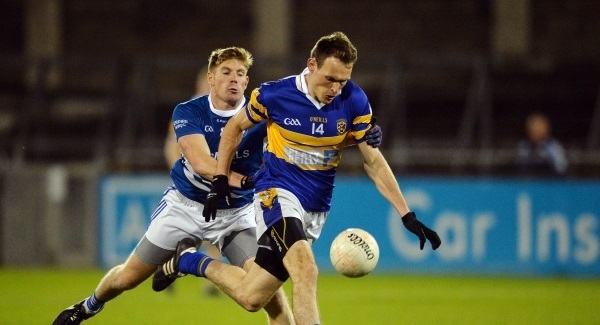
Thursday morning in Carpenterstown and the thick curtain of fog smothering Dublin’s northside has prompted the sort of rush-hour traffic that keeps parents lingering for that extra minute of small talk after the school run before surrendering to the agonising crawl to work.
Well, that and events in Parnell Park the night before.
Skerries Harps aren’t the most coveted scalp in Dublin senior football but Castleknock’s ten-point win against them in Donnycarney the evening before was notable for the fact that it earned the club a berth in the last four of the county senior championship for the first time in history.
It isn’t the sort of result that will ripple all the way to the Wild Atlantic Way - and they remain an outside bet to succeed Ballyboden St Enda’s as county champions in a few weeks’ time - but the significance of Castleknock’s incessant rise stretches well beyond the local.
We live in an era dominated by the sky blue hue of Jim Gavin’s Dublin but it’s been one soundtracked by the ceaseless debate between those who accredit the success to solid structures and volunteerism and others who argue that it has been secured simply by the disproportionate funding afforded the county by Croke Park.
The truth, as it usually does, lies somewhere around the equator.
As for the funding - Dublin took in €2.1m from Croke Park last year - the detractors have been resolute in their desires: less for the Dubs, more for the rest. That’s an understandable chorus but it just doesn’t take into account the demographic and social realities on the ground.
Now, this isn’t easy for a culchie to say, but the real rallying cry should be: more for Dublin and more for everyone else, too.
And Castleknock is the perfect case in point.
Founded less than 20 years ago, the club has already stitched a string of successes into its CV with Féile, Leinster and All-Ireland titles all secured between both codes and, in the shape of Ciarán Kilkenny, it has a pied piper figure for every kid in the area to emulate.
And what a lot of kids. The catchment covers the D15 areas of Castleknock, Carpenterstown and Clonsilla but that doesn’t mean the same now as it did on day one back in 1998. When Kilkenny was born five years earlier much of the ‘parish’ was still a rural idyll of undisturbed green fields and country roads.
Greenery now is still fairly abundant in the lush grounds of Castleknock Hotel and Golf Club, Luttrellstown Castle and the sprawling expanse that is the Strawberry Beds, but urban life continues to colonise by chipping away at the edges.
The explosion in the population has been stupefying.
Three of the five fastest-growing electoral districts in the country are to be found in D15. It has recorded the biggest population growth in the Republic of Ireland in the last five years with an 8.1% bump since over 100,000 souls were registered there in the 2011 Census.
The infrastructure, to no-one’s surprise, is creaking. House prices are escalating with basic, small three-bed semi-Ds now fetching close to €400,000, traffic is slower than a Monday maths class and a public information meeting last May for a new secondary school - bringing the total number to three - degenerated into a litany of queries from concerned parents over catchment areas.
This is the backdrop to Castleknock GAA’s story.
Try telling club members there that there are too many Games Promotion Officers (GPOs) in the city and the obvious response would be to point in the direction of the club grounds in Somerton, or across the road at Tir an nOg Park, where hundreds of boys and girls are tutored every Saturday morning. The net result of all this work in Castleknock, and in dozens other locales around the county, is never more visible than in Croke Park in September when Stephen Cluxton lifts the Sam Maguire aloft from the Hogan Stand, but the real victory is in the social benefits accrued by boys and girls.
This isn’t just a Dublin issue, of course.
Meath, Kildare and Laois all recorded substantial population increases in the recent Census. So did the cities of Cork and Galway. Every county in Ireland needs more services and facilities and the social glue applied by boots-on-the-ground workers like the GAA’s GPOs.
“We have got Games Promotion Officers in most of our clubs,” said Gavin last February. “The county board, with that (central) funding, matches them, as in there is a 50-50 split to provide those Games Promotion Officers. It’s no more different in Castlebar than in Clondalkin. We need to get out there and invest in our people. I just think Dublin GAA have gone about it smartly.”
That they have and, as the Dublin manager explained, there is nothing to stop club officials all over Ireland from putting business plans of their own in place and using them to seek money from HQ towards GPOs of their own.