Anthony Foley: A son of Munster we can all be proud of
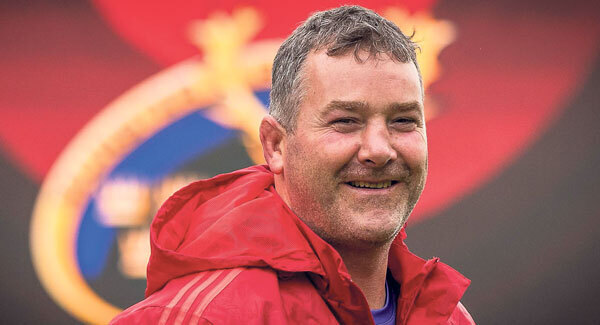
It was as if no matter how many times he read it was true, he still couldnât process or believe the news which had broken about an hour earlier. As much as to bow the head like the rest of us might have seemed the more respectful gesture, in a way his was the more appropriate one. To bow the head would be to register, let alone, grieve, Anthony Foleyâs passing, but it was too soon for that; by shaking the head the man captured the incredulity of Cusack Park, Clare, Limerick, Munster, Ireland, world rugby.
Not since the passing of Cormac McAnallen has the passing of a sports figure triggered such a sense of mass shock and affection throughout the country. Even though McAnallen was a further 18 years younger than Foley, the sentiment is virtually identical: gone way too soon. Although there is the consolation of knowing, like McAnallen before him, how much he achieved and packed in to such a short, full life, the overwhelming sense is of what he and his family have been deprived of.
The familyâs statement yesterday was as eloquent as it was dignified, articulating that his loss canât be articulated with that harrowing and heartbreaking line that âWe have been plunged deep into an incomprehensible darkness and sense of loss that we must work our way through over the coming days, weeks, months, and years.â
It is impossible to write about Foley and not write about his family. Anthony Foley became the rugby player he was because he was his fatherâs son. And it wasnât because of genetics. In some of the multiple and well-meaning tributes that have been paid to him, it has been said that his rugby intelligence was innate, something which couldnât be coached. But that wouldnât be right, and it certainly wouldnât be to do right by Brendan Foley.
Anthony Foley would often describe rugby as âbasically a street fight with a ballâ, largely because his own father was a son of the mean streets of Limerick, but when the family moved to Killaloe, Keith Wood for one will testify that the Foleys viewed the game as much as a game of chess than a street fight. The game was as much about using your brain as much as your brawn; knowing what was the right move to next make.
In the foreword of Foleyâs autobiography, Wood recalled calling into the family house âon one of those glamour summer days that only occur in our youthâ only to find the curtains closed and father and son glued to the TV set. They watched a lot of videos together, the two Foleys. They loved their westerns: The Magnificent Seven, The Searchers, Rio Bravo, and Foley Juniorâs personal favourite, Butch Cassidy And The Sundance Kid. But for every western that they slipped into that old video cassette player, there were five rugby tapes. The Welsh team of the â70s with their mastery of the offload and penetrating runs, the History of Rugby presented by Nigel Starmer-Smith, and a whole litany of Ireland games in the Home Nations.
âWith this constant repetition,â wrote Wood, âAnthony began to understand those games and the game intimately.â In his investigation of skill acquisition, the writer Daniel Coyle noted that expert performers in every field are brilliant observers. âIâm not talking about passively watching,â heâd write in The Little Book of Talent. âIâm talking about staring â the kind of raw, unblinking, intensely absorbed gazes you see in hungry cats.â Foley studied and stared at what he wanted to become. As the quote machine that was Yogi Berra used to say, âYou can observe a lot just by watchingâ, and Foley did that and more, in the company of his father in that house in Killaloe.
Five and a half years ago in an interview with me, Foley would elaborate on this theme of how his rugby intelligence, like so much else in the game, was not something innate but developed.
âYou just recognise certain trends from the game to the point itâs an instinct to react. You train for it. You see it, you act on it, but youâve got to have repped it. Itâs all about repetition. No matter how talented people might think a player is, when you delve back into what heâs doing, it comes to repeating the skill, repping it, repping it, repping it.â
Even in how he applied and demanded physicality, there was an intelligence to it. Again it was rooted in his fatherâs outlook. Heâd pass on to his son that as important as it was to make the other crowd take the first backward step, donât punch anyone; youâll only hurt your team, not your opponent who probably wonât feel it anyway with his adrenaline pumping. âHit him hard in the tackle, or in the ruck, son. You can do more damage that way â and itâs legal.â
For all the passion and blood and thunder that rugby, Munster rugby, and Foley would be associated with, Foley, to use a term of Mickey Harteâs, was more into offering information rather than noise in the dressing room, that perfect blend of fire and ice. âWhen Foley or Gaillimh [Mick Galwey] spoke, you were getting solid opinions,â John âBullâ Hayes would observe in his own autobiography. âIt wasnât all just about passion and commitment. They had an awful lot of pure know-how to pass on as well.
âFoley was always thinking; he was great at reading a game on the hoof, reading the opposition, reading the referee as the game was unfolding. And heâd be able to give his analysis in clear language at half-time.â
nd yet probably his greatest quality was that as much as he knew about rugby, he knew rugby players even better. He could relate to them, inspire them, probably because he inspired them to fight for a cause greater than them all â Munster, community â which in turn prompted them to fight and play for one another to an unwavering degree. He was so respected because he was so loved. As much as he was known for his blunt and candid manner, there was a soft, understanding side as well.
âWeâre looking out for one another here,â heâd say in that interview with me five years ago. âYouâre relying on the man beside you for your job, results, so you need to make sure that everyone is okay and feels an important part of the team... You donât need fellas to be going out to dinner the whole time together but youâd like to be able to think fellas can sit down and talk about each of their families and have that bit of depth about us. That stuff has always been a strength of ours.â
In all he achieved with Munster, it can be forgotten his importance in shaping the Ireland team of this millennium. As brilliant as stellar talents like Brian OâDriscoll and Shane Horgan were, the momentum of 2000 was generated by that of Munster, which in turn was generated by that of Shannon, which in turn was driven by its pack â Clohessy, Galwey, Quinlan, and above all, Foley who was one of several Munster men recalled in that watershed Six Nations campaign of 2000. Ireland would not have been winning triple crowns in the mid-noughties if Munster hadnât been reaching Heineken Cup finals in the early noughties.
That know-how was something he was passing on to another generation of Munster and Irish player, and to think he can no longer do so in person is still incredible to fathom.
And then that he is no longer there for his children is even harder. Yesterday in these pages Donal Lenihan poignantly recalled how it seemed just like the other day when on his international debut an eight-year-old Anthony Foley sat in the corner of the Lansdowne Road dressing room, his legs short of the ground, swinging, just as heâd protectively mind his fatherâs spot in the Munster dressing room. Keith Wood has spoken so vividly about those video sessions behind closed curtains in Killaloe, a tradition which Foley was continuing with his own sons. In that interview we did five years ago, Foley spoke about his then six-year-old-son Tony and how he loved watching old Munster games, especially that hit Paul OâConnell made on Chabal against Sale. âHe knows old Heineken Cup matches so well, he can predict whatâs coming,â Foley smiled.
Now Tonyâs father wonât be there for those DVD sitdowns. At least not in person. But heâll be there alright in spirit, just like he will be with Munster. As long as they wear red, anyone who puts on that jersey, in a way, is a son of Foleyâs.