Trust the cynics to wave the 'imaginary yellow card'
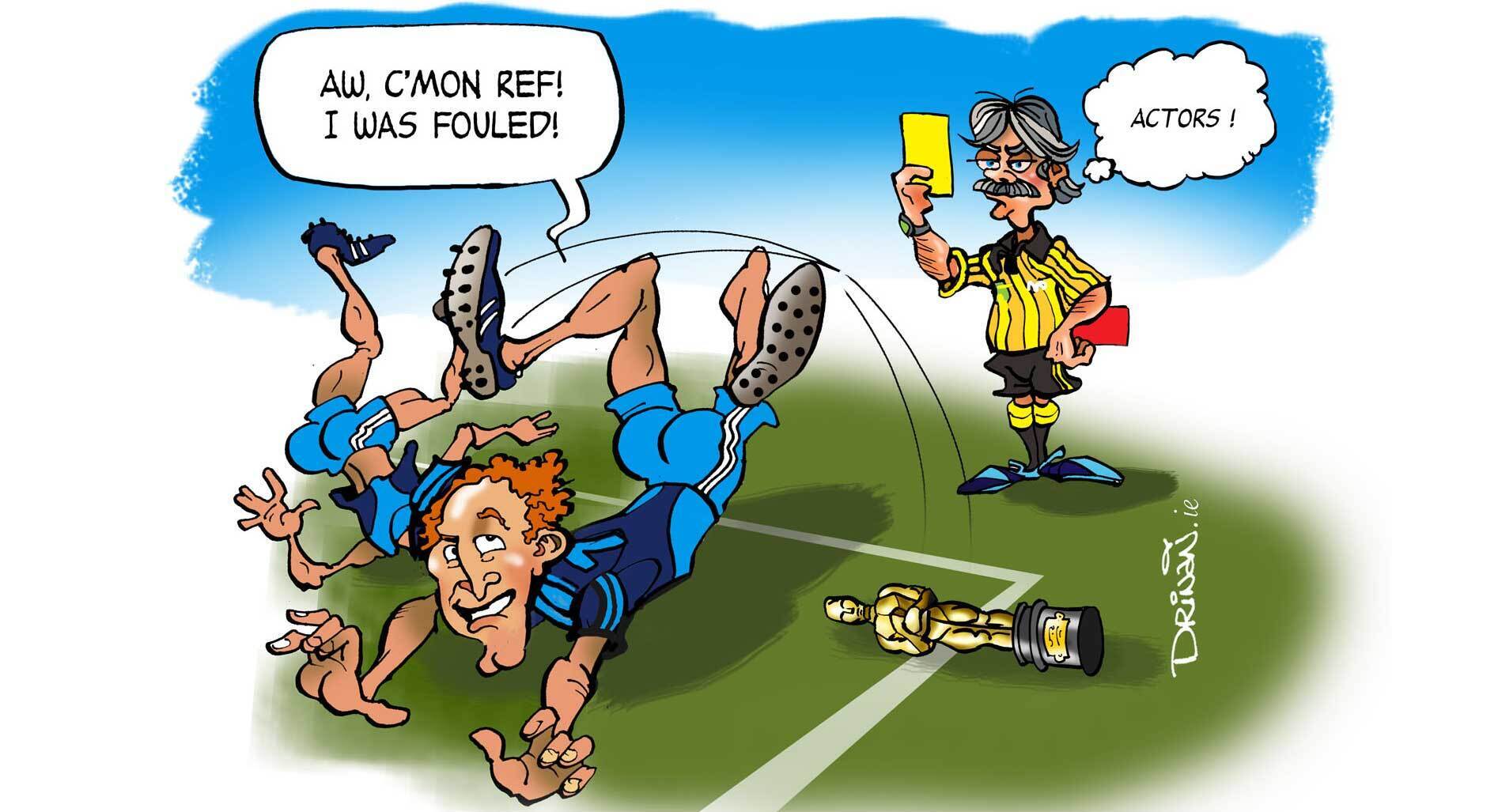
An important anniversary will soon be reached; the great modern Premier League fear of mime is almost ten years old.
Trust the cynics to wave the 'imaginary yellow card'

As research methodologies go, it is a somewhat inexact approach, but Google fails to produce a single use of the phrase ‘imaginary yellow card’ in a Premier League context before the end of the 2005/06 season.

When contemporary visual theatre finally made its presence felt during the ensuing campaign, it will surprise few that Jose Mourinho was its chief sponsor.


In December 2006, in the lead-up to the annual Mime London Festival, Mourinho staged his own mini-festival of gesticulation, flourishing two ‘imaginaries’ in a week. First, he conjoined thumb and index finger angrily at Goodison Park to decry an Andy ‘Andrew’ Johnson tumble over Chelsea goalkeeper Hilario, then brandished imaginatively again three days later in response to Nicky Butt’s felling of Arjen Robben in a Carling Cup tie with Newcastle.

To give an indication of the ‘controvassy’ this outbreak of wordless protest caused, Everton lodged an official FA complaint and threatened legal action at the impugning of Johnson’s “professionalism and integrity”.

Though, admittedly, Mourinho did supplement his mime by telling us post-match that “you cannot trust” the Everton man.

Mourinho eventually apologised but too late. The silent disease had its carrier. Gradually mime found its feet in the English game, though it wasn’t until September 2010 that the first ‘imaginary red card’ was flourished.

Again it was a Chelsea manager, Carlo Ancelotti observing the traditions of a Carling Cup clash with the Geordies to — the Daily Mail tells us — “wave an imaginary red card to demand the dismissal of Ryan Taylor”.

That we know the imaginary card was red may be down to Ancelotti’s convincing interpretive instincts, and partly because Taylor had already been booked.

Amid instant revulsion, a chastened Ancelotti almost apologised. “That is football, Italian football. Maybe this is the last time I do it.”

Six years on, that remains the consensus within the English game. Forsaking Chaplin, the English regard mime as Italian football, Spanish football, German football. The football of John Foreigner.

When isolated pockets of mime broke out during this week’s Champions League action, particularly in the Arsenal-Barcelona tie, the pundits’ verdict remained just as it has always been: “You don’t like to see that.”

Perhaps, ten years simply isn’t long enough for it to bed in. As the historian Danny Mills recently confirmed, the dive was introduced to English football in 2003 by Robert Pires. And it is only in recent times that the right to do down has been enshrined.

When Jamie Vardy recently performed what is known, in the trade, as ‘The Pires’ against Arsenal, even a football man as quintessentially English as Tim Sherwood hailed “clever play” and agreed that Vardy was “entitled to go down”.

Last Thursday night, when Jesse Lingard botched The Pires against Midtjylland, Michael Owen even delivered an impromptu tutorial: “If you’re going to go down like that you need to leave a leg.”

So it may simply be a matter of time before imaginary cards are ushered in out of the cold. But, for now, all dramatics — encompassing miming, feigning and excessive rolling — that invite the censure of an opponent rank behind only spitting in the list of things you don’t want to see.

Central to this curious state of affairs would appear to be three bizarre double-standards.

Opening and closing the case against a brandisher of imaginary cards is invariably the reluctance to see any player “try to get a fellow professional in trouble”.

Yet this passionate avowal of a collegiate approach, this belief that they are all, somehow, in it together out there quickly goes out the window when a player has the temerity to express his regard for a fellow professional by seeking his shirt at half-time.

A practice that tends to rank as high as third on the list of things you don’t want to see.

Oddly, too, the traditional direct approach to securing the caution of an opponent — a vein-popping, spittle-flecking rant in the referee’s face and a volley of fack’s sakes — remains fair game.

On some level, there may exist the feeling that if John Foreigner must prevail upon a referee for good old British fair play, the least he can do is learn the lingo, however industrial, and not fall back on the tools of the blaggard; sign language.

There was another incongruity this week between the clamour, on one hand, for Arsenal to learn some smarts, to commit a cynical foul in the build-up to Barcelona’s first goal, and the objection, on the other hand, to Barcelona’s attempts to cynically secure the yellow cards that would disincline Arsenal players from any such cynicism.

This appears to be the fundamental misunderstanding in the persecution of the mime artist; a failure to recognise yellow cards as an important currency of the game, something to be appealed for in the same way as corners and throw-ins, particularly vital at a time when tackling is more or less the last refuge of the desperate.

In many ways, it is referees themselves who encourage this confusion. “It is an art of refereeing to keep the card count down if at all possible,” wrote Premier League referee Mark Halsey in his autobiography, echoing the age-old nonsense that ensures appropriate punishment is something players feel they must appeal for.

This lack of respect for yellow cards and their influence on the dynamic of a game and season was evident again in the reaction to Gerard Pique’s convenient booking late in the game against Arsenal, ruling him out of what looks a dead second leg, but freeing him up for some tactical fouling later in the competition.

“We don’t like to see that,” was again the consensus across the water.

At least RTÉ had Damien Duff on hand to assure us he played for a manager who understood the importance of these small details, who encouraged him to pick up a yellow card when the time was right.

Our money was with Liam Brady’s who felt he could guess which manager that was.

x

More in this section

Sport

Newsletter

Latest news from the world of sport, along with the best in opinion from our outstanding team of sports writers. and reporters

Cookie Policy Privacy Policy Brand Safety FAQ Help Contact Us Terms and Conditions

© Examiner Echo Group Limited