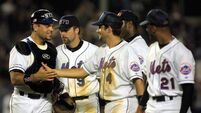
An Olympics of lies and deceit
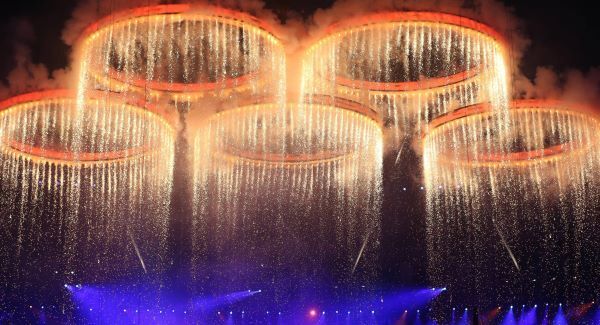
It’s hard to raise much enthusiasm for the entire circus. For me the reason isn’t the recent drug shenanigans that have been uncovered, but a little more personal.
When I was a small boy and just taking an interest in these matters, we had a book by Ron Pickering in our house about the 1976 Olympic games in Montreal, which was the Olympics then on the horizon.
The cover showed sprinters leaving the blocks on a track in a spanking-new stadium, with a bright blue sky overhead, subtly suggesting optimism and hope, the absence of any clouds giving one the sense, however subliminal, that in the world of the Games nothing intruded upon the purity of the competition.
We now know what a crock that was, of course.
Those 1976 Games were among those stained by the systematic abuse carried out by the entire state apparatus in some countries, not to mention the nod-and-wink shamateurism in others.
There were other Games ruined by corruption and illegality before 1976, and more corrupted since, but because that was the first Olympics I really noticed, it’s the one that counts for me.
Not that we were aware of the extent of the deception, of course.
Difficult though it might be to imagine, the world was a far bigger place then. If you were interested in the contestants in the marathon or the 100m freestyle, for instance, you couldn’t simply fish your phone out of your pocket and log onto YouTube to see highlights of their most recent outing.
The stars of that Olympics became early heroes to me because of their novelty. The slightly blurred TV pictures, that tinny commentary, the graphics that gave you a migraine as you tried to make out the split times: evocative and shabby at the same time.
For those reason I find the retrospective destruction of those memories far harder to swallow than more recent revelations about Russian athletes (seriously: did you think a country like Putin’s Russia was being upfront and honest about its athletes?).
Or the Jamaican testing regime (which, for your information, is non-existent, but I guess so long as its champion sprinter is a bit of a card who hangs out with Swedish girls, that’s okay).
Or Sebastian Coe’s connections to Nike (the former Tory politician has disgraced himself by distinguishing between cutting those connections and being forced to do so).
Those are all developments with a weary expectedness about them, but it’s not enjoyable at all to think of myself as a little squirt nodding over the exploits of Russian weightlifters or East German swimmers, all the while being hoodwinked along with the rest of the world.
The funny thing is that when you start looking you find trace elements everywhere of the Olympics’ rottenness. I recently ransacked by David Maraniss, about Detroit in the early sixties.
The city made a strong case for the 1968 Olympics but was beaten, eventually, by Mexico.
Maraniss sketches a compelling picture of the machinations in Baden-Baden between each of the contending cities — Detroit, Mexico, Lyon, and Buenos Aires — as they attempted to convince the International Olympic Committee to award them the games, and sums up the rank hypocrisy of those involved by pointing out that American Avery Brundage, then head of the IOC, while vocal and insistent on amateurism for the athletes, had his every expense covered by wealthy Germans.
And why not? Brundage was the man who fought against a boycott of the Nazi-organised Olympics in Berlin in 1936, and who insisted on the Munich Games continuing in 1972 after Israeli athletes were murdered in the Olympic Village itself by Palestinian terrorists.
The more you learn, the less you feel like watching.
How Updike turned his misfortune into a baseball masterpiece

Last week, Dónal Óg Cusack referred to John Updike’s description of Fenway Park, in Boston — “lyric little bandbox” was Updike’s glittering, offhand gem from his famous goodbye piece about Red Sox star, Ted Williams.
It would have been pretty interesting to see what Updike would have made of the one-in, all-in between Dublin and Galway in Boston (That was reminiscent of a Saturday night, at closing time, in a couple of places I remember in Dorchester, but that’s neither here nor there.) On a recent trip to Dublin, I picked up Adam Begley’s new biography of John Updike, as it happens.
Though I struggle with Updike’s novels, his essays and reviews are so sleek and effortless that I wanted to see how he’d knocked them out.
Updike hadn’t written about baseball before that Williams feature for the New Yorker, and never really did again, apart from a couple of short bits and pieces, so his first and only significant piece about baseball was, and is, one of the all-time great examples of sportswriting.
What I didn’t know, though, was that Updike had planned an extramarital dalliance for the afternoon, only to find his lady friend out when he called.
“So, I went, as promised, to the game,” he wrote years later, “and my virtue was rewarded.”
There’s a lesson here. I just can’t quite work out what it is.
Battling to avoid Star Wars
If there’s an area of life that hasn’t been colonised by Star Wars marketing, be sure to let me know. Laxative-processing, maybe, or chicken gene-splicing.
Funny, how fleshing out the details of a new civilisation always includes sports, though.
In the abysmal middle movies in the vast Star Wars series, motor racing was the pastime of choice. One or other of the colourless characters involved in the porridgey mess was an ace driver and . . . ach, I can’t even go on.
Let me know how bad it was when you see it.
I’m not putting myself through it, not unless the children insist.
When did sports shine the brightest?
I mentioned the New Yorker, above, and I’m going to refer to it again.
I spotted their book of the 1940s the other day, in a bookshop. It’s a collection of their finest articles and features from that decade. Which made me wonder — what decade would you opt for, in terms of sports, as the most memorable? Keep an eye on this space: I’ll return to this topic.