Symbolism important for France after Paris attacks
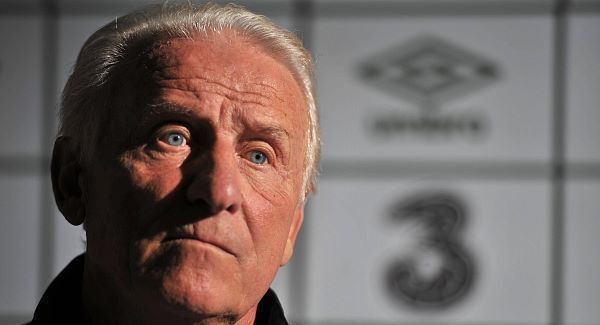
He had been asked by Italy’s state broadcaster RAI to do the commentary for the Belgium-Italy game on the anniversary of the Heysel disaster.
Thirty years on it was evident that he is still haunted by that tragedy.
“The blackest day of my career, one of the blackest in the history of sport,” he called it during the pre-match build-up.
It was a touching moment when the game was stopped to commemorate the dead.
Trapattoni’s commentary faded out as the 39th minute approached. The players slowed to a halt and the crowd rose to applaud the names of the victims as they flashed out one by one on the big screens overlooking the pitch.
It felt a little too quick. A flash, gone. Another flash, gone. But at least Belgium and Italy had marked the occasion in the place where it happened, even if nothing but a gateway remains of the old stadium.

It was a lively game. Italy could have been two up at half-time, then Belgium came back strongly, eventually winning 3-1. But at half-time news started to come through from Paris that made scorelines irrelevant.
France and Germany kicked off a quarter of an hour later. So by nasty coincidence it was almost at the same moment as the Heysel commemoration that the explosions which began a night of horror were heard in the Stade de France.
For many inside the stadium the explosions did not seem threatening, more like thunder than real explosives. Not so for those alert to the possibility of an attack, such as the Germany manager Joachim Löw.
“Of course we thought of it,” he said. “It was very loud. You could imagine what had happened.”
Olivier Bierhoff, Germany’s general manager, described a frightening situation after the match when it was decided that the team should remain in the stadium because they were uncertain whether routes away from the Stade de France were secure.
Heysel changed football across Europe; Friday’s events will change a lot more. But football is now centre stage because it has been targeted by a suicide attack, and the European finals next year — bigger and more complex than ever before — are evidently in the firing line.
Friday’s attack at the Stade de France was intended to be the most spectacular, sowing panic among spectators at a prestige event with a big television audience and involving two big countries. In the event it was the least successful, partly because security at football has become a lot tighter. The first attacker was stopped and searched, the other two detonated explosives outside the stadium.

The French authorities, Uefa and the various national football associations were already planning a huge security operation next summer.
There is now talk of some participating countries providing their own armed units to back up the French.
However it is a lot easier to guard stadiums, team hotels and training facilities than protect crowds of spectators, especially those who don’t have match tickets but are just there to enjoy the event.
The fan zones and big-screen events, both very popular in France (and in Belgium), may have to be abandoned, or staged in a different way.
It’s hard to optimistic but there are reasons to be positive.
There was very little panic in the Stade de France or on the streets of Paris on Friday. And there has been a genuine sense of solidarity, especially among football people.
When the Germans decided to remain in the Stade de France overnight, the French players insisted on staying all night as well, only returning to their base at Clairefontaine at four in the morning.
The following day the French national anthem was played – and applauded — at every match in Italy’s Serie B on Saturday.
And tonight’s match at Wembley looks likely to give us the unprecedented sight of an English football crowd singing La Marseillaise.
Symbolic gestures of course, but they have meant a lot in France over the past three days.