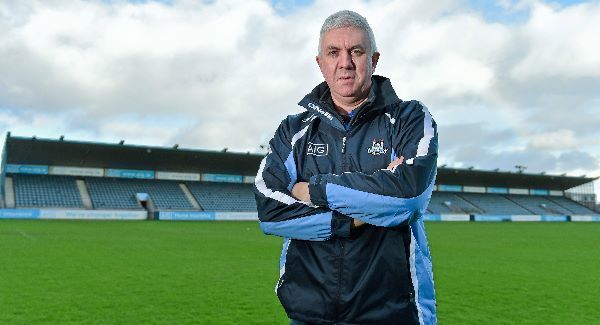
Patient Ger Cunningham looks ready to look after No. 1 in Dublin
The problem if you make any conclusions after just one round of the league is you can make yourself a hostage to fortune, not just later in the summer but later the same week.

Patient Ger Cunningham looks ready to look after No. 1 in Dublin

Last year, every Division 1A side that won their opening fixture lost their next one; everyone that lost the first day out won the next. While that trend can’t repeat itself this time — Clare and Cork can’t each emerge with two points from Páirc Uí Rinn next Saturday — the principle and risk is the same.

The bum of the week is the star the next, the crisis of one weekend the joke of the next.

Still. There was nothing isolated about a lot of last week’s action. Last weekend reaffirmed a few theories and trends. Especially the game in Parnell Park. Namely:

1. Ger Cunningham is no ordinary rookie manager.

Since his appointment as Anthony Daly’s successor, there have been some inferences in social and traditional media that Dublin may have landed themselves with someone who is more a ‘natural’ No. 2 than a bona fide No. 1 . That he may not have what it takes.

We couldn’t disagree more.

What Cunningham has done is serve one of the most thorough apprenticeships ever undertaken.

He has plenty of experience as a No. 1. He won a county title and rave reviews among the Ballygunner players in Waterford. He has masterminded multiple Fitzgibbon Cup and fresher titles at UCC. He’s managed teams of all age groups down in his home club of St Finbarr’s.

His inter-county experience is vast. Leave aside his 18 seasons as a player. He was a goalkeeping coach and selector to the Cork team that won back-to-back All-Irelands in the mid-noughties, coach and selector to the Jimmy Barry-Murphy teams that contested the 2012 league and 2013 All-Ireland finals.

That he has yet to manage Cork probably says more about Cork than him. It’s not that he’s a more natural No. 2; it’s more that he’s had to bide his time to get a shot at being a No. 1 . If anything that should be seen to be in his favour rather than be held against him.

He didn’t jump the queue. He’s more than served his time. And now that it is finally his time, it’s clear that he’s ravenous to make the most of it. You can see it in the people he has around him.

While it’s too early to assess his sideline management, especially in the wake of Tommy Dunne’s departure, his backroom team is as impressive and as formidable as any in the country.

Strength and conditioning coach Ken Robinson has been a key figure in making DCU one of the leading sporting environments in the land and in Ballymun Kickhams becoming the standard by which club teams in Dublin and elsewhere had to prepare. Ed Coughlan is one of only a handful of qualified skills coaches in all of Ireland and in his role as strength and conditioning coach to the Mayo footballers over the past four years would be credited by their players as central to creating a high-performance environment there.

Performance coach Caroline Currid, another long-time collaborator of Cunningham’s, has won All-Irelands with Tyrone, Tipperary and Dublin. Head physio Colm Fuller has worked full-time in Premiership rugby before moving back to team up with the Sports Surgery Clinic in Santry.

Brendan Egan is one of the leading sports nutritionists in the country and from his time playing with the Sligo footballers can especially relate that expertise to fellow GAA players.

All of the above might operate in the 10% marginal zone that Anthony Daly spoke about in his book, but no one in hurling outside of Kilkenny has that 10% better covered than Dublin. And while it’s very early days, the crispness, boldness and method which Dublin hurled with would suggest Cunningham with all his field coaching experience won’t be a slouch in the 90% core department either.

2. Tipperary need to perform — and find some freshness.

It’s the norm for Tipperary to lose first day out in the league. In fact over the last 12 seasons, Tipp have won their opening league game just three times. And one of those wins came against Down.

What should concern Eamon O’Shea though is the manner of some of those defeats on his watch. Two years ago they lost by 12 points in Cork. Last weekend they lost by the same margin in Dublin. Kilkenny under Brian Cody have played 120 league games and lost only three of them by more than six points. The last of those was the 2011 league final. Their heaviest league defeat since has been by three points. There is a way to lose. And as Cody’s experimental side showed last Saturday night in Cork, there is a way to win.

To finally beat Kilkenny, Tipp need to become a bit more like Kilkenny, or to be more exact, O’Shea has to become a bit more like Cody.

All of these players have been good to O’Shea as much as he’s been even better to them but as Cody teaches us, loyalty has an expiration date when a player’s legs has reached theirs.

Ger Loughnane has gone as far to say that O’Shea made a mistake staying on for another year.

That’s a tad premature and extreme but where Loughnane has a point is that O’Shea has to shake it up before the next man rips it up. It’s one thing to lose with the same opening-day lethargy; another to lose with the same old faces. His team needs new blood to freshen up the best of the old bloods. If last Sunday helped O’Shea towards coming to that realisation, then it will have served its purpose.

More in this section

Sport

Newsletter

Sign up to our daily sports bulletin, delivered straight to your inbox at 5pm. Subscribers also receive an exclusive email from our sports desk editors every Friday evening looking forward to the weekend's sporting action.

Cookie Policy Privacy Policy Brand Safety FAQ Help Contact Us Terms and Conditions

© Examiner Echo Group Limited