Rugby’s urge to ‘shake it off’ remains as strong as ever
Another weekend of bumper fare for the Six Nations.

Rugby’s urge to ‘shake it off’ remains as strong as ever

Packed venues in London, Dublin and Edinburgh, millions tuning in on TV and online and the whole thing packaged pristinely with the support of blue-chip companies who are all too keen to be associated with this captivating sporting carnival.

And yet, rugby clearly has a problem.

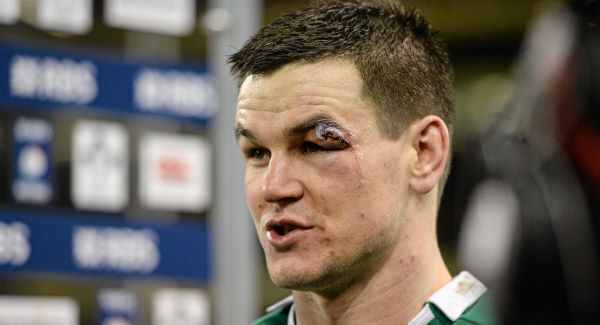
Jonathan Sexton may have come through his eagerly awaited return to play after 12 weeks on the sideline due to concussion symptoms, but the sight of England’s Mike Brown collapsing to the turf in Twickenham earlier that day ensures another week — at least — of introspection.

George North’s “lights out” moment eight days earlier, when Wales played England, was another glaring example of the issues facing a game where might is increasingly right, but it is the quantity of less dramatic but equally worrying head injuries which is causing concern.

An RFU report released last week claimed that 12.5% of all injuries in rugby now are to the head and/or neck and the rate of incidence has shot up in the space of a year, according to the body’s annual audit, from 54 to 86.

It’s hard not to think that much of that is due to the higher levels of awareness surrounding the issue and yet rugby is, like American football, having to come to terms with the possibility that the game is facing into the prospect of fundamental change.

Watching Ireland play France was an unnerving experience given the focus on Sexton as it heightened the awareness of what playing this game at this level can do to the players who put their bodies so willingly on the line.

France lost Scott Spedding to concussion after 53 minutes, but only after the full-back had initially shrugged off the attempts of two medical personnel to escort him off the field. That manly urge to “shake it off” remains as strong as ever.

Wesley Fofana was another to spend time away from the field for a head injury assessment, though he was cleared to return, and his coach Philippe Saint-Andre was happy that the concussion protocols had been met sufficiently.

“On our side, yes. I could not speak for the Irish. One (player) was perfect and came back, the other was not and didn’t.” Then there was Matheiu Bastareaud, who had to leave the field after clashing heads with Jonathan Sexton.

Bastareaud’s part in Saturday’s game had been bigged up all last week due to Sexton’s return and the concussion the Irish out-half had suffered in Paris last March when he attempted to tackle the Toulon behemoth.

Sure enough, there was no shortage of moments when the pair collided and, though Sexton managed to finish the game this time, the mere sight of Bastareaud charging forward with ball in hand pretty much summed up rugby’s issues.

Time and again Bastareaud, who weighs in at just under 20 stone, led with his head or with his forearm raised and stationed in front of him like a crash barrier in a car. That invariably meant that the area of contact was above the defender’s shoulders.

Wayne Barnes blew his whistle far more than anyone would have wanted throughout the 80-plus minutes, but he never once penalised Bastareaud for the type of inherently dangerous act that is all too common in modern rugby.

The game has tinkered with its rules time and again in the last decade, but it was Vince Lombardi who said back in the 1960s that American football was not so much a contact sport as a collision sport.

That observation is only more apposite now 50 years later and the same words of wisdom apply to rugby which has undergone the most dramatic of cosmetic surgeries since the game went professional 20 years ago.

The game in Dublin was the modern game at its worst. Or best. That depends on your point of view. Rugby purists purred over its combative intensity, floating voters were bored rigid by the straitjacket quality of the exchanges.

In over 80 minutes of play, two of the world’s best teams manufactured just two try-scoring opportunities. France made only two line breaks, according to the official statistics — but that was two more than Ireland.

Against that, there were over 250 tackles made or missed and over 160 rucks contested. Crash. Bang. Wallop. Repeat. Is it any wonder we notice team doctors now more than wingers?

More in this section

Sport

Newsletter

Sign up to our daily sports bulletin, delivered straight to your inbox at 5pm. Subscribers also receive an exclusive email from our sports desk editors every Friday evening looking forward to the weekend's sporting action.

Cookie Policy Privacy Policy Brand Safety FAQ Help Contact Us Terms and Conditions

© Examiner Echo Group Limited