Coaches the key ingredient in the recipe for success

They live for their sport. They give sports people the tools to go out and perform.
You wouldn’t try to bake a cake without eggs, so trying to be world class at sport without coaches isn’t possible.
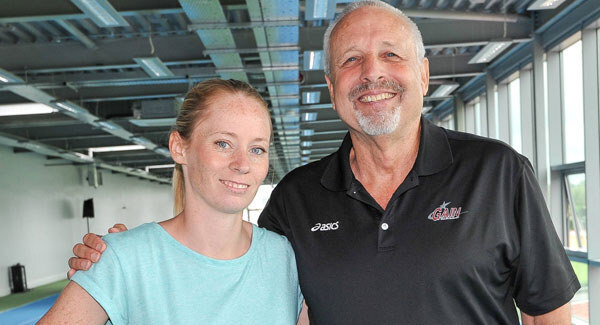
Last Saturday, Terrie Cahill and myself spent the day at a conference given by American coach Vern Gambetta, hosted in the UCC Mardyke Arena. I’ve always enjoyed Gambetta’s views on training and I’m an avid reader of his blog. The day was packed with discussion from his coaching experience.
Two years ago, Terrie and I took a trip to Sweden to a sprints and hurdles conference. After two flights, a train journey and a taxi ride, we landed in Falun. Our aim was to find out just what we were missing in the coaching puzzle, what box we were not ticking. Surely there was some magic hurdle drill or weights training exercise that would give me a big improvement.
The time we spent in Falun was very worthwhile. I bumped into Susanna Kallur, the world indoor record holder in sprint hurdles, chatted with her about her injury issues and training. I did my own training sessions in their indoor hall, afterwards sneaking around to take pictures of their training set up, always looking for those secret elements.
On our long trip home, we analysed what we gained from the trip. What we discovered was there are no big secrets, no short cuts and nothing obvious we were missing. It turned out our little team was doing a good job.
Last Saturday’s talk was hugely enjoyable because Vern Gambetta is a very passionate and accomplished coach who delivers a brilliant presentation. The key theories his coaching is built on are no different from the foundations my coaches built my career on.
I used to spend hours online watching other hurdlers racing or training, and I’d send my favourite clips to my coaches to look at. Sometimes I’d be looking at how a hurdler had a fast lead leg or maybe how another hurdler was a great starter. It was important for me to reassure myself I wasn’t on a different page or missing something. Watching world-class hurdlers kept me focused on getting faster myself. Also when I was warming up for a race next to them, I’d never get too distracted by what they were doing because I had seen it so many times on YouTube!
One of the points Gambetta made was about marginal gains. People obsess about the 2% but forget the 98%. The basics are what make people good but they are quite simply not that sexy. I spent 20 to 30 minutes during most sessions warming up and doing drills that helped my running mechanics. These made me faster and more efficient over the hurdles. The drills are boring but effective. Without the drills, I wouldn’t have been able to run fast but few people want to know about boring sprint mechanic drills. People want to hear there is one secret ingredient to running fast. Who really wants to hear that you must train your arse off six days a week 11 months a year?
Last week I was on the RTÉ Radio with Sean O’Rourke. We were chatting about sport and the topic of coaches came up. One of the points I made was that athletics coaching is a completely unpaid, voluntary role in this country. There is one paid full-time position but it’s specifically for distance running. This means anyone who competes in a non-distance running event (hurdles, sprints, jumps etc) doesn’t have an option to train with a coach employed by the governing body.
I realise there are challenges in employing paid coaches but I think coaches are too important for these challenges not to be ironed out. A funded athlete has access to a physiotherapist, weights coach, doctor, nutritionist, sports scientist, performance manager and lifestyle manager, all of whom are in paid roles. Of course they should be paid but why is it okay to assume an Irish coach should not be paid for their work? I would contend that outside of the athletes themselves, coaches are the most important people in sport.
We can all be guilty of thinking far away hills are greener but there needs to be a shift in how we think of ourselves and our counterparts from other countries. Rather than feeling the need to go abroad to learn from better coaches, we should be looking to collaborate and share experiences. There is so much knowledge in Ireland that we should be utilising the people who have it.
Last Saturday, I listened to Gambetta and each part of the talk was incredibly familiar to me. All the principles he discussed were the cornerstones of my training. A training schedule masterminded by a husband and wife coaching combination from a kitchen table in Meath, in between running a business and bringing up three kids. Gambetta talked about how you know if your training methods work — it’s simple, the results tell you if they work. I can attest to that but take a quick look at the Irish record books and the Cahill coaching influence can be seen in the hurdles, sprint, relay and long jump events. Results don’t lie.
Coaches are motivated by passion and in Irish athletics we have coaches with bucket loads of passion but they need an opportunity to be the optimum coaches they can be. I can feel as passionate as I want about baking a cake but without the eggs the result is not going to be much of a cake.