Fitzmaurice shows value of ensuring all systems are go
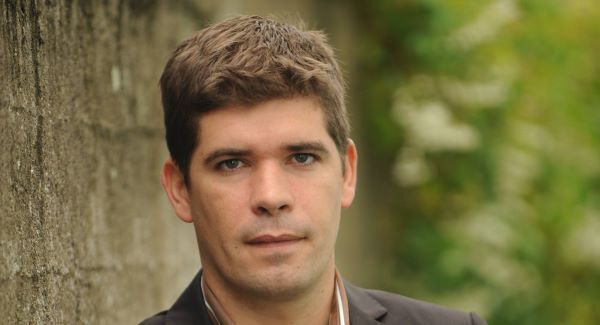
There are plenty who would dispute this theory. But I suspect Eamonn Fitzmaurice might also lean towards this school of thinking.
Fitzmaurice knows from personal experience that talent doesn’t always prevail. Consider the following names: Marc Ó Sé, Tomás Ó Sé, Darragh Ó Sé, Seamus Moynihan, Mike McCarthy, Dara Ó Cinnéide and Colm Cooper. That’s some talent pool. Fitzmaurice played in a Kerry team that included these incredibly gifted players. They still lost the 2002 All-Ireland final to Armagh.
How did that happen? For starters, Armagh had a system for everything. In contrast, it seems, Kerry didn’t have any system at all.
Last week, Darragh Ó Sé used his newspaper column to highlight how the role of the goalkeeper has changed during the past 20 years.
Before the 2006 quarter-final, Ó Sé said that he and midfielder partner were hoping the “anal” Armagh boys would be poring over video footage trying to identify Kerry’s kick-out strategy.
This thought caused Ó Sé much merriment, as he revealed Kerry didn’t actually have any tactics for their kick-outs. At the best of times, Ó Sé said he had no idea where the ball was going to land.
It’s an amusing anecdote. But when you’ve won six All-Ireland medals, you can afford to be a bit more light-hearted about the ones that got away.
Joe Kernan couldn’t afford to be so cavalier. Working with a more limited squad of players, Kernan left nothing to chance. He had a plan for everything.
He once threatened to drop Benny Tierney for disobeying instructions. Benny’s crime? He fist-passed the ball to a corner-back.
Benny made the mistake once before. When he erred a second time, Kernan told Benny if he did it again, he would be watching the games from the dugout. When a shot landed short, Benny had to kick the ball to the wing (the move for Armagh’s winning point in the 2002 All-Ireland final, started when Benny collected a weak shot and pumped his clearance under the Cusack Stand).
Joe Kernan was a groundbreaking manager. The twin planks of his coaching philosophy were fitness and organisation. In his first year with the Orchard County, they went on a training camp to La Manga. It was a bold, bold move.
Twelve years later, and Kernan’s legacy lives on. Earlier this year, Eamonn Fitzmaurice and Jim McGuinness took their squads to the Algarve.
It would be wrong to think of Fitzmaurice and McGuinness as merely copycat managers. Nothing could be further from the truth. Instead, they are Kernan’s natural successors.
In the same way Kernan’s scrupulous planning helped Armagh topple the superpower that was Kerry, Fitzmaurice and McGuinness now face the same challenge with Dublin.
Like Kernan, the Kerry and Donegal managers are innovators.
Fitzmaurice is Kevlar- plated. His decision to ban the Kerry public from training sessions in Fitzgerald Stadium caused uproar. But Fitzmaurice never wavered. How could he work on kick-out strategies when spies were sitting in the stands? In Fitzmaurice’s mind, there was no room for debate.
McGuinness is also covered in a Teflon coat. Last year, club fixtures disrupted his training programme. Worse again, players got injured playing for their clubs. Before taking the reins in 2014, McGuinness made the sure the same scenario wasn’t going to happen again. The club championship was postponed until the county exited the All-Ireland series.
Managers like Fitzmaurice and McGuinness like to control what is controllable. Darragh Ó Sé might think of them as being slightly “anal”. But Kerry supporters will be extremely grateful to have a manager like Fitzmaurice at the helm.
Kerry can no longer rely on a glittering array of natural talent. To win this year’s All-Ireland, they’ll have to ‘go northern’. Their game plan must to be rehearsed in detail.
Dublin have the best players. And as the reigning champions, are regarded as virtual shoo-ins for this year’s title. But do Dublin have the best system?
Recent history shows that talent offers no cast-iron guarantee of success. And we don’t have to go back to 2002.
When Donegal won the All-Ireland title in 2012, did they have the best players or the best system?
The World Cup provided further evidence that the best system wins. Costa Rica has a population of 4.5 million people.
Nine of the Costa Rica squad play in their domestic league. Their match winner Bryan Ruiz couldn’t get his place on the Fulham team. Drawn in the ‘Group of Death’, Costa Rica beat Uruguay and Italy, and drew with England.
As soon as they qualified, the Costa Rican players underwent fitness tests which led to personalised training programmes. After their defeat to the Netherlands, midfielder Celso Borges said: “We were all working for six months. There’s no magic to it. We just put a lot of heart into it.”
But there was more to it than spirit. By the time they reached Brazil, coach Jorge Luis Pinto had fine-tuned a counter-attacking game plan that was second nature to his players.
“That’s almost three years of training with the same principles, the same training methods. It shows the group is steady, the team is very confident in what it is doing. We trusted the system,” said Borges.
Pinto has modelled himself on Jose Mourinho. And his team played like a Mourinho side. They defended in numbers and counter-attacked. Costa Rica finished the tournament unbeaten in open play.
Any team that concedes goals can be beaten — and that includes Dublin.
Even Wexford managed to stick the ball past Stephen Cluxton. Dublin’s en masse attack means their full-back line is continually exposed.
Evidently, McGuinness and Fitzmaurice don’t believe in Dublin’s system. If they did, their teams would be playing that way too.
But can they follow Kernan? Can they defeat a team that looks invincible?
When drawn in a group with three previous World Cup winners, Jorge Luis Pinto said: “We love the group. The braver the bull, the better the bullfight.” For the sake of this year’s bullfight, coaches Eamonn Fitzmaurice and Jim McGuinness will need to be extremely brave.