Guided by good shepherd GAA will not want
He will be a chairman who governs through consensus rather than directives
What qualities and skills should the president of the GAA possess? Should he be a chief executive type? You know the sort. The hands-on leader who understands business and finance, the decision-maker who is not afraid to put noses out of joint so long as he gets the job done.
If that’s your idea of a GAA president, then you mightn’t be that impressed with Aogán Farrell.
The Cavan man wants to be the GAA’s next president, but the Cavan man is the polar opposite of the stereotype that has just been described.
Aogán Farrell has no interest in rolling up his sleeves and negotiating sponsorship deals or broadcasting rights. And he has no desire in being a legacy president. He doesn’t want to build a new stadium or change any rules.
Nope. If Aogán Farrell succeeds Liam O’Neill, then he would carry on in much the same vein as his predecessor. He will be an old style uachtarán. He will be a figurehead and an ambassador. He will be a chairman who governs through consensus rather than directives.
For what it’s worth, I think that would be a good thing. Under its current structure, the GAA doesn’t need any more chiefs.
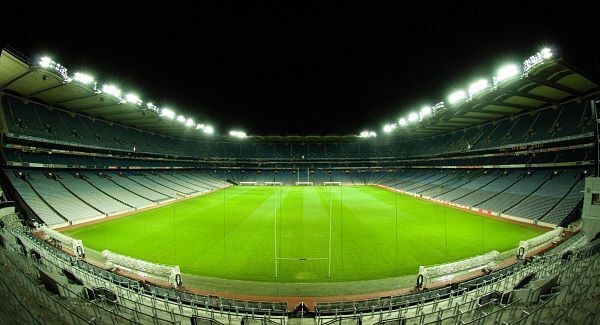
It needs to be stressed that the executive-style presidents like Peter Quinn and Nicky Brennan did a huge amount of good for the GAA. Quinn delivered Croke Park while Brennan restructured and revamped the staffing model at Croke Park Ltd.
Croke Park’s gate receipts generate the cash. Meanwhile, Croke Park Ltd has a finance, marketing, ticketing and media department which keeps the wheels turning.
The work done by Quinn and Brennan, and the presence of Páraic Duffy, the director-general, has reduced the need for a proactive president.
Any president who wants to get his nose stuck into the commercial matters of Croke Park is going to be on a collision course with the heads of those departments and Duffy. It’s not a recipe for happy or effective governance.
The GAA no longer needs its Presidents to lead from the front. Rather, future incumbents should take their cue from Nelson Mandela. In his autobiography, Long Walk to Freedom, Mandela said a leader should be like a shepherd. “He stays behind the flock, letting the most nimble go on ahead, whereupon the others follow, not realising that all along they are being directed from behind.”
Liam O’Neill has already demonstrated the benefits of encouraging democracy. Before O’Neill became president, Central Council had become a bit of a joke. The president sat behind a table at the top of the room and delegates were seated like pupils in front of him. There was little debate.
Ironically, O’Neill, the primary school principal, changed the classroom format. Delegates sit around one table. Discussion is encouraged and delegates who challenge proposals no longer fear excommunication.
On Saturday, Central Council refused to ratify the controversial hurling proposals that had been designed to keep Cork and Limerick in Division 1. In his own quiet and undemonstrative way, Liam O’Neill has made changes, but he has done so without meddling in the business of other departments.
While some will regard O’Neill as a ceremonial president, his record will show he didn’t just attend function and open clubrooms. The challenge facing Aogán Farrell is that he must convince the GAA he can perform the delicate balancing act that is required of the modern president. He must also make an input without interfering in places where he isn’t needed.
And there is a way for Farrell to outline his credentials. If elected, Farrell has stated he will “put fixtures at the top of my list”.
He said: “Club players don’t know when they’re playing. Games are on, then they’re off, it’s club versus county. The club is the cornerstone of the GAA and we have to add impetus to that by making sure we have an improvement in fixture-making.”
Yes, it all sounds very worthy. But men who are campaigning to be president always sound like that. The always pledge their allegiance to the noble club. Then they become president and the fixture chaos continues unabated for another three years. To convince the GAA’s grassroots that he is genuine, and that he does have a plan, Farrell needs to reveal his solution.
Does he want to streamline the National League? Is he in favouring of playing the All-Ireland club Championships before Christmas? Would he play the All-Ireland finals sooner? Those are the questions. We need the answers. And if Sean Walsh (Kerry) and Seamus Howlin (Wexford) want to hang their campaigns on the club fixtures card then they need to answer those questions too.
When surveying the GAA’s annual fixture chaos, it’s hard to avoid the conclusion that the shepherding skills of our previous presidents left a lot to be desired.
It’s one thing to direct operations from behind. But a long list of GAA presidents have stood at such a far remove that the flock has run wild.
No shepherd who truly cared for his flock would allow that to happen.