Peter Jackson: A Grand Slam may be gone but hope isn't for Ireland
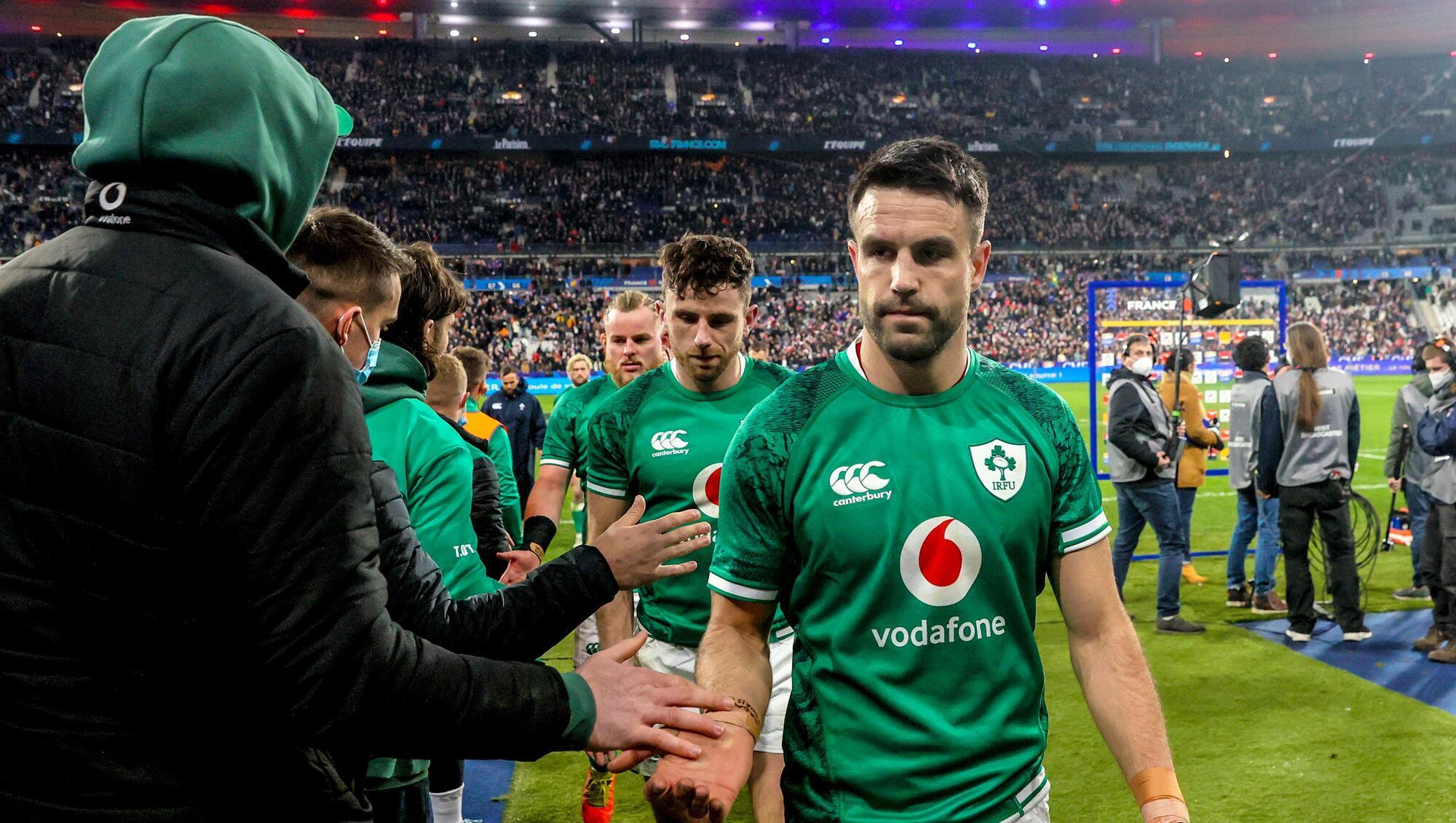
Ireland's Conor Murray dejected after the defeat in Paris. Picture: INPHO/Billy Stickland
Now that France stand alone in the Grand Slam scheme of things, Ireland will need a hand from Scotland or Wales to help them win the Six Nations.
Those with long memories and a sharp sense of history will be acutely aware of the irony. Fifty years ago this very month, Irish rugby had never been in more urgent need of a favour from their Celtic neighbours, and neither chose to grant it.
The refusal of first Scotland, then Wales to honour their fixtures in Dublin during the immediate aftermath of Bloody Sunday caused the oldest annual international sporting tournament on the planet to be left unfinished for the first and only time.
Then it was merely a matter of turning up. Now the favour is considerably more onerous, defeating France either in Edinburgh or Cardiff or, ideally, in both places and so put the Irish back in charge of their own destiny.
There is reason for hope, that it may not be asking too much, despite the splendour of France-Ireland confirming their status as a cut above the rest. Round three on Saturday week takes France to Murrayfield where they have lost all three of their most recent biennial visits.
On the last one they found a brutally old-fashioned way of beating themselves up. Maybe someone had whispered in Mohamed Haouas’ ear that a front-row predecessor from the 70s had once laid four Scottish forwards out in the same match.
Whatever the reason for his modest impersonation of the fearsome Gerard Cholley, a French amateur heavyweight boxing champion in his time, Haouas’ punching of the Scottish flanker Jamie Ritchie put a gaping hole in the Gallic Grand Slam for yet another season.
France lost that one 28-17, just as they had on their two previous visits, 32-26 in 2018 and 29-18 two years later. Last year, for good measure, Gregor Townsend’s squad dared to beat them again, in Paris.
Les Blues being better now than they were then, that may be asking too much, in which event it will come down to a Friday night in Cardiff next month. Given what Ireland did to Wales the other day, that may be stretching the imagination towards the realms of fantasy.
The beauty about the Six Nations is that it hardly ever fails to deliver one result so fanciful that even a latter-day Nostradamus would struggle to see it coming.
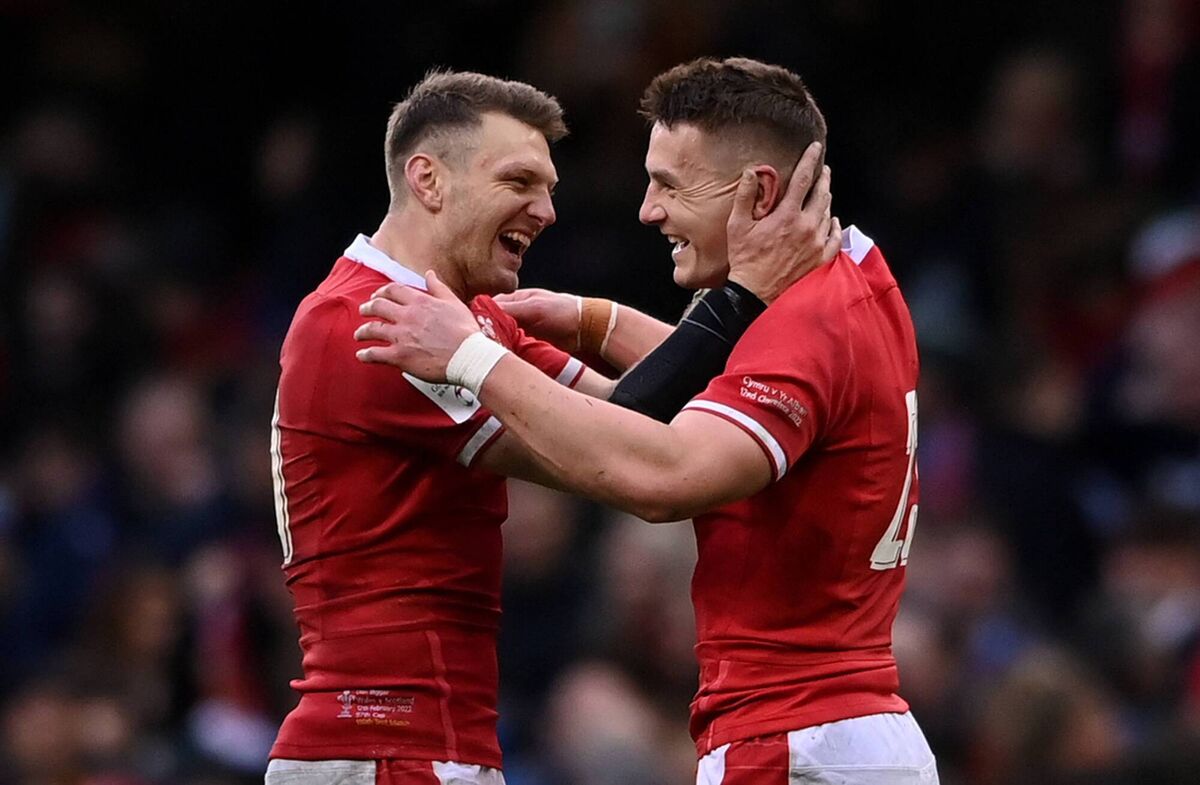
Wales, written off by all but the faithful few, have just turned the fury of a nation scorned into one awash with pride and passion.
They beat Scotland who beat England who beat France (last year) who beat Ireland who beat the All Blacks.
For the record, Wales have beaten France four times out of five.
Significantly, the one defeat in the last full-house Cardiff match before lockdown, 23-27 two years ago, happened after Shaun Edwards had legged it across the Channel because France offered the long-term contract denied him by Wales.
The aforementioned Mohamed Haouas did his unwitting best to throw a spanner in the works then with a yellow card. For the benefit of those Irish fans asking where Haouas is now that they need him, the French management have excluded him because of a court case which ended last week with the Montpellier prop convicted of burglary and given an 18-month suspended prison sentence.
All Andy Farrell can do is ensure Ireland reach the final round, Scotland on March 19, with a shot at the title, even if France keep winning. In that event, only England in Paris will stand between them a first Slam for 12 years.
Welsh win was a triumph for the old fashioned virtues of pride and passion
Half an hour into Wales v Scotland, Nic Berry took Stuart Hogg aside in the Scottish 22 and left nobody in any doubt what the Australian referee would do in the event of another penalty offence: “Next one down here [in the 22] will get a yellow card.”
As soon as the game restarted with a Welsh penalty, Berry pinged an unidentified Scottish player pending Welsh advantage from which they scored their only try.
Once the conversion had been taken, the referee ought to have been reaching for the relevant card.
It was as if the warning to Hogg, issued barely two minutes earlier, hadn’t happened. Having left himself no room to wriggle out of his ultimatum, Berry had no option but to keep his word.
Scotland conceding a try ought not to have made a blind bit of difference.
Penalty tries carry a double punishment, seven points and a yellow card for the offending player, a law which justifiably did for England at Murrayfield the previous week.
In Cardiff, the Scots got off lightly until Finn Russell’s deliberate knock-on gave Berry no option but to do what he threatened to do some 40 minutes earlier.
The consequences cost them the match, deservedly so.
The fury of a nation scorned had been raging around the Welsh squad’s bunker all week. The sense of outrage and despair over their team’s failure to fire a shot in Dublin seemed to leave the wounded champions with just the one reason for hope — the history book.

It contained a long catalogue of Scottish woe in Cardiff over the 20 years since they last won there: red cards for Scott Murray in 2006, Stuart Hogg eight years later sandwiched between the sin-binnings which turned the prospect of a 10-point win into a seven-point defeat.
Dan Biggar read the book and found a motivational source strong enough to revive the collective dispirit of players furious at their failure to give Ireland a game.
As their captain said before the match: “History tells we have a habit of bouncing back.”
It turned out to be a triumph for the old-fashioned virtues of pride and passion.
Biggar’s fortitude in adversity ensured that Wales unleashed torrents of the stuff, enough to show that if they aren’t good enough to win another title, they will have a say in who does.
A switch in time...
At the last count, more than 20 players who began their professional careers appearing for one country are now representing another. One of the most recent additions is now on course to line up for England against Wales some seven years after captaining Wales against England.
Harry Randall was four years old when his English parents moved the family from the London area to a village in Carmarthenshire, Tycroes. England’s newest scrum-half joined the local rugby club along with his builder-father, Joby.
Wales put Randall in charge of their U16 schoolboy team against England where the opposition included Tom Curry. In Rome on Sunday, Randall went to work under Curry’s direction, helping Marcus Smith lift the tedium of an uneventful afternoon. Over the last year, the following have changed colours by switching to the country of their birth or that of their ancestors.
England U20: (9) Will Addison, Kieran Treadwell (both Ireland), Sam Skinner, Ben White, Josh Bayliss (all Scotland), Ross Moriarty, Nick Tompkins, Johnny Williams (all Wales), David Sisi (Italy).
South Africa U20: (5) Duhan van der Merwe, Pierre Schoeman, Oli Kebble (all Scotland), Paul Willemse (France), Braam Steyn (Italy).
Australia U20: (2) Sione Tuipulotu (Scotland), Mack Hansen (Ireland).
Wales U20 and U16: (2) Alex Dombrandt, Harry Randall (both England).
New Zealand U20: (1) Gareth Anscombe (Wales).
Samoa U20: (1) Uini Atonio (France).
Tonga U20: (1) Uilisi Halaholo (Wales).

Picture paints a thousand words
It is the done thing these days for every Test squad to be surrounded by a team of psychologists, none more so than England. That may or may not explain why Eddie Jones chose to psyche his players up for their Roman jaunt with a shot of Sonny Liston flat on his back.
The iconic photograph, freezing for eternity big, bad Sonny’s first-round knock- out by the then Cassius Clay in Bangor, Maine, 57 years ago, might have seemed more appropriate had England been taking on a heavyweight as mean and menacing as Liston.
Instead, they were in with the perennial non-contenders for the Six Nations, comparative flyweights who have been losing ad nauseum for seven years with no sign of a cure in sight. England’s routine win takes the losing Italian run in the championship to 34.
There is nothing more certain than that Ireland will make it 35 on Sunday week and fill their boots in the process. Italy’s next generation may have given England a bloody nose in the U20 tournament but in the one that really matters, they are still being counted out far too soon and far too often. Maybe that’s why Jones chose the shot of Liston flat on his back...
My team of the weekend
15 Melvyn Jaminet (France)
14 Darcy Graham (Scotland)
13 Garry Ringrose (Ireland)
12 Yoram Moefana (France)
11 Gabin Villiere (France)
10 Dan Biggar (Wales)
9 Antoine Dupont (France)
1 Cyril Baille (France)
2 Ryan Elias (Wales)
3 Uini Atonio (France)
4 Tadhg Beirne (Ireland)
5 Paul Willemse (France)
6 Ross Moriarty (Wales)
7 Tom Curry (England)
8 Gregory Alldritt (France)

Subscribe to access all of the Irish Examiner.
Try unlimited access from only €1.50 a week
Already a subscriber? Sign in