Ronan O’Gara: It shouldn’t be easier to accept defeat away from home
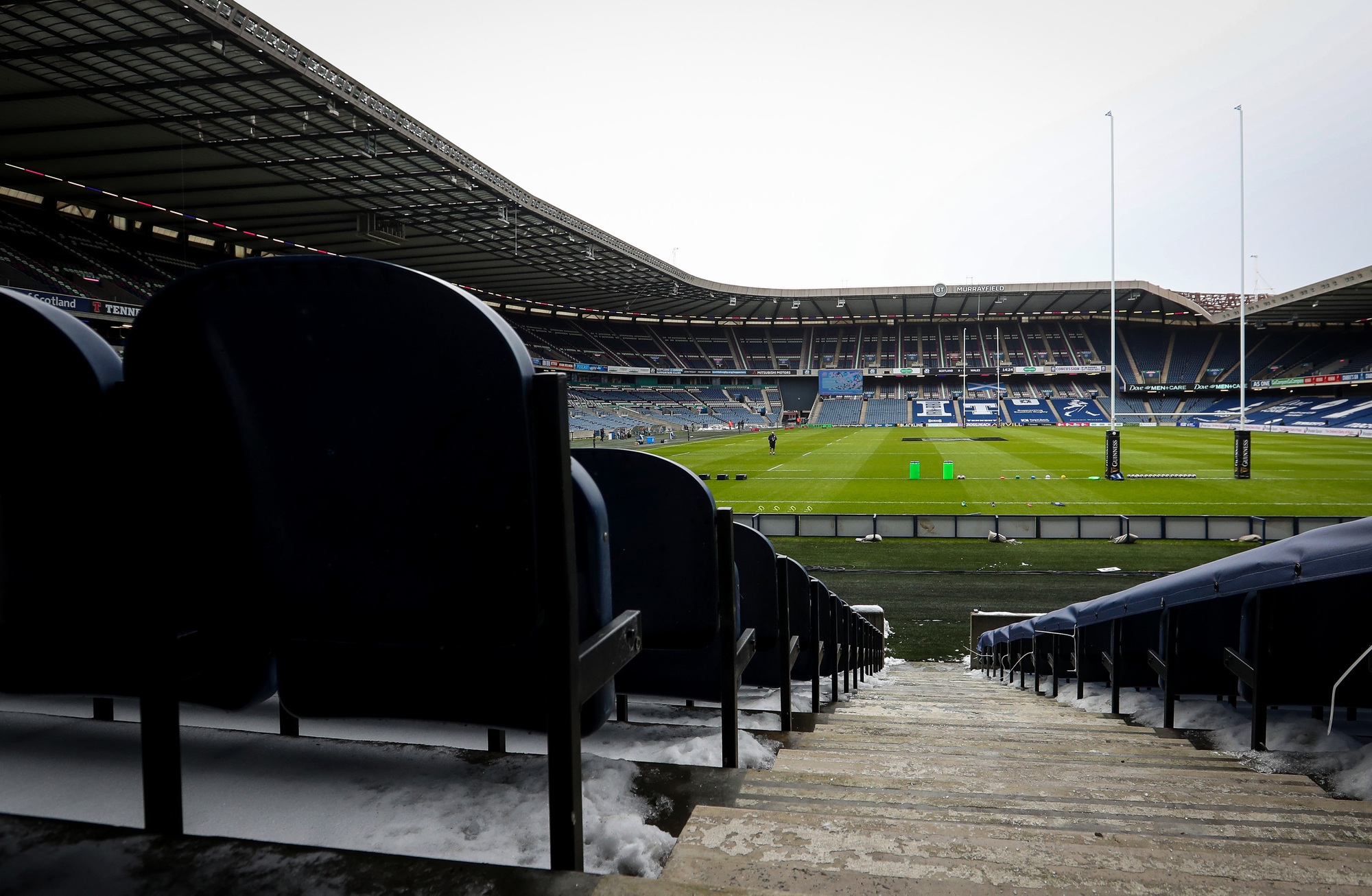
Defeat for Ireland at Murrayfield would present a similar set of damning statistics, three Six Nations defeats from four. The lack of crowds downgrades the importance of home advantage
There's a reason so little science is available on why home teams, in the main, manage to eke out wins, even in tight games. How could there be? As a coach, I’d love further investigation into why, come 65 minutes, the psyche of an away team player deems it that bit more acceptable to come up short.
And why there seems to be less of that opt-out clause for the team at home.
Sport without crowds has bucked the trend, but it is something one expects to see reversed once spectators return. Home teams in the Six Nations still tend to get the job done. Is it easier to give ground as the visitor because convention says it’s so? Like it’s ok, because we will make up for it next time at home?
England will come out like caged lions at Twickenham tomorrow against France. But there is still a very real chance they could be going to Dublin in a week’s time with three losses and the prospect of a fourth against Ireland. That would put the cats amongst the pigeons across the channel.
Defeat for Ireland at Murrayfield would present a similar set of damning statistics, three Six Nations defeats from four.
The Scotland that Ireland face Sunday has a different vibe to it. They should be going into the weekend looking for a third straight win. I heard Rory Lawson on radio this week speaking about how Scotland got it so wrong against Ireland at the last World Cup, how they were bullied, how they didn’t match Ireland’s physicality, and how they malfunctioned in the set-piece. That seems a long time ago. They have placed a major emphasis on addressing those deficiencies and bringing in Steve Tandy was a significant factor in doing so. Now their scrum is competitive, they’ve a good maul, good defence and they are able to counter attack well with Stuart Hogg at the back. When teams kick ball poorly, Hogg is the best in the world at running it back.
But every man has his weakness. I’ve had issues with Hogg as last man, one-on-one, where his ability to pull off the tackle was suspect. He deserves all the praise he gets as a counter attacker, but to get universal approval as a great player, he has to be super efficient on both sides of the ball, a la Ben Smith at the Highlanders.
I might be reading the wrong newsfeeds, but Ireland are talking about Scotland a lot this week. One hopes that is mere courtesy. It is crucial Andy
Farrell and management aren’t dragged into a negative spiral of thinking regarding the consequences of a
defeat on Sunday.
Players and coaches at this level generally operate in a growth mindset that sees the opportunity for a performance and not the consequences of a defeat.
It is rare that Scotland go into a game with Ireland as the more settled unit, but there is a strong argument to that effect this week.
What I mean is they are further along the track in terms of how they are
hoping to play.
Beating up on Italy is a poor basis on which to plan for the future because you can pretty much play as you please and still defeat the Italians.
Project 2023 kicks in the Monday after the England game. Farrell can play short-termism for the next two weekends and focus on performance. If you get the performance, you generally get the result. Very rarely in sport have I seen a performance that hits all its markers fall short and that’s not speaking from my high horse — that’s just from experience. We lost many, many games with Munster and Ireland, and in almost all case, we under-performed.
On the occasions where you deliver a performance and still come up short, there is comfort in knowing and seeing the right direction. What you don’t want is what we saw in the Autumn Nations Cup when people were saying Ireland were making progress in defeat by playing well when they clearly were not. People aren’t stupid either.
It’s good if rugby people are thinking bigger picture now. The short-term contract extensions agreed with some of Ireland’s thirtysomethings in recent weeks has sharpened everyone’s appreciation of age profile and planning for the future.
There is an outsized problem at 10, that conversation is a bit of a mess at the moment. But are we really expecting a series of bolters to come into the equation for Ireland over the next 18 months? How many areas are we actually talking about in terms of Farrell pulling a joker from the bottom of the deck — two or three at most?
Is Keith Earls going to the next World Cup? A one-year contract extension certainly raises questions in that regard.
Farrell will select his ‘wily old campaigners’ judiciously — you can’t have too many of your squad in their 30s, at least not if we are serious about learning the lessons from previous World Cup campaigns. Fellas hop off the ground up to the age of 26-27 and you need an energetic core.
What Farrell begins to examine now is players he can hang his hat on for the next two and a half years. I look at Hugo Keenan, as an example, and feel it’s too early to be locking him in for France 2023. He is pleasing on the eye, but Irish rugby is in that place now where everyone new and shiny is a solution. Far from it.
There are moving parts. I was doing some video work last week and people forget quickly that Jacob Stockdale has scored some bloody good tries for Ireland, but that seems to have been parked when the debate moved to his defence. Every player has a weakness, remember?
Almost by osmosis Murray and Sexton have been decoupled in most people’s minds. That may be no bad thing. Stuart Lancaster’s comments this week regarding Jamison Gibson Park’s pre-eminence over Conor Murray may not have gone down well in Munster but no-one is really convinced that Sexton and Murray works as a combo in 2023.
There’s still buckets of time to get the players and age profile right for the next World Cup. Farrell will be reminding the Bundee Akis and Chris Farrells of this and that their current exclusion from Six Nations involvement comes down to marginal calls in management meetings.
Ireland is hardly weakened by bringing Aki into 12 and moving others around — and these are the things management argues long and hard over — but the consequence of moving more than one player around to accommodate same is a clear deterrent at this moment.
Dare I say the benefits of two playmakers on the field for Ireland are self-evident, and another upside of having a fit Joey Carbery back in the equation. It also spices up the replacement unit.
Right now, getting Project Farrell properly off the ground is the primary consideration, but they will find Scotland a tougher nut to crack than in recent times.
France’s incentive to win at Twickenham is huge. They are coming off a prolonged break from the tournament and with all that on top of the psychological handbrake French sides tend to have travelling abroad, it would be a statement success for Fabien Galthie.
For all of Toulouse’s Top 14 form this season, their draw away to Munster in the Champions Cup Round of 16 makes their success 25% less likely. The French are working so hard at eradicating this issue from their psyche but they remain the foremost exhibit of The Away Team Syndrome in Sport.
Toulon must overcomes a similar handicap travelling to Leinster, just as La Rochelle must going to Kingsholm to face Gloucester.
There will be no crowds at Thomond Park or the Aviva, but there is something that seeps into the French mindset away in Europe. You are looking at degrees of fragility that will work in the favour of Ireland’s provinces.
What will be intriguing is Munster’s handling of Toulouse wing, Cheslin Kolbe, who remains pretty undefendable. He is the sort to make mincemeat of video reviews and previews, short of resorting to a wall in front of him.
He is a real world star who, if anything, has kicked on from South Africa’s World Cup win.
What a few weeks of rugby ahead.