Peter Jackson: Peter O'Mahony's elbow did little for Tomas Francis’ looks but real damage to title hopes
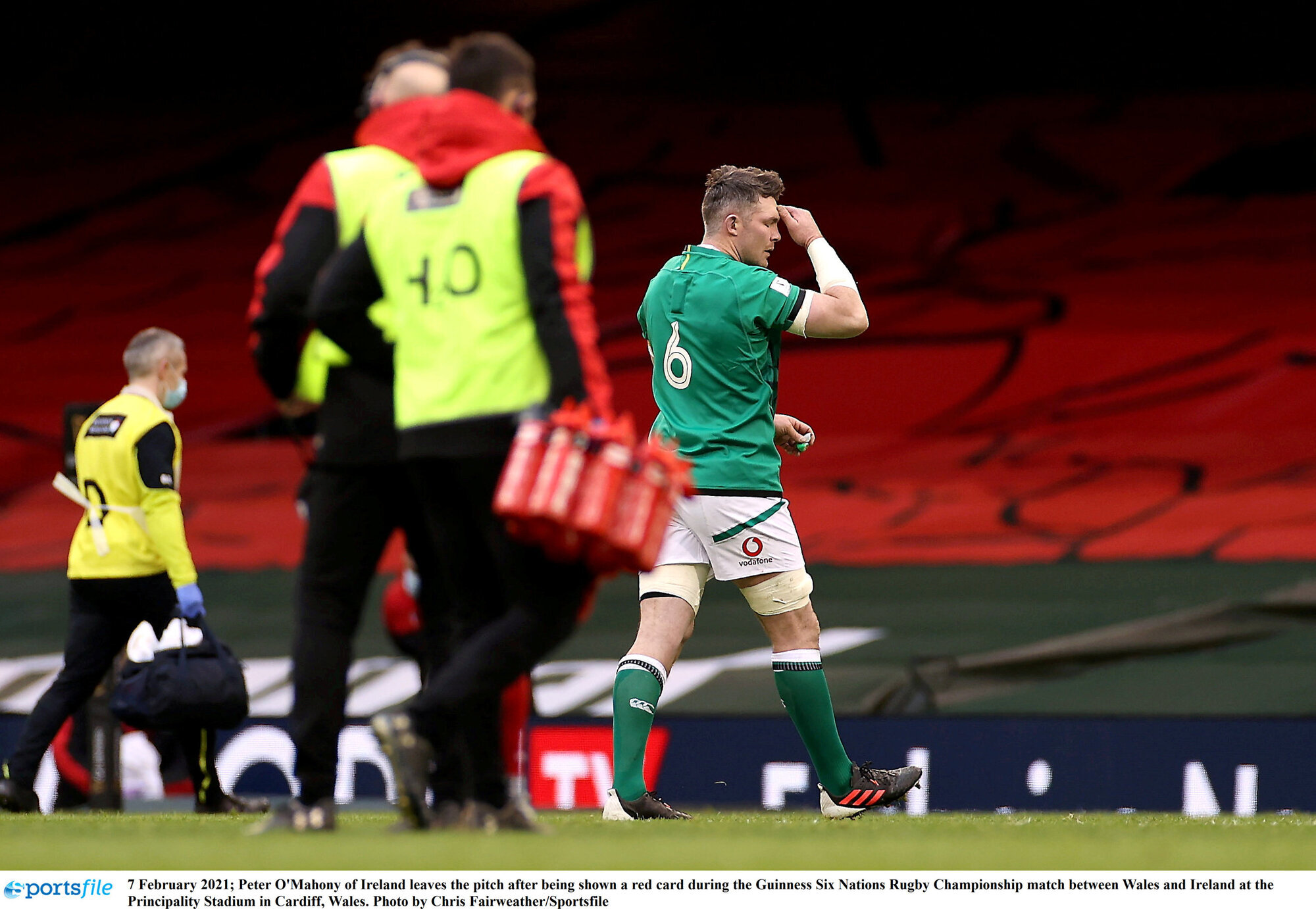
Peter O'Mahony of Ireland leaves the pitch after being shown a red card against Wales. Picture: Chris Fairweather/Sportsfile

Scotland did more, far more than win where they hadn’t won for almost 40 years. Out-witted and out-played from start to finish, England’s forensic inspection of the evidence will bring them to the conclusion that they ought to have lost by 15 instead of five.
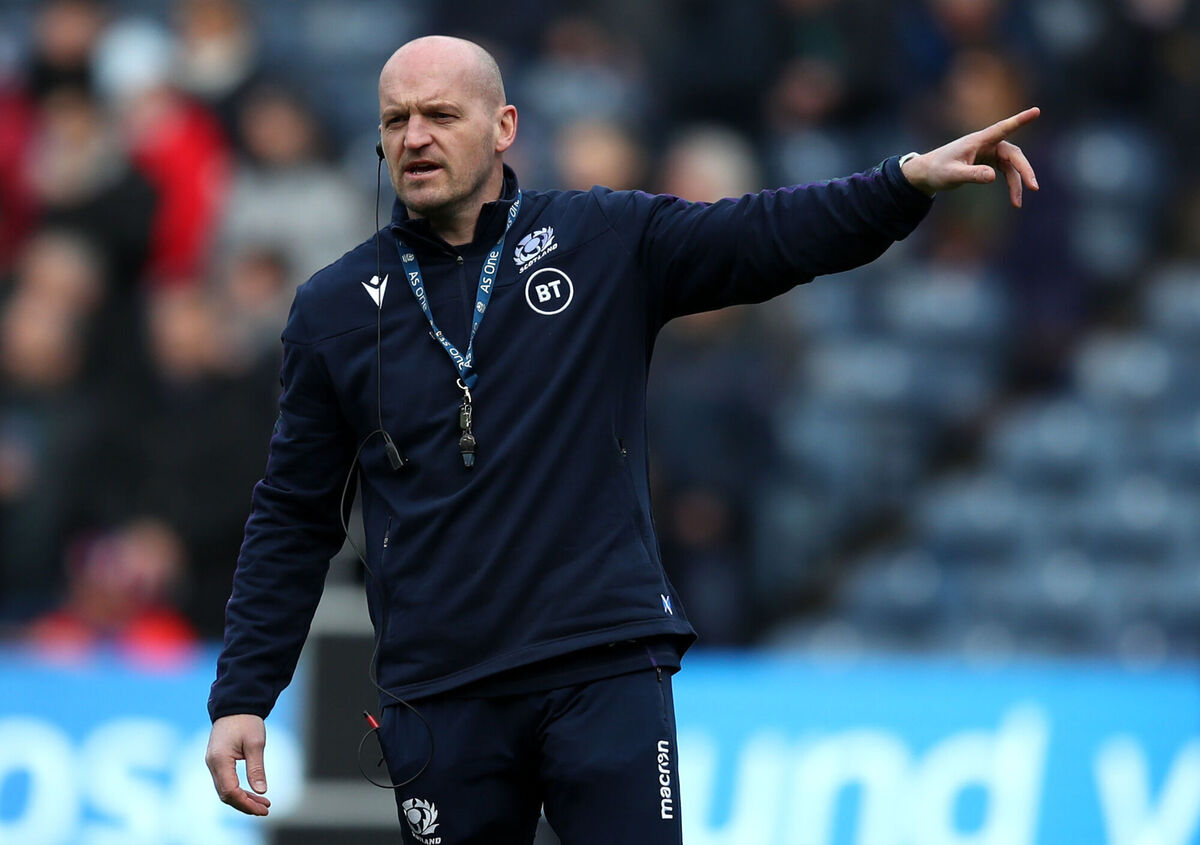
In succeeding where 10 other head coaches had failed since Jim Telfer in 1983, Gregor Townsend presided over a performance so good that England never got close enough to threaten a try, something they hadn’t failed to do since Simon Geoghegan ambushed them almost 30 years ago.
Finding a day when England scored fewer points at home in the championship requires going back further still, to the same weekend in 1988 when, outclassed by Wales, all they managed in reply was a solitary penalty from Jon Webb.
On the Richter scale of English shockers, the champions falling at the first hurdle is as seismic as any and that’s saying something considering the competition:
Lawrence Dallaglio’s gung-ho leadership in going for the corner instead of the posts with Jonny Wilkinson infallible off the tee allowed inferior opponents to ambush them via Scott Gibbs’ famous last-minute try. Grand Slam gone with Neil Jenkins’ conversion.
Warm sunshine first-half, Arctic squall in the second, as widely forecast yet England without Martin Johnson’s pragmatic influence kept trying to run everything from deep. Duncan Hodge picked them off. Grand Slam down the drain.
Despite sweeping all before them until the foot-and-mouth epidemic caused a delay, England fell to Keith Wood’s try straight from the training ground. As another Grand Slam disappeared, head coach Clive Woodward said: "It's as if the ceiling had fallen in.’’
This time it was the roof. The newly-enthroned world champions taken to the cleaners and barely six months later Woodward resigned to join Southampton Football Club.
An occasion which will be never forgotten by those lucky enough to have been there.
They came to collect the Grand Slam only to lose by such a distance that Wales even stripped them of the title on points difference. Mental disintegration.
Stephen Varney is a 19-year-old Welsh-speaking scrum-half from Pembrokeshire whose Italian great-grandfather stayed there after serving time as a prisoner-of-war.
Paolo Garbisi, as Venetian as a gondolier, is 20 and theirs has been touted as the youngest half-back partnership in the championship.
The claim will have come as news to a High Court judge in Dublin and a financier in Belfast.
Scrum-half Johnny Quirke was a 17-year-old pupil at Blackrock College and out-half Gerry Gilpin a 21-year-old student at Queen’s, when the Irish selectors introduced them to each other 48 hours before their joint baptisms at Twickenham in February 1962.
It turned out to be a fiery one, a literally pointless exercise on a day when Ireland crammed their team with nine new caps.
Three — left wing Laurence L’Estrange, flanker Noel Turley, and hooker Jimmy Dick from Ballymena — never played again. Another novice from Ballymena would last a little longer — Willie John McBride.
By then, a pair of 18-year-old Welsh schoolboys had gone down in history not merely because they had been picked to play against the All Blacks, an event in itself, but because they gave them the runaround.
Willie Davies and scrum-half Haydn Tanner lined up for Swansea against New Zealand in September 1935 by kind permission of the headmaster of Gowerton Grammar School.
Davies, lauded as ‘a sprite of a genius’ from the nearby cockle village of Penclawdd, made two of Swansea’s three tries in a decisive 11-3 win.
All Blacks skipper Jack Manchester told reporters after the match: “Please don’t tell them at home that we were beaten by a couple of little schoolboys.”
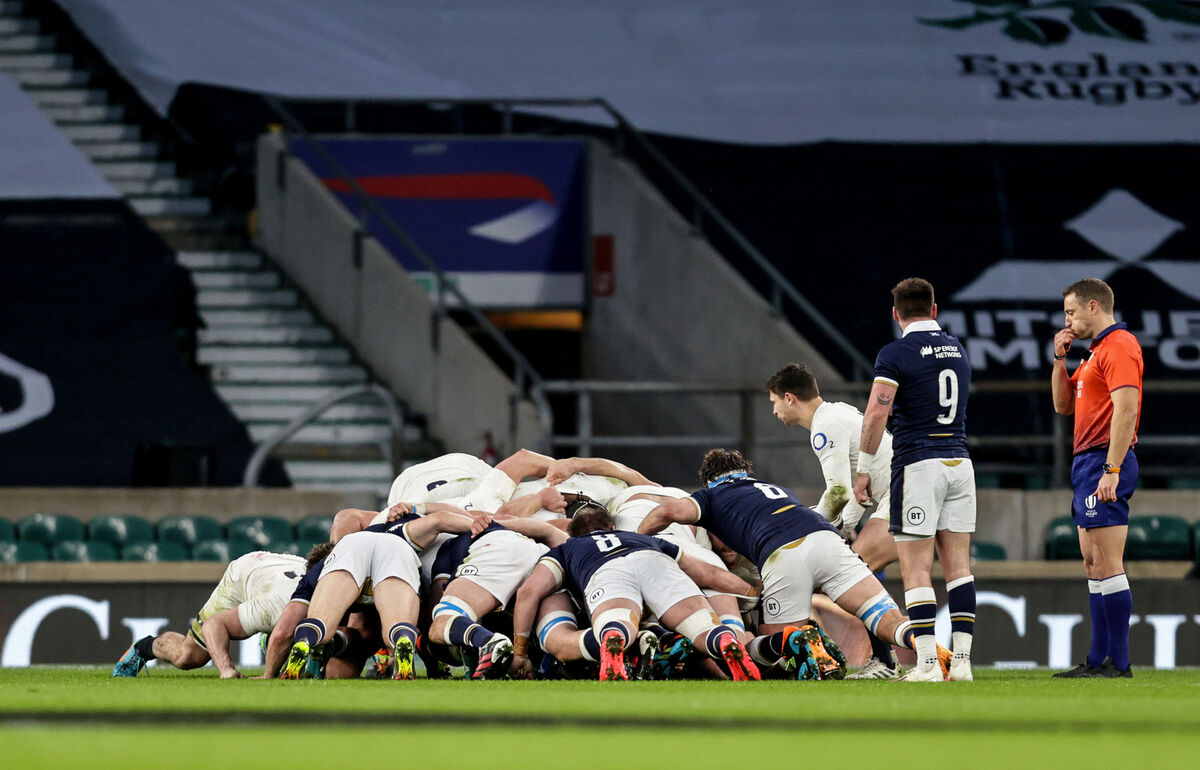
Italy-France in Rome generated a total of nine scrums of which took up almost nine minutes. Only three were completed without a penalty or free kick.
England-Scotland produced 11 over an aggregate time of 13 minutes. Seven ended in referee Andrew Brace punishing one team or the other.
Wales-Ireland, by contrast, featured ten scrums, five each and not a single penalty. Try and work that out.
Given that Ireland, England, Scotland, and Wales stood behind the Springboks in most of South Africa’s despicable apartheid regime, it ought to surprise nobody that rugby union appears confused on the question of taking a knee.
Only four Scotland players — Ali Price, Cameron Redpath, Jonny Gray, and Chris Harris — did so in support of the Black Lives Matter movement.
The SRU issued a statement yesterday supporting the 19 who did not, saying they “are free to demonstrate their support for this important issue in the way they see fit”.
All but six of England’s squad knelt during the minute’s silence for Rugby Against Racism which meant that the standers outnumbered the kneelers 25-21.
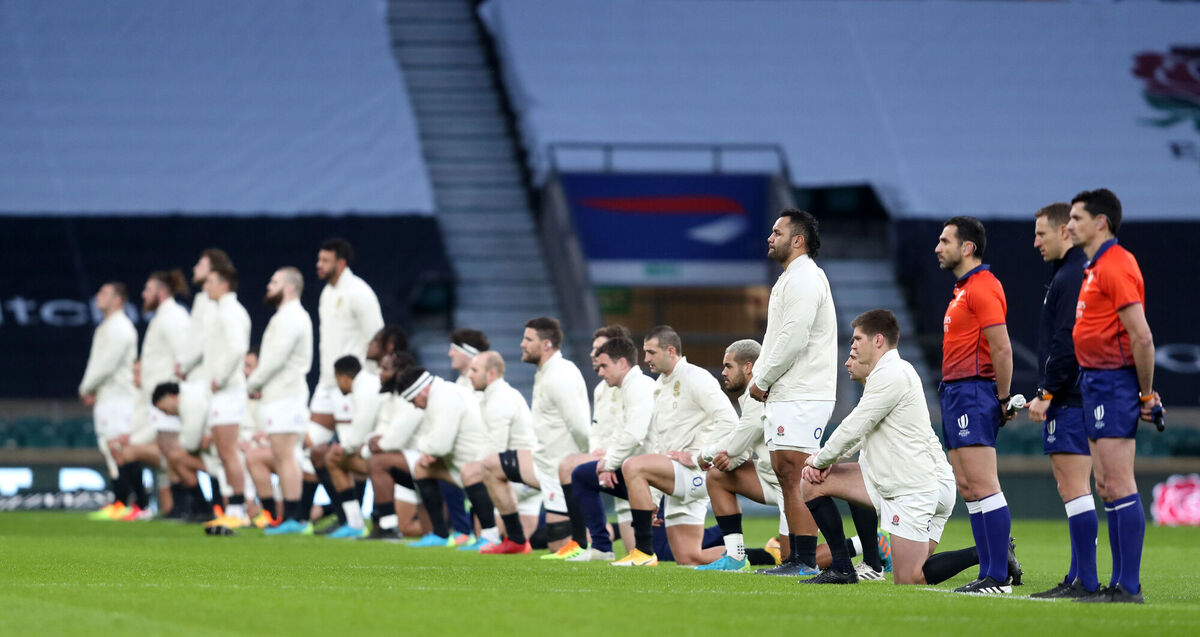
Unlike Premier League football, neither World Rugby nor the Six Nations has given a specific directive.
15 Stuart Hogg (Scotland), 14 Teddy Thomas (France), 13 George North (Wales), 12 Cameron Redpath (Scotland), 11 Duhan van der Merwe (Scotland); 10 Mathieu Jalibert (France), 9 Antoine Dupont (France); 1 Wyn Jones (Wales), 2 George Turner (Scotland), 3 Andrew Porter (Ireland); 4 Tadhg Beirne (Ireland), 5 Jonny Gray (Scotland); 6 Dylan Cretin (France), 7 Hamish Watson (Scotland), 8 Matt Fagerson (Scotland).