Colin Sheridan: IRFU recruitment policy makes mockery of ‘team of us’ ideal
Argentina's achievements have made a mockery of the IRFU’s ‘vision’, especially in the broader context of the comparative poverty of the Argentinian RFU
Colin Sheridan: IRFU recruitment policy makes mockery of ‘team of us’ ideal

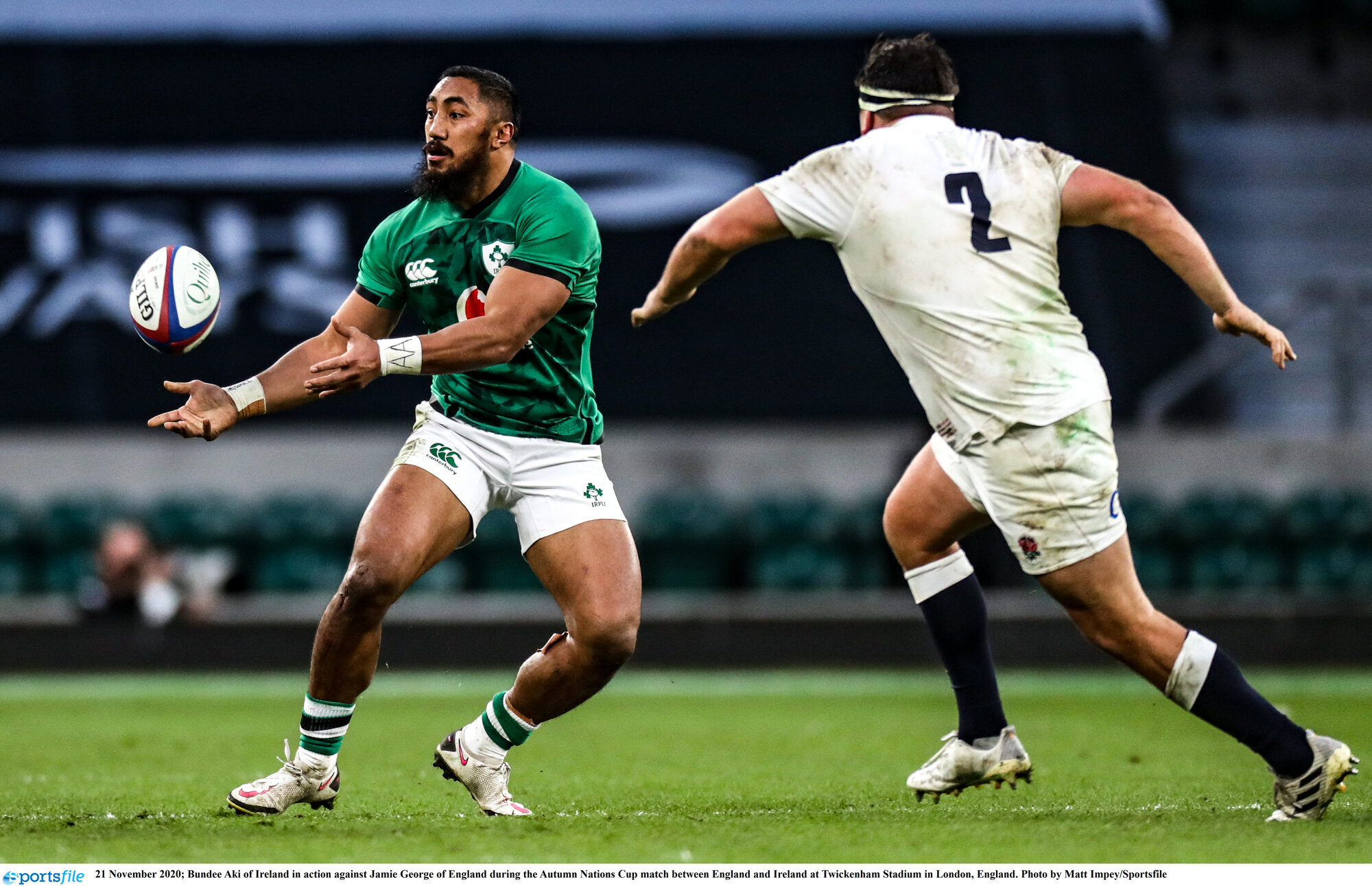
Bundee Aki is arguably the most recognisable sportsman living in Galway. In the six years since arriving, he has established himself both as a player and a role model. Photo by Matt Impey/Sportsfile

Some years ago, a friend from Tipperary relocated to Cavan for work. An innocent social conversation which was meandering to an inevitable end took a sudden and life-altering turn.

“You said you’re from Tipp?”

“I am,” he said.

“What part?”

“Loughmore-Castleiney,” he countered.

“You hurl, do you?”

There followed a pause, “I do,” he lied.

The next week he joined the Cavan senior hurling panel. He sat out the first half-dozen or so training sessions with a contrived back spasm. His mere presence at training, a Tipp man, above in Cavan, even in bootcut jeans and fleece jacket, saw a swell in attendance. He made all the right sounds at the right times. Somebody remarked that he was similar to Eoin Kelly in “the way he walked”.

The night before the opening round of their Division 4 opener away to Donegal, he pulled on a pair of Tipperary togs, shortened his grip on the hurl, and pucked around for the first time with his new teammates. He didn’t do too much, as he was minding the back. The following day, having not played competitive hurling since childhood, he made his inter-county debut off the bench for his adopted county Cavan. It was his last game of competitive hurling.

He left, laden down with all the trappings of his opportunism — new gear bag, training gear, and the honour of being the only member of his family to play national league hurling. The original “project player” was born.

In retrospect, my friend was lucky Eddie Jones was not managing the Donegal hurlers that day. Last week, Jones took aim at Irish rugby and fired his arrows; “I heard someone calling them the United Nations, mate, so I had a little chuckle,” Jones quipped in advance of Saturday’s Nations Cup encounter. Shots fired.

Blank rounds, though. I’m not sure why he was chuckling, as the joke was neither funny nor fair, especially on the United Nations. The better joke, if there is such a thing in international rugby media circles, would have been: “I heard someone calling them the Foreign Legion.”

The irony of course is Jones and his employers the RFU — hardly bastions of purity — would likely select a Mongolian yurts-man at loosehead prop if he enhanced their chances of winning (that said, England had zero project players in their starting team).

Jones, a master satirist, is better than such tame pre-match banter. For a man who prides himself on the power of cutting remarks, this offering was quite tame, but it still had its desired effect; highlighting the five ‘project players’ selected in the Irish XV, and once again laying bare a recruitment and selection policy that the IRFU has unashamedly and (very successfully) pursued: Identifying and recruiting talent from overseas markets, players who have missed the boat with their own unions.

From a purely business point of view, the IRFU can point to their star projects CJ Stander, Bundee Aki, and new addition James Lowe as being the equal or better of any of their homegrown competition. But there is a personal cost, too, not just for those omitted due to the policy, but to the project players themselves.

Aki is arguably the most recognisable sportsman living in Galway. In the six years since arriving, he has established himself both as a player and a role model. His evolution seems to have less to do with a contrived charm offensive, more to do with him just living his life.

His graduation to the Irish rugby team, once he qualified to be selected, was undoubtedly merited. If anything, he has been one of Ireland’s most potent performers. The same can be said of Munster’s Stander.

The aforementioned Foreign Legion adopts a policy that any soldier wounded in battle can automatically apply and be granted French citizenship under the provision, “Français par la sang verse” (French by spilled blood).

Nobody could argue Aki’s or Stander’s claims to Irishness under such terms, but by identifying them and others specifically for that purpose, the IRFU has exposed these players and their families to the wrath of the fan, many of whom see the ‘project player’ project as a dilution of the ‘team of us’ ideal, an ideal the union so carefully and profitably cultivated.

The IRFU, with their clever marketing strategies, have fed the ‘team of us’ narrative with one hand, while aggressively pursuing the bottom line with the other. Hardly a novel approach for a corporate entity, but long before there were profit and loss accounts to justify at year’s end, the IRFU was what it is still supposed to be now; the managing body of an actual sport, not a hedge fund.

In exploiting — without prejudice — World Rugby rules, the IRFU has not only diluted the notion of representing one’s country, but threw Aki, Stander, and co like meat to the baying mob in the process.

In 2017, World Rugby voted to change the required residency period for test eligibility from three years to five. No coincidence that the policy change was driven by its vice president, Agustín Pichot, a man who spilled more blood for his own country — Argentina — than any other player.

The last two weekends have seen Los Pumas defeat New Zealand for the first time, and draw with Australia with matchday squads consisting entirely of Argentinian-born players. Such an achievement makes a mockery of the IRFU’s ‘vision’, especially in the broader context of the comparative poverty of the Argentinian RFU.

It’s worth noting that when the test eligibility change was announced in 2017, the IRFU immediately unveiled its IQ Rugby programme, which, they told us, would be responsible for the “identification, development, and management of overseas Irish- qualified talent”.

Further proof that the ‘team of us’ is in fact a team of not just us, but us, them, and anybody else we can qualify to represent us.

x

More in this section

Cookie Policy Privacy Policy Brand Safety FAQ Help Contact Us Terms and Conditions

© Examiner Echo Group Limited