PM O'Sullivan: Forgive me for doubting whether hubbub about hurling will lead anywhere productive
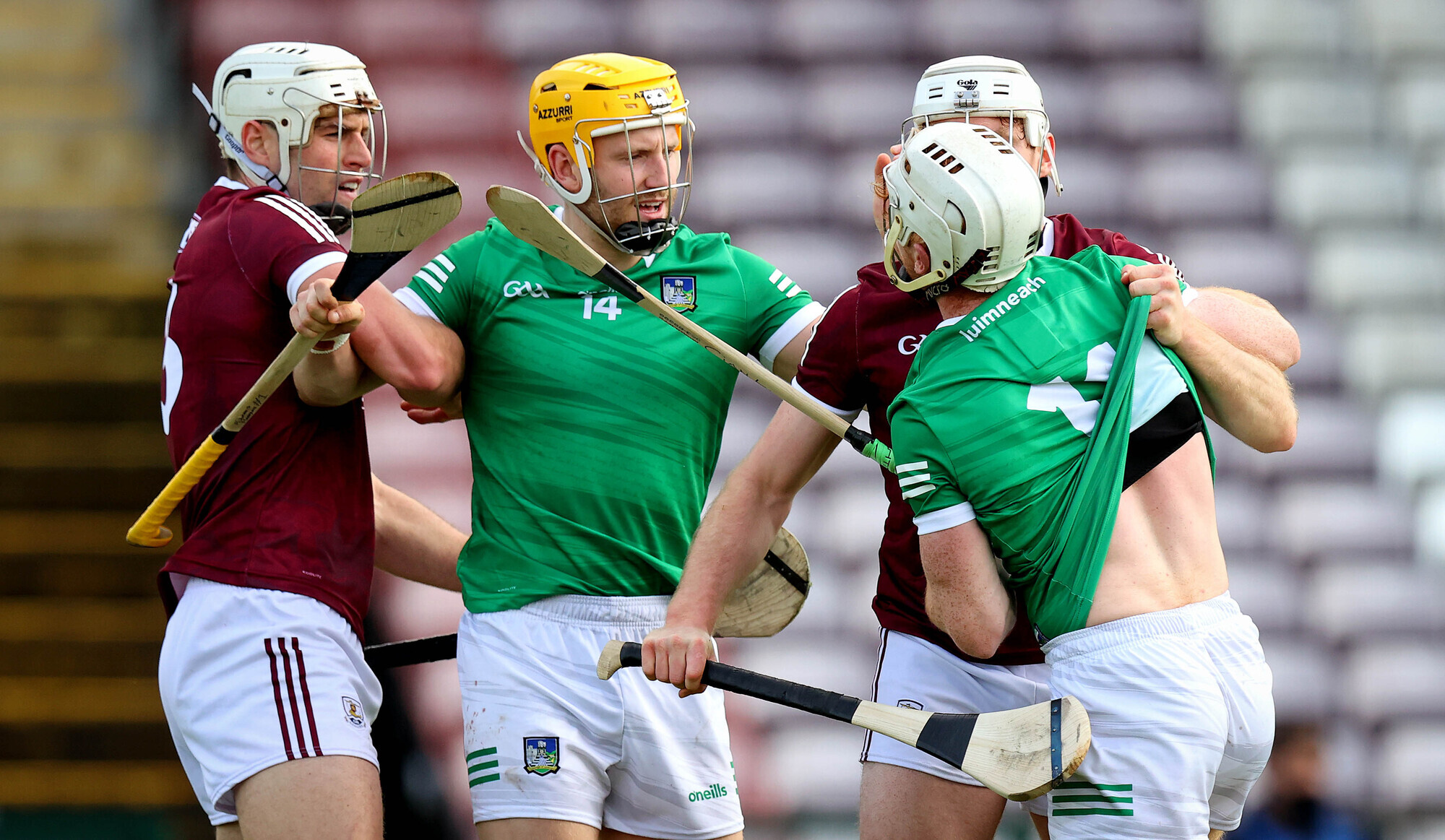
Hurling lies in the dock, various ways. For becoming tedious, most of all. My phone is littered with such messages. ‘Isn’t hurling gone awful boring?’ ‘Who’d want to go and see that?’, asks PM O'Sullivan. Picture: INPHO/Ryan Byrne
What a hurling week that last week was… Last Sunday, John Kiely issued a double censure. The All-Ireland champions’ manager indicted hurling for becoming a Glastonbury of whistling, a free for all of fouls, indicted Galway for becoming a Rory’s Stories of falls, simulation so convincing as to be deadly funny. Two days later, Kiely indicted himself, apologising for speaking in heat of aftermath.
Galway GAA did its impression of an Easter Island statue. Then Sylvie Linnane broke rank, resolute defender turned dervish.
He claimed all present day hurlers, not just the Kilkenny lads of 15 years ago, were Stepford Wives. “I see camogie now more physical than hurling,” Linnane concluded.
Oola la la, as they say in the borderlands of Limerick.
I sort of felt, during an emotional week, we were watching the can-can done in hobnailed boots. And I sort of discerned, behind the flamboyant scenes, a NAMA of grudges being banked. The soundtrack left the part of Paris forever Limerick and revved into The Undertones’ ‘Here Comes The Summer’.
Hurling lies in the dock, various ways. For becoming tedious, most of all. My phone is littered with such messages. ‘Isn’t hurling gone awful boring?’ ‘Who’d want to go and see that?’
One friend thinks clay pigeon shooting might now be better craic than your average intercounty outing. And maybe Frank is on the right track, in that slotting clay pigeons is blood sports orientated but bloodless.
How did we get here? Nigh everyone accepts a genealogy of the 21st-century game. Cork hurling of the mid-2000s proved a gateway drug to 2021’s NHL action. Clare 2013, Waterford 2017, Wexford 2019: high watermarks in this line.
I am told the motto in the current Cork camp is ‘anaerobically’. As in: ‘We are going to win this All-Ireland anaerobically, by running teams to death.’ This type of hurling’s buzz, if such is the word, lies in avoiding aerial contests for possession and crowding the middle third.
Governing emphasis? Enforce overloads, so as to create overlaps. Rationale? Accrue a shot at goal in abundant space.
As encapsulation of this approach, I recall watching 2019’s Fitzgibbon Cup semi-final between DCU and UCC. Derek McGrath acted as co-commentator. The former Waterford manager’s voice intensified as he commended UCC for getting “lots of bodies” around the ball.
I find this type of hurling hard to fathom. The obsession with crowding middle third offends against the principle of economy, a principle that underpins all preparation in the medium term.
Interviewed by Denis Walsh in early 2020, Waterford’s Brian O’Halloran glossed the training undertaken to make 2017's senior final: "I think what we did over those few years was — not unsustainable — but we kept going back to the same well. I don’t know if you can do that over a long period of time, mentally more than anything else.”
A secret magus, believe it or not, is Clive Woodward. The former England coach preached a ‘safety first’ gospel and absorbed the insights rugby league could offer rugby union. (2004), Woodward’s autobiography, codified lessons learned.
GAA management cannot be divorced from wider developments in sports management and preparation. Said rugby insights migrated into Sigerson Cup football, with its clenched emphasis on possession, and inexorably into intercounty football.
These insights travelled by osmosis into Fitzgibbon Cup action and inter-county hurling as witnessed during the 2010s. Cork hurling and Clive Woodward shook hands.
Here is the context in which a more level Sylvie Linnane remarked during the week: “I think it is ruined with the extra man behind the ball. We played Limerick last year in the [All Ireland] semi-final and their half-forward line scored loads of points and we having an extra man in the backs. There’s something wrong somewhere.”
He is not wrong. Galway playing that seventh defender was pure daft. But we are where we are, in the phrase. What to do?
People are chock full with remedies. Make the sliotar heavier, say.
Not so simple. The size of the 21st-century bás counts, if long-distance point-scoring seems a blight. The stick used into the early 2000s had a significantly smaller bás and was much more temperamental as regards a sweet strike.
An increase in bás size meant an increase in sweet spot size.
This tendency ultimately made a John Horgan out of plenty hurlers who had nothing like the late great Cork defender’s purity of strike from way out the field.
The crux? People want a flowing game but no softness on fouls. People want round-robin provincial championships at intercounty level but a fair deal for clubs.
People want more intercounty games but fairness for club players. People want squares and circles in a beribboned heart-shaped box.
We now possess, thankfully, vaccines for Covid-19. But an antidote for populist guff? There, I feel much better for unburdening myself. I am deeply cynical about the week that was.
Put up a tweet saying the price of a sliced pan should be one euro rather than two euro.
You will get a trillion retweets, a zillion likes. So what? Approval without responsibility is like a sugar-only diet. Soon you can neither smile nor bite, because you have no teeth.
GAA life cannot be divorced from wider Irish socio-political life. Controversy over GAA ticket prices, even when they stay great value, demonstrates this truth. Recreational complaint is a bane of Irish life.
More broadly, the last decade’s tangle on water charges proved more of the same in a more important arena. Never did so much populist guff asphyxiate so many.
The People Before Profit crew and the like, where water charges are concerned, could plausibly be renamed Sewerage Before Sea. No one against water charges in a blanket sense has credible Green credentials.
So forgive me for doubting whether the current hubbub about hurling will lead anywhere productive. People vent and the dogs bark and the caravans of Twitter opinion move on.
Yes, there are plausible initiatives to hand, rational measures that could be adopted.
Requiring three opposition players to be on the 20-metre line, defending a puckout, would decongest the middle third, because a man could not be transferred out the field to create a shield. This directive would likewise shrink a short puckout’s attractiveness.
But, but, but…
Such reflection would require sustained and careful long-term thinking, with no grandstanding.
Creating excitement, as be all and end all, would have to be sidelined. Which is a bit like expecting good politics.
I will seek help for my cynicism, my allergy to guff, when I raise a glass of whiskey distilled from barley grown on the rocks of Bawn.