Paul Rouse: In Croke Park's heralding of new Courts deal, the logic of community came unstuck
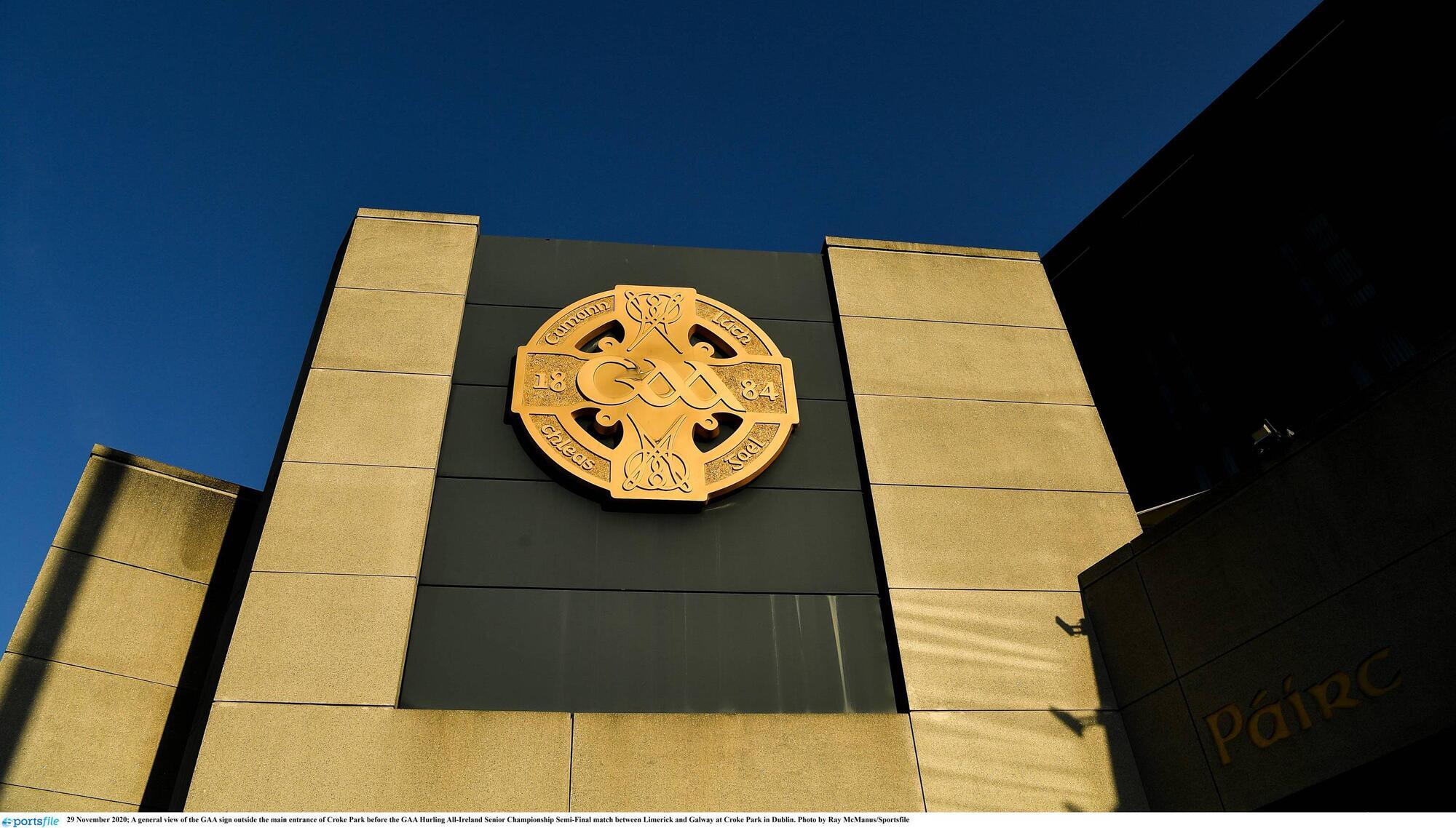
A general view of the GAA sign outside the main entrance of Croke Park. Photo by Ray McManus/Sportsfile

As good a place to start as any is with the words issued from Croke Park when news broke of the deal to hire rooms in the stadium to the Courts Service: “It is appropriate that this great national venue should be used as a vital support for the democratic functioning of the country, as together we work to recover from the past months of crisis.
"Courts play a vital role in maintaining access to justice, and law and order in any country.
"They give the opportunity for redress for victims as people are held to account for their actions. Croke Park is not unused to great adversarial battles, and provides a suitable arena to hold courts.
“The GAA welcomes the courts to Croke Park, and hope we can build on the relationship that has been established over the years by GAA clubs regularly hosting court sittings, when needed.”
Do the people who run the GAA actually believe this stuff? Do they believe that what they are doing here is supporting the democratic functioning of the country? Do they believe that what motivates this deal is a contribution to the recovery from the Covid crisis? Do they actually believe that because Croke Park is used to staging “great adversarial battles”, it now “provides a suitable arena to hold courts”?
Or is it just guff? And if it is, why do they feel the need to swaddle a commercial transaction in the language of noble intent?
So what exactly is this commercial transaction? It appears that the GAA is hiring rooms in Croke Park to the Courts Service for three months for a cost of €437,000. On top of that, the Courts Service will spend an estimated €302,000 on catering, security, and ICT costs.
For this price, three separate courts will sit in Croke Park’s conference facilities to a total of 200 sitting days across the three months.
It should be noted in passing that the state has a long tradition of paying enormous sums of money for the running of its courts. For example, it is estimated that by the time the new Criminal Courts of Justice at Parkgate Street at the entrance to the Phoenix Park pass into state ownership in 2035 they will most likely have cost more than €600 million for design, building, maintenance and support service. Inevitably, this is reported to be several hundred million euros more than previous estimates.
It must be remembered in all of this that it is the taxpayers of the country who are paying the money in respect of the Criminal Courts of Justice — and paying also for the hire of the conference rooms at Croke Park.
The immediate context of the payment in respect of the hire of those Croke Park conference rooms is, of course, that in the second half of 2020 the state gave the GAA some €15 million to run its All-Ireland hurling and football championships.
The GAA deserves huge credit for how those hurling and football championships were run off. For many people, the matches offered a great diversion in a bleak autumn and winter.
Ultimately, though, the money that made it possible was provided by the taxpayer.
Similarly, the GAA’s choice to run its 2021 inter-county programme of leagues and championships in the first half of this year will again put significant pressure on its finances.
The costs of running inter-county teams are huge and it is now apparent that any income from spectators will be hugely diminished in comparison to a normal year.
The GAA could have decided to run its inter-county competitions later in the year in the hope that more spectators could have attended.
It didn’t and that is its choice.
But it is a choice with consequences and it is one that begs straightforward questions: how will the 2021 inter-county costs be met? Will the GAA borrow the money, will it use reserves, or will it be back to the taxpayers to look for a subvention?
Either way, the state that underwrote the 2020 championship is now paying a lot of money to hire a facility from an association who will most likely be back looking for more money in 2021.
Is there not an obvious tension here?
Ultimately, this is all also a reminder of the extent to which the GAA is now dependent on commercial income to fund its basic operations. For the Croke Park Stadium accounts, it makes sense to maximise its income and that, of course, means squeezing every potential client who uses its conference facilities.
Similarly, Croke Park seeks to maximise all its sponsorship and other commercial deals. For example, in Christmas week last year the GAA announced a deal with the Chinese technology company Huawei “in respect of real-time data usage, artificial intelligence, augmented reality, virtual reality, to enhance the experience of fans and patrons of the stadium.”
This was presented with the hook that the plan was to develop Croke Park into one of the most technologically advanced “smart stadiums” in Europe.
It is not clear what any of this meant, but the bottom line here is the bottom line. And, in terms of the operation of a modern sporting organisation, there is a logic to that. Nobody can deny that the GAA needs a lot of money to function.
But where the logic comes unstuck is in the endeavour to cast everything as sitting snugly within the ambit of a “community-based amateur organisation” or some sort of “greater patriotic endeavour”.
And in the words that came from Croke Park to herald its new Courts deal, the logic became completely unstuck.
All of that being said, maybe the GAA will throw in a little piece of technological innovation to help soften the cost to the state. When the foreperson of a jury is asked to decide on the guilt of a defendant, instead of speaking they could simply press the Hawkeye buttons and out above the pitch, on the big screen, Tá or Níl could deliver the verdict. For just a minimal extra cost, of course.