The pension question most people never ask

'For most people, this is not about making dramatic changes. It is about asking better questions. What am I actually invested in? What has it delivered over time? What could I access instead?'
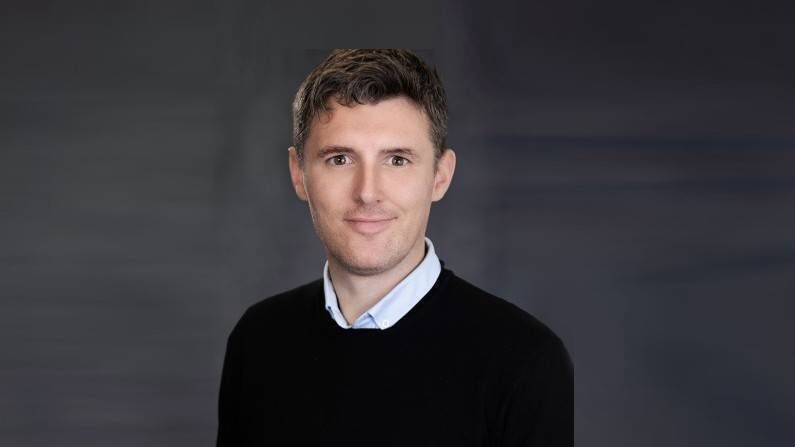
Conor O'Shaughnessy, CFP®, Elevate Financial, offers valuable advice for anyone considering their investment options
In part one I showed the gap that can exist between a limited pension structure and a globally diversified one.
If you remember the example, €100,000 growing at 7% versus 11% over time is the difference between roughly €761,000 and €2.3 million. This example is a simplified illustrative scenario; actual outcomes can vary significantly depending on timing, fees, and market conditions.
However, that is not a small gap. That is a completely different outcome. That gap is not merely theoretical. It has shown up historically across real market cycles. We have seen it through the dot-com crash, the financial crisis in 2008, the Covid crash in 2020, the inflation shock in 2022, and more recent volatility in 2025. Different causes. Same pattern. The question is whether the structure you are in allows you to benefit from that over time.
Most people are not in bad pensions. They are in limited ones. That might sound like a small distinction, but over time it makes a very real difference. I have this conversation with clients every week. The reaction is almost always the same. Nobody ever told me this.
If you have a former employer pension, the options available are usually somewhere between six and 12 funds. If you have never actively selected one, there is a strong chance you are sitting in the default option. That is the starting point.
When you left that job, you may have been told you can move your pension into a private structure, usually a Personal Retirement Bond. That might expand your options to 50 or 70 funds, which sounds like a big improvement.
And it is. But here is the part most people are never told. There are providers using that same structure that open the universe much further. Instead of a fixed list, you are suddenly dealing with thousands of investment options across global markets.
A key distinction when choosing a financial adviser is whether they are tied to a single provider or can access the wider market.
An independent adviser can access multiple providers across structures like PRSAs, Personal Retirement Bonds and UK pension transfers, rather than being limited to a single in-house range. Not every adviser uses that fully. But it is a good place to start.
You are no longer limited to a small set of funds managed domestically in Ireland. You can access global equity indices, ETFs, gold trackers, government bonds, infrastructure, and a much broader range of defensive assets. That means access to some of the largest asset managers in the world. BlackRock and Vanguard in the US. DWS in Germany. Institutions managing trillions across global markets for decades.
This does not mean your current fund is not investing globally. It means the team managing your money is likely sitting in Dublin, drawing from a smaller pool, with a shorter track record and less depth. In Ireland, only a handful of providers will give you direct access to these global managers. Most rely on in-house funds. Even where ETFs are available, they are often not the direct institutional versions, and performance gaps can exist even when tracking the same index. That distinction matters.
Not all limited ranges are equal. Some offer 25 funds but include direct BlackRock and Vanguard trackers. Others offer 70 funds but rely heavily on synthetic or in-house products. The difference is not the number of funds. It is the quality of what you can access if you are willing to take on the risk.
Think of it like this. You can choose from the best players in the world, or you can be limited to the League of Ireland. There is talent locally, but you are not drawing from the deepest pool available. Most pensions in Ireland are designed for simplicity and broad suitability rather than optimisation for every individual.
Let’s be clear on two things. What an ETF is, and what an index is. An ETF is simply a vehicle. It tracks whatever you choose it to track. An index represents a market.
For example, the DAX tracks Germany. The Nikkei tracks Japan. In Ireland, we have the ISEQ. It holds the 20 largest companies in Ireland. But if you are tracking 20 businesses in one small economy, you are not particularly diversified. That is why global indices are a different proposition.
The S&P 500 tracks 500 of the largest companies in the United States. The MSCI World tracks over 1,500 companies across developed markets. You are holding the market. These indices carry different risk characteristics, including higher equity exposure, currency fluctuations, and periods of significant volatility.
For every €100 invested in the S&P 500, your money is spread across hundreds of companies in proportion to their size. If Nvidia represents 5% of the index, roughly €5 of your €100 goes there. If Microsoft is 3%, that is €3. And that allocation is not static. If Nvidia rises in value, its weight in the index increases automatically. If it falls, its weight reduces. No one is making that decision. The market is doing it in real time.
Further down the index, you might hold 22c of Mastercard, 18c of Amgen, and small amounts in hundreds of other companies.
Compare that to a typical mutual fund. A manager might hold 40 to 60 stocks and decide how much to allocate to each. If Nvidia doubles, they must decide whether to increase, reduce, or hold. Your result depends on a smaller number of human decisions being right. With an active fund, you are buying an opinion of where the needle is. With an index, you are buying the haystack.
Over the last 50 years, the S&P 500 has delivered around 11.71% per year and the MSCI World around 10.45%, based on data from Curvo. Higher performing Irish multi-asset funds have delivered closer to 7% over similar long-term periods, and that figure may be generous. Although outcomes vary significantly depending on the fund, timeframe, and asset allocation. That gap, sustained over decades, is where the real cost may lie. All figures are gross returns before fees. Past performance is not a reliable indicator of future results. Actual returns will vary and depend on future market conditions.
So, the natural question becomes simple. How does what you are currently invested in compare to that, net of all fees? To make this concrete, consider a hypothetical example based on published fund data. A large employer pension fund in Ireland delivered 8.06% per year over the five years to February 2026. In 2022, it fell 12.92%. A model illustrative portfolio, for example 60% MSCI World, 15% bonds, 15% gold and 10% infrastructure, fell approximately 11.1% that year and delivered around 11.9% per year over the same five-year period. On a starting pot of €211,000, the difference between 8.06% and 11.9% per year over five years is the difference between approximately €312,000 and €370,000. That is roughly €58,000 on the same money over just five years. Over longer time periods, that gap can compound into hundreds of thousands.
Discretionary fund management is not something most people will encounter. But if you have a pension pot of €500,000 or more, it will likely come across your radar. I have sat in those meetings. The charts are impressive. The confidence is compelling. You are told a team is actively managing a portfolio of 60 to 70 stocks. Making live changes. Moving out ahead of downturns.
But in my view, the value of a good adviser is not constant activity. It is discipline and restraint. As Peter Lynch put it, more money has been lost preparing for corrections than in the corrections themselves. Some argue multi-asset funds provide a smoother ride that keeps investors from panic selling. In an adviser-led structure, that is the adviser's job. The fund does not need to do it.
I always come back to two questions.
Across any meaningful period, five years, 10 years, 1970 to 1975, 2008 to 2013, have you consistently beaten simply buying the S&P 500 or MSCI World with what is actually available in Ireland?
Not a sleight of hand with a selectively presented graph. Show me the fact sheet of the fund I will actually be invested in, side by side with the S&P 500 and MSCI World. This has grown at X over five, 10 and 20 years. This has grown at Y. Both net of fees. Trust, but verify. Ask to see the actual fact sheets, side by side.
And secondly, are you providing genuinely better downside protection than a simple mix of global equities and defensive assets?
In many cases, the honest answer to both is no. S&P Global’s SPIVA report shows that over 20 years, 95% of active funds fail to beat their benchmark after fees.
Charlie Munger once said only around 5% of managers consistently beat the market. He described charging high fees for consistent underperformance as a deep moral depravity. That is a strong statement and not one I apply universally. Complexity in investing often hides risk rather than reducing it. Simplicity, done well, is often the superior approach.
A portfolio can be built in very different ways depending on your goals.
Broad index exposure through the S&P 500, MSCI World or Nasdaq for growth. Emerging markets for additional growth. Infrastructure and energy ETFs for long-term real asset exposure. Bonds and short-term treasuries for stability. Gold and other non-correlating assets for hedging. Currency-hedged versions where appropriate. Each part doing one specific job. The thinking is deliberate. This does one job. That does another. Nothing is trying to do everything.
To make it concrete, consider two approaches at a similar risk level. The default approach might combine a domestic aggressive multi-asset fund at 60% with a domestic cautious fund at 40%. The design approach takes that same 60/40 allocation and builds it differently: global index exposure for growth, defensive assets for protection, additional diversification through infrastructure, energy or gold. Each component selected for a specific purpose. Same broad risk profile, very different construction, historically, very different outcomes.
So, three things are worth checking. Do you have access to global funds through direct exposure? Are you on a platform that gives you real choice? And does your adviser have the ability to implement it properly? That is the difference between default and design.
If you take away only one thing, it should be this. The structure you are in matters more than most people realise. Not just the fund you pick within it. The structure itself. Because that determines what you can access. And over time, that compounds into very different outcomes. For most people, this is not about making dramatic changes. It is about asking better questions. What am I actually invested in? What has it delivered over time? What could I access instead? And is the structure I am in helping or limiting that outcome?
Most people have never been shown the comparison properly. And the cost of that gap is not theoretical. It is measured in the life you live in retirement.
If any of this has raised questions about your own former employer pension, those questions are worth pursuing. The answers are usually simpler than people expect, and the difference they make rarely is.
To arrange a free introductory consultation with Conor O'Shaughnessy CFP, click here.
- This article is for educational and informational purposes only and does not constitute personalised financial advice. Past performance is not a reliable indicator of future results. All investments can fall as well as rise in value. You should seek independent financial advice tailored to your own personal circumstances before making any investment decision.
The value of your investment may go down as well as up. Past performance is not a reliable guide to future returns. You may get back less than you invest.