Navigating trade between the USA and Ireland in 2026 through supply chain partnerships
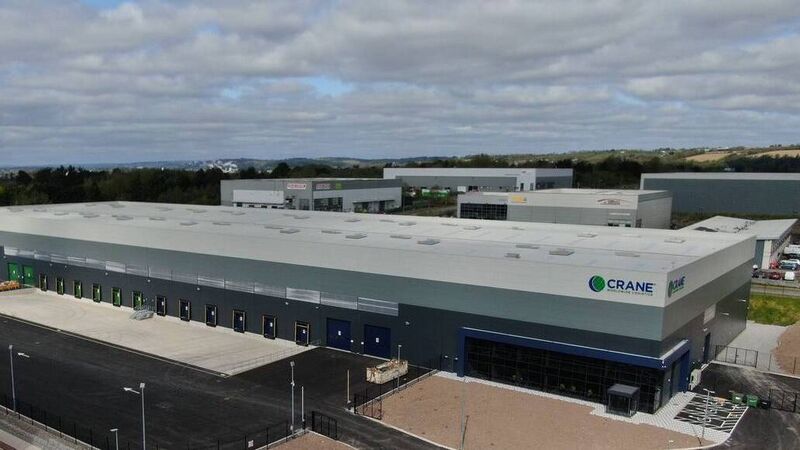
The Cork premises of Crane Worldwide Logistics Ireland, a logistics specialist with a key role to play in supporting the competitiveness of its client companies as they deal with global tariffs and new EU border and climate rules.
As tariffs remain a live policy tool and new EU border and climate rules take effect, Ireland-US and US-Ireland trade in 2026 is increasingly shaped by compliance speed, landed-cost clarity, and resilient freight options.
For shippers, that puts global logistics partners like Crane Worldwide Logistics Ireland at the center of day-to-day competitiveness.
The United States remains one of Ireland’s most important trading partners, with Irish exports to the US heavily weighted toward high-value chemical and pharmaceutical supply chains. Recent CSO releases continue to show that chemicals and related products account for the largest share of exports to the US in the latest monthly snapshots.
That concentration is exactly why policy shifts matter so much in 2026. Following last summer’s US-EU tariff framework, companies have a clearer “ceiling” for many EU-origin goods, but they still face real margin pressure when tariffs move from theory into contract pricing. And while the EU has proposed extending the suspension of a large retaliatory package against the US, the measures remain capable of being reactivated, keeping contingency planning firmly on the agenda.
At the same time, 2026 is a year of operational rule changes, not just politics. The EU’s Import Control System 2 (ICS2) is moving to the next phase, with the new v3 messaging applying from 3 February 2026 and older versions being decommissioned. For companies shipping into Ireland or transiting via EU gateways, pre-arrival data quality is no longer a back-office issue. It is a frontline service risk that can trigger holds, delays, and missed customer commitments.
Climate-linked regulation is also becoming a practical trade factor. The EU’s Carbon Border Adjustment Mechanism (CBAM) has moved into its definitive regime from 1 January 2026, creating new reporting and authorization expectations for importers of covered goods into Ireland and the wider EU.
Separately, the EU’s deforestation regulation has been postponed to 30 December 2026 for most operators, but many supply chains are already seeing earlier customer pressure to document origin, traceability, and due diligence.
When tariffs, compliance, and transport volatility rise together, the companies that win are often the ones that can pinpoint savings inside the customs line-item, not just the freight rate.
One lever that is gaining renewed attention is the US duty drawback, a program administered by U.S. Customs and Border Protection that allows the refund of certain duties, taxes, and fees paid on imported goods, where the goods (or qualifying products) are subsequently exported or destroyed under customs rules. In a year where tariff risk is being priced into procurement and inventory decisions, drawback can materially change the true landed cost of an Ireland-US trade flow.
This is where a modern logistics service provider is expected to do more than move freight. Crane Worldwide Logistics and Crane Ireland’s teams support customers with integrated services that match the 2026 environment: global freight forwarding (air, ocean, and multimodal), warehousing and distribution, customs brokerage support, and international trade advisory aligned to changing EU and US requirements.
That combination matters most for time-sensitive sectors such as pharma, MedTech, technology hardware, and high-value manufacturing, where speed, compliance, and visibility are inseparable.
Crane is also progressing with plans to introduce a new warehouse in Dublin, an expansion reflecting its commitment to strengthening regional logistics capabilities and meeting growing customer demand.
Early signals indicate the project is advancing steadily, with preparations now focused on finalizing operational details and coordinating launch activities across teams. While the full site profile will be announced later, stakeholders can expect a formal go-live date to be revealed soon, marking the next milestone in Crane Worldwide’s continuing investment in its Irish and European network.
As 2026 unfolds, the core question for Ireland-US trade is increasingly practical: can your supply chain keep pace with political change, border data rules, and carbon-related requirements, while still delivering cost and service performance?
For many organizations, the answer will depend on partnering with a global logistics and supply chain provider that can connect freight execution with trade compliance and measurable cost-out strategies.