More than meets the eye: How Bausch + Lomb, Waterford is shaping the future of contact lenses
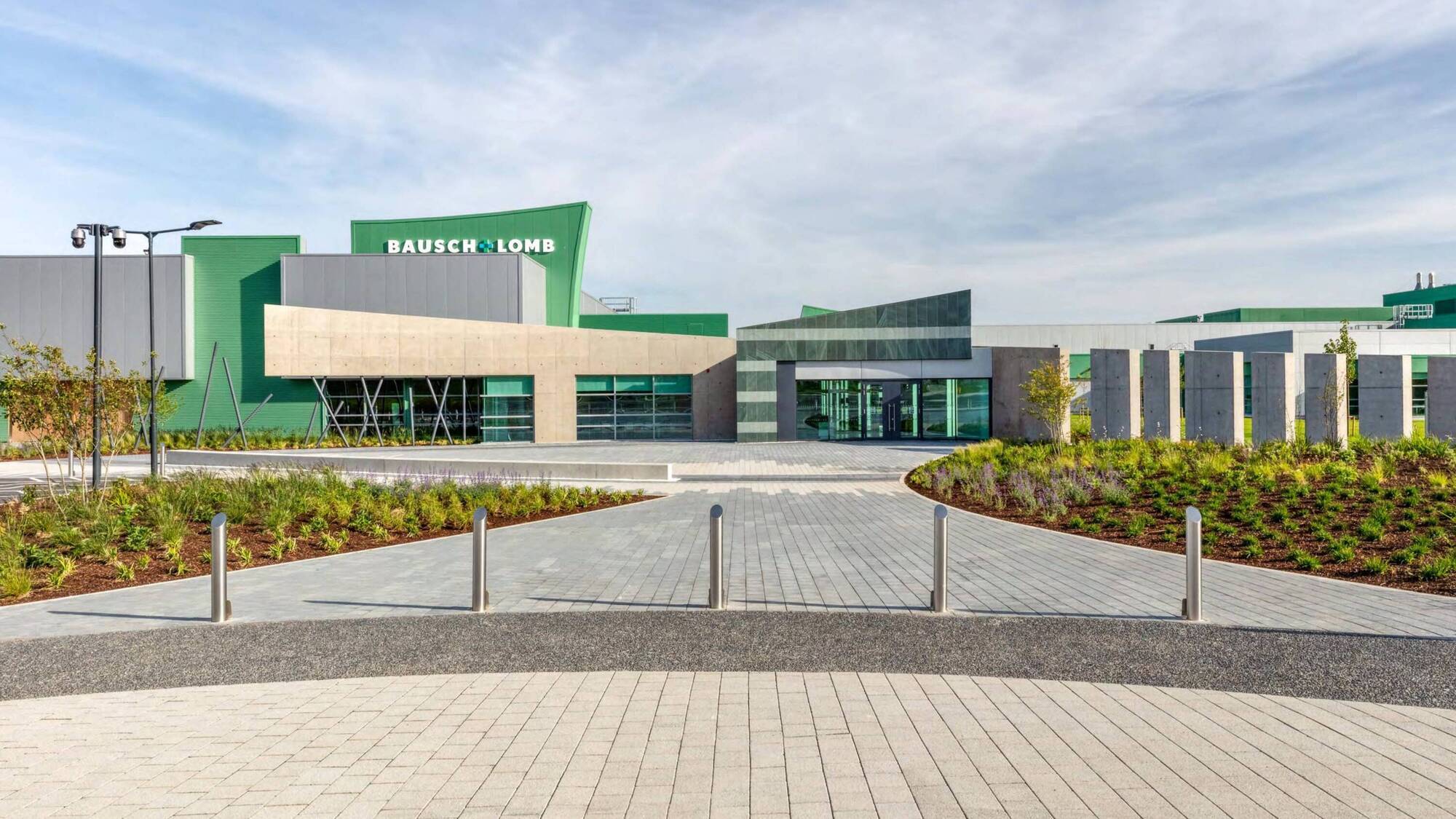
Contact lenses have quietly evolved into some of the most sophisticated medical devices manufactured at scale today. Much of that evolution is happening not in Silicon Valley or Boston, but in the South-East of Ireland at How Bausch + Lomb, Waterford.
While contact lenses may appear unchanged, they have evolved into highly sophisticated medical devices. At its Waterford facility, Bausch + Lomb is developing the global platforms that will define the next generation of vision care innovation.
At first glance, contact lenses can appear to be a mature technology. Their size and shape have remained largely unchanged for decades, constrained by the anatomy of the eye and the fundamentals of optics. It would be easy to assume that innovation in this space has slowed. The reality could not be more different.
Beneath the surface, contact lenses have quietly evolved into some of the most sophisticated medical devices manufactured at scale today — driven by advances in materials science, precision engineering, automation and data-led development. Much of that evolution is happening not in Silicon Valley or Boston, but in the South-East of Ireland.
In Waterford, Bausch + Lomb operates one of the largest and most technologically advanced contact lens manufacturing and R&D campuses in the world.
What makes the site distinctive is not simply its scale, but the fact that global product platforms are conceived, developed, industrialised and manufactured under one roof. From early-stage research through global distribution, Waterford plays a central role in shaping the products worn by millions of people every day. This end-to-end capability is not just a point of pride; it is what anchors long-term investment, high-value roles and future growth in Waterford.

“From the outside, a contact lens looks simple,” according to Kevin Fahy, Director of Research & Development at the Waterford facility. “But behind that simplicity is an extraordinary level of materials science, precision engineering and process control. Many of the platforms that will define the next decade of our contact lens portfolio are being developed here in Waterford, with the explicit intent of being manufactured sustainably and at scale.”
A modern contact lens is a finely balanced system. Optical performance must be delivered with micron-level precision, while maintaining comfort, stability, oxygen delivery and biocompatibility on a delicate biological surface. The materials are soft, fluid-sensitive and responsive to their environment, making them some of the most challenging optical products to design, measure and manufacture consistently.
Over the past two decades, progress has come through incremental but meaningful advances — improved polymers, tighter process control, smarter automation and advanced metrology. These changes rarely make headlines, but they are what enable reliable vision correction at global scale.
That depth of capability matters. It is why Waterford has grown into a true innovation hub, and also why new product development has become the lifeblood of the site’s long-term success.
For Bausch + Lomb, innovation is not an abstract concept — it is a practical necessity. In vision care, sustained growth depends on a steady rhythm of new product introductions that address real unmet needs for patients and eye care professionals.
Waterford-based R&D platforms have underpinned much of the site’s growth over the past decade, developed as part of Bausch + Lomb’s global R&D network and building on decades of expertise across the organisation, including long-established teams in Rochester, New York. Products such as Biotrue® ONEday and Infuse did not emerge by accident; they were the result of long-term investment in materials expertise, optical design and manufacturing capability.
“What makes Waterford different is that innovation here is not something that happens in isolation from manufacturing,” says Mark Hennessy, vice president of Operations at Bausch + Lomb Waterford. “Our role is to take highly complex ideas coming out of R&D and turn them into reliable, high-quality products at global scale”.
Crucially, these products are not theoretical. They are designed from the outset to be manufacturable at scale on existing production lines in Waterford. That discipline — innovating within real-world manufacturing constraints — allows breakthrough products to reach the market faster, with lower environmental impact and stronger long-term sustainability.
After more than 25 years without a fundamental breakthrough in lens materials, the industry is now entering a new phase. One example is the development of bioactive contact lens materials that are designed not just to correct vision, but to actively interact with the biology of the eye.
By integrating bioengineered molecules directly into the structure of the lens material, it becomes possible to deliver sustained hydration, improved tear-film stability and enhanced comfort throughout the day — addressing issues experienced by a large proportion of lens wearers. Achieving this without compromising oxygen delivery, optical performance, or manufacturability is a significant scientific and engineering challenge, and one that has been tackled through close collaboration between R&D and manufacturing teams in Waterford.

Alongside this, Waterford-based platforms are supporting the development of next-generation daily disposable lenses, and myopia management lenses designed specifically for children. Each targets a distinct and growing need — affordability and access, long-term comfort and early intervention for one of the fastest-growing eye-health challenges globally.
Innovation today must also be responsible. The Waterford site has embedded sustainability into both product design and manufacturing operations. From energy generation and waste reduction to material efficiency and automation, the goal is to deliver high-quality medical devices with the lowest possible environmental footprint.
This approach reflects a broader truth about regional investment. When advanced manufacturing, R&D and sustainability are developed together, they reinforce each other. Skills deepen, supply chains strengthen and regions become more resilient and attractive for long-term investment.
Waterford is Ireland’s oldest city, but its role in global eye health is thoroughly modern. The evolution of the site mirrors a wider opportunity for regional Ireland: to compete internationally not on cost, but on capability, expertise and innovation.
As global demand for better vision care continues to grow, so too does the importance of locations that can combine deep technical knowledge with scalable manufacturing. The platforms being developed in Waterford today will shape products launched years from now, worn by patients across the world.
For the teams in Waterford, this work is not about following trends, but about setting them — with the responsibility that comes from shaping products relied on by millions worldwide.
That is the real story behind contact lenses that “look the same.” Quietly, and with precision, the South-East of Ireland is helping to define the next chapter of global eye-health innovation.