Aiming for a world class employee experience

Linda O’Brien who leads Gas Networks Ireland’s employee workplace experience strategy, which focuses on empowering managers, enhancing experiences and elevating connection.
Gas Networks Ireland is redefining its employee experience as a strategic enabler of business performance, culture and long-term organisational resilience.
That effort is being led by Linda O’Brien, who was appointed to the new role of workplace experience manager six months ago.
Her role is to put the supports in place to help the organisation continue the transformation from a traditional utility into a modern, people-centred organisation that actively empowers its workforce to thrive.
“Together with my team and the wider people function, we’re working to create an environment that allows employees to feel supported, connected and valued,” she says.
This is inextricably linked with the organisation’s strategy. “People underpin strategy,” she explains.
“A great strategy is only as strong as the people on the ground who bring it to life.” Gas Networks Ireland operates one of the most modern gas networks in Europe, supplying over 725,000 homes and businesses.
As the organisation works towards a repurposed and fully decarbonised gas network, its people, their expertise and engagement are critical to delivering that long-term transformation.
The organisation’s refreshed corporate strategy identifies two core enablers – ‘maintaining robust financials’ and ‘empowering its people’. As part of this, a comprehensive workplace experience strategy has been introduced, which is built on three core elements – empowering managers, enhancing experiences and elevating connection.
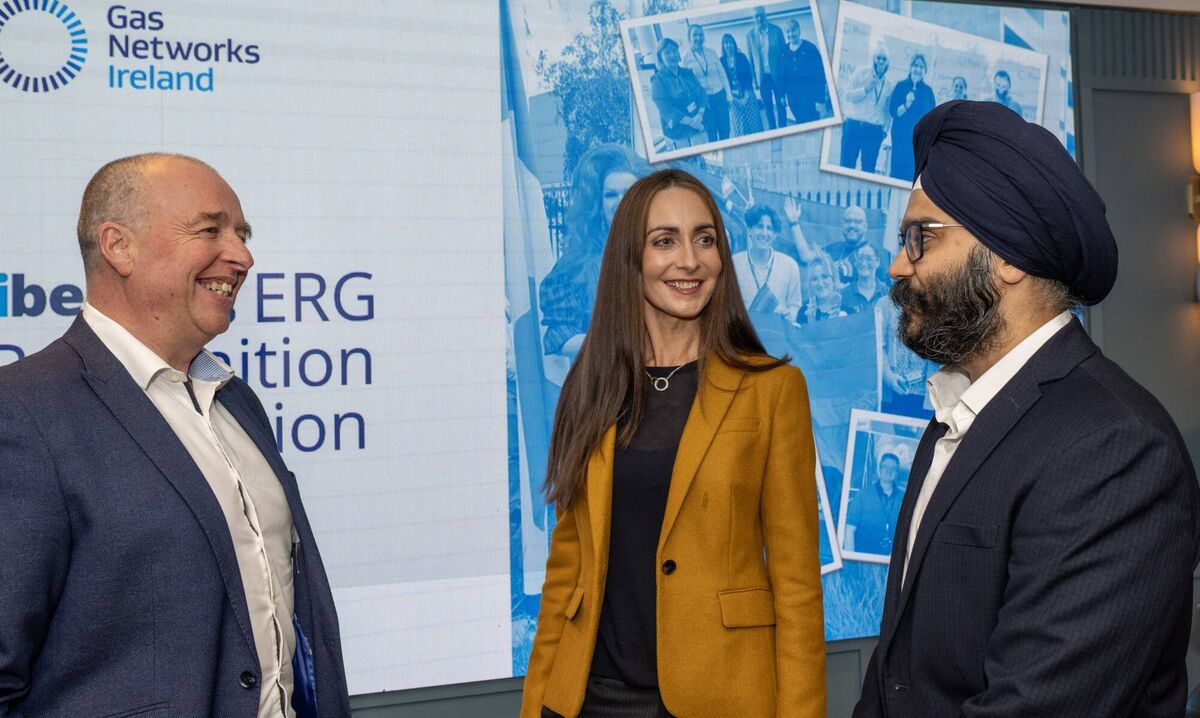
Empowering managers involves equipping leaders with the right tools, training and forums to support their teams, O’Brien explains.
“We enhance experiences through the continuous improvement of our processes such as recruitment, onboarding, induction, feedback, recognition, performance and retirement processes. And we elevate connection by strengthening collaboration, embedding company values and strategy and fostering community through internal communications, engagement and events.”
The workplace experience strategy is a fundamental element of the overall corporate strategy, she adds.
“Some elements of the employee experience can seem less tangible at first glance, but they drive measurable outcomes, including engagement, productivity, retention and culture. My job is to translate that into practical actions that support our people and enable the organisation to deliver.
"Put simply, strategy is what we are going to do as an organisation, our culture, values and behaviours determine how we are going to do it. That’s where our people truly make a difference.”
She cites the importance of connection as an example. “At a practical level, we are working to connect employees to the purpose of the organisation, our licence to operate, where we’re going, how we’re going to get there and how they all contribute to that.”
Empowering managers is equally important. “This isn’t about senior managers,” she notes.
“It’s about leadership at all levels and giving them the tools to be able to support team members and have career conversations with them. People Managers are the key to maintaining sustainable engagement with the workforce.”
Empowering people to advance their own careers is also critically important.
“We invest in our people so they can create their own learning and career development plans,” says O’Brien.
“We offer a suite of learning and development options for employees to select from to enhance their skills. Together with the work we do on workforce planning, this helps to future-proof the organisation by enabling us to have the right skills, in the right place, at the right time.
"Our responsibility is to give people the tools to develop their careers from the moment they come in the door to the day they leave us.”
In this regard, the organisation is making some significant improvements to the onboarding and early career experience.
“This includes a redesigned onboarding journey from pre-boarding and through the 90-day integration period,” she says.
“We have also developed clear learning, mentoring and progression frameworks for new hires.”
Gas Networks Ireland is also investing in the future workforce through strengthened graduate, internship, and apprenticeship programmes and partnerships with third-level institutions.
“Our recent pilot programme with the UCC Accessibility Office, the UCC DS EmployAbility programme, is a strong example,” says O’Brien.
The programme provides work placements for students with disabilities through tailored supports, structured mentoring, and an accessible onboarding experience.
The benefits of the programme are far-reaching; both supporting the students in their transition to the working environment and equipping our managers to build a disability-inclusive workplace.
“Feedback from the pilot was hugely positive, and insights from the programme are now feeding back directly into wider improvements across our onboarding processes and early-career pathways. We will look to expand the programme in the coming year,” O’Brien adds.
The workplace experience strategy is supported by the Gas Networks Ireland engagement and culture programme.
This ensures that each employee is aware of the organisation’s vision, strategy, and operational performance and the part that each individual plays to deliver them.
“Culture provides the guiderails in how everyone delivers,” says O’Brien.
“Our values and behaviours are at the core of our culture. They are stitched into key people processes such as recruitment, performance and recognition. Our behaviours focus on delivery, accountability, empowerment, learning, innovation, respect and inclusivity.”
“This doesn’t mean telling people what to do or how these should think, it simply provides a steer on how we deliver and show up each day,” says O’Brien.
“If people are going for interviews for new roles within Gas Networks Ireland, they will be asked about the values and behaviours. When it comes to performance reviews, employees have to demonstrate how they applied those values and behaviours in their role. They are also reflected in our employee recognition programmes.”
Diversity, equity and inclusion are also at the core of the culture. “All the research shows that the more diverse the workforce, the more successful a company will be,” she explains.
“We now have five generations in our workforce for the first time. We also have a growing percentage of our workforce from different cultural backgrounds and with different abilities. We have to make sure the experience is inclusive and equitable for everyone.
"This does make things more challenging in one sense as experiences need to become more tailored, but it’s worth it. We have to address different issues for different audiences within our population and perhaps put assistive technology in place.
"Some employees might need day-to-day supports. But that is just part of having a rich and diverse workforce.”
Gender balance in the traditionally male-dominated energy utility sector is another issue being addressed.
“At present, one third of our workforce is female,” she notes.
“We have a female development programme, over 100 of our female employees have participated, with 43 per cent of those having since progressed to new opportunities in the organisation.
"We are also taking steps to increase the representation of women in senior leadership roles and are already seeing greater numbers. Some of this work begins long before people enter the job market through our corporate social responsibility (CSR) efforts and the work we are doing with schools on early talent programmes.”
Gas Networks Ireland has six employee resource groups focusing on gender, ethnicity and culture, LGBTQI+, neurodiversity and ability, family and inter-generational.
“These groups have made great gains in raising awareness across the organisation and have contributed the development of new policies in areas like menopause support and holiday swaps. When a group comes up with what looks like a good idea, we pilot it, and if it works, we make it part of business as usual in our suite of policies.
"It’s about listening to the groups and turning insights into action. It’s great to have this structure where people feel comfortable in coming forward to say that we need a new policy in an area like menopause.”
Diversity can bring its own challenges. “We have people in the organisation who have worked here since they left school at 16. About a third of our workforce will retire in the next decade.
"That’s a challenge for the organisation, but we have good succession plans in place, and the people moving into those roles will be more than capable. It’s about identifying and upskilling the people to take on the roles to ensure we fill knowledge and experience gaps.”
Employee feedback is central to the workplace experience strategy.
“This is really important to us. We are a big enough organisation that issues can arise that we may not hear about. We listen informally through the manager network, and we also have representatives around the business who gather feedback. We conduct formal employee engagement surveys as well.
"These anonymous surveys are a very sophisticated way of measuring sentiment and exploring how it might differ across different parts of the organisation.
"This provides an opportunity to put in place tailored interventions for a particular team or function. We act on the insights gained to ensure we are delivering a world-class employee experience so our people can deliver for Ireland.”
For more information, visit HERE.