GAA aiming to help rural clubs by allowing players to line out for two teams
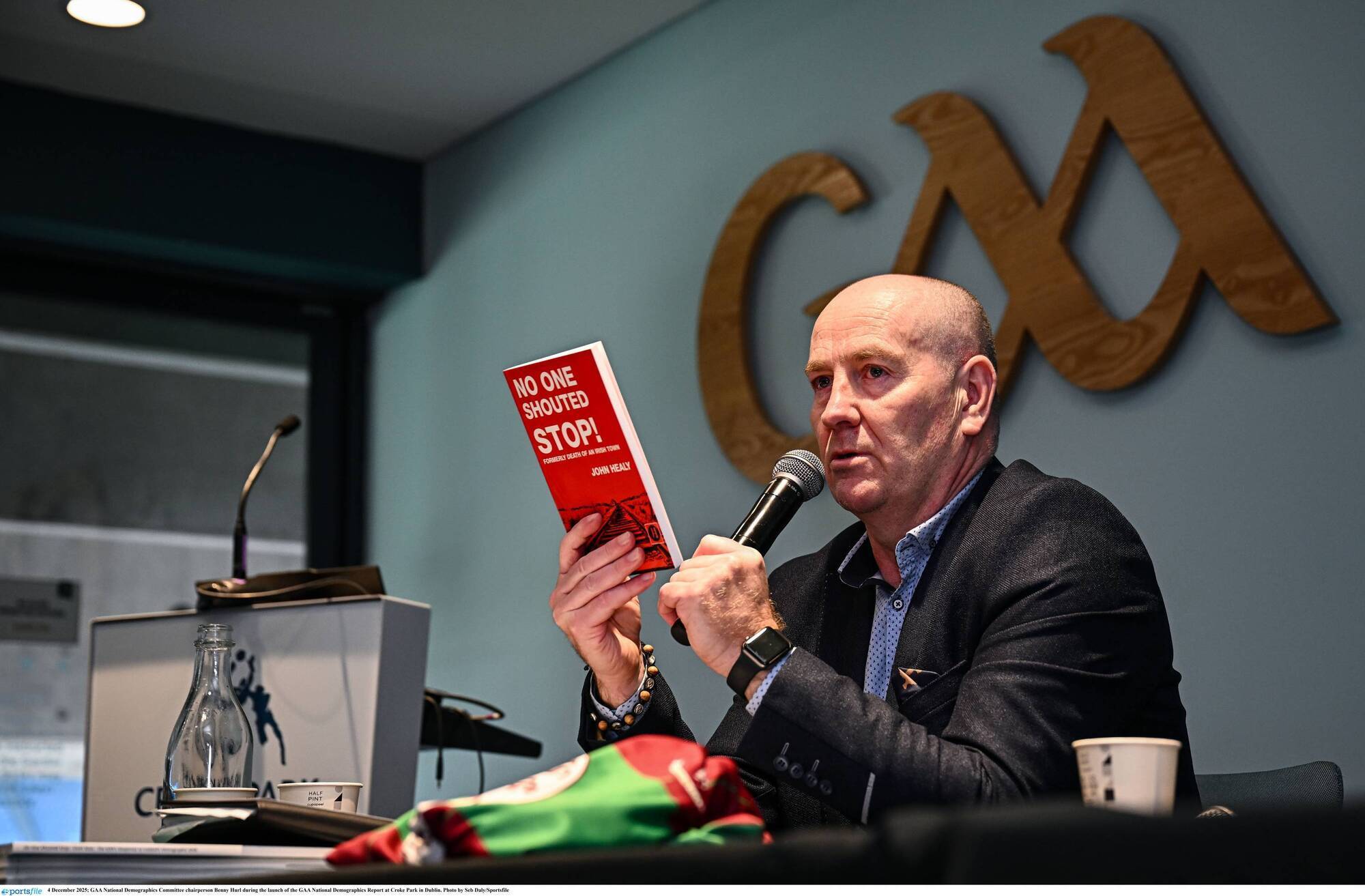
The GAA's demographics committee is chaired by Benny Hurl.
The GAA are to consider allowing players line out for two clubs as a means of assisting demographically challenged units on islands and other rural areas.
Last Saturday, Central Council approved two motions put forward by the national demographics committee that will go forward to Annual Congress in February.
One of the recommendations enables players to line out for their island club in championship fare, providing it is their first club, as well as their current club. Under strict conditions, the other motion allows non-member players to line out for a demographically struggling club as well as their own.
Clubs will be able to apply for an annual island permit whereby one such as Valentia Young Islanders or Bere Island can call on up to three players who have since switched to another club.
If there is a clash of fixtures with their current club that outfit takes precedent. The player must receive the special status by either their provincial body or Central Council. An island club will have to be recommended by its respective county committee for approval by its provincial council.
Permission to utilise the rule is done on an annual basis and the deadline for applications is March 31. The club may only avail of this measure where its highest graded adult team competes below senior championship level.
An island may qualify whether it is or isn’t connected to the mainland by a bridge or a causeway and an island club is defined as one that serves the resident community in one or more islands as designated by their provincial council following county recommendation.
Valentia Young Islanders, home of the great Mick O’Connell, have struggled to field teams in recent years. In 2013 and again in ’21, they were forced to withdraw from adult competition. This year, they conceded one of their 11 Division 5 games, lost another eight and were relegated.
Bere Island haven’t had adult representation in the county championship since 2016 but have participated in the local Beara Junior C competition as well as under-age competitions.
The Benny Hurl-chaired committee are also recommending demographically challenged clubs, pending county and provincial approval, be allowed to use a maximum of three non-member players. Those players would remain members of their clubs but registered as players with both clubs. Similar to the island club permit, the players would apply for the dual status on an annual basis.
The conditions for such assistance are stringent. The club will have had to suffer a sustained shortage of eligible players to the point that their participation in competition is threatened. An injury list, poor results or a single difficult fixture will not be sufficient to qualify to call on the players.
The county committee would not be obliged to approve requests from clubs to field the players who are affiliated to other units. The option is there if they believe there is a case for a club to receive additional support.
The two new motions from the demographics committee come on the back of two that were passed by Annual Congress last February. The first of them related to the definition of a club, which had previously been the ability to field an adult team in a senior, intermediate or junior championship.
An exception was inserted to the rule: “To cater for the ever-changing Demographics, in Rural and Urban areas, a County Committee may give club status to a unit that complies with Central Council Approved Policy.
The second empowered counties’ competitions control committee to sanction 12-a-side games to reflect the difficulties faced by small, rural clubs. Previously, the minimal number had been 13.
The motions were born from the national demographics committee’s striking report published last December, “No One Shouted Stop – Until Now” The group are also considering the expansion of the parent rule. The GAA Official Guide currently states a player can line out for a club if either of their parents were at the time of his birth a permanent resident in the present catchment area of that unit.
A player who had either parent living in Dublin at the time of his birth can play for the club of that parent providing it was their first club. County bye-laws can also determine cases for immediate family club connections.

BLACK FRIDAY
Already a subscriber? Sign in