Bookmark this guide to Dublin's literary hot spots
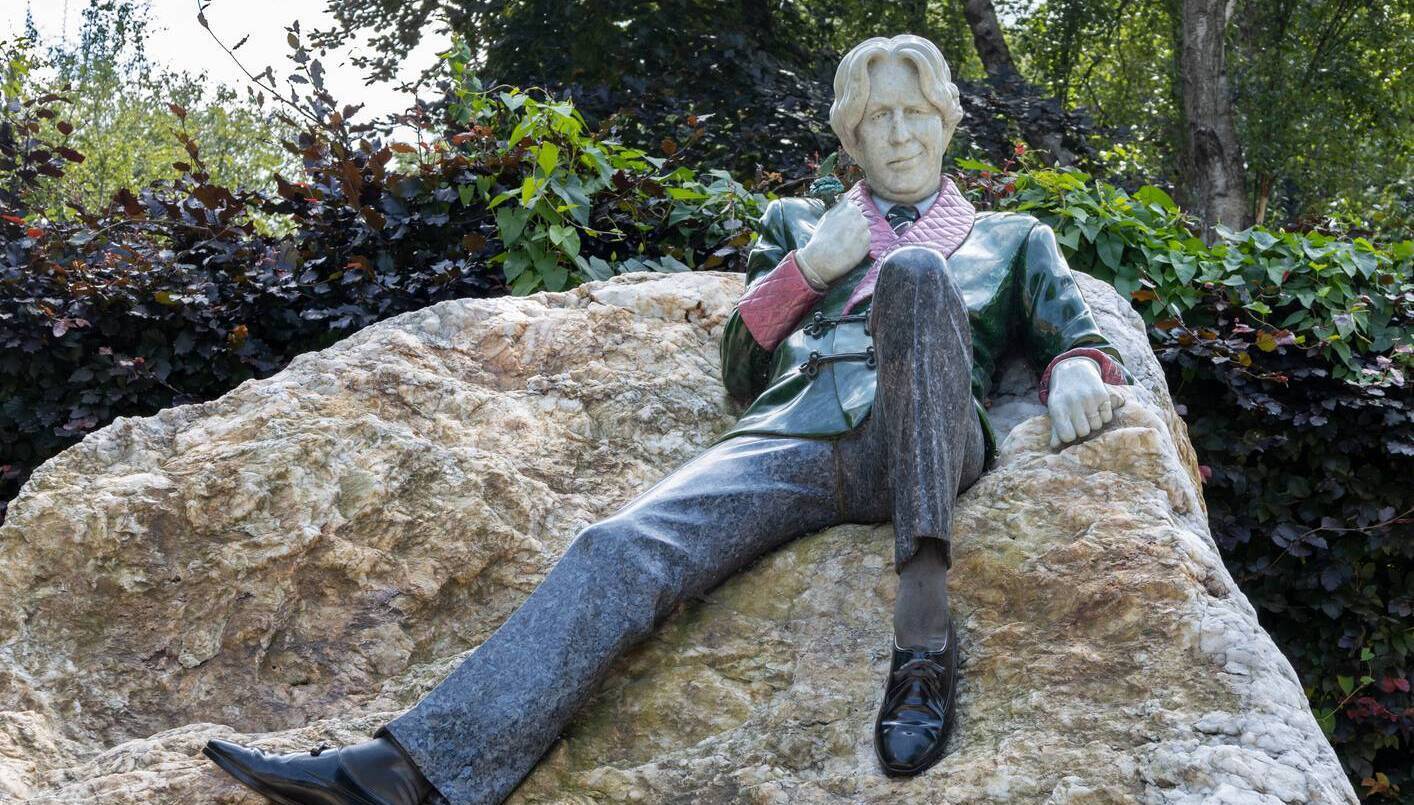
The Oscar Wilde Memorial Sculpture, one of three commemorating the Irish Poet and Playwright at Merrion Square Park in Dublin. The stone sculpture was created by Danny Osborne in 1997.
This cheeky, irreverent verse – that I overheard at a cosy pub in Dublin – has stayed with me, years after my visit to the city.
The sentences above clearly cannot pass for literature, in any sense of the term, and yet they introduced me to the Nobel laureate in a way that no book ever could. Let me explain: Decades ago, as a student of English Literature in India, I had studied some of Yeats’ work.
I had a hazy recollection of his changing political stand, and his unrequited, tragic love story. Yet, despite it all, Yeats remained a distant, towering figure in my mind, discussed only in formal academic language. To hear this casual rhyme, over a few pints of Guinness, in the city where he had lived, instantly bridged the gap from my student days, making me see Yeats as a literary giant and a fallible human, all at once.
Apart from this, the doggerel also showed me that in Dublin, the stories of luminaries go well beyond the museums, sometimes walking right into a bar. The city allowed me a chance to really get to know the literary greats, in settings one would least expect.
I, for one, never thought I’d see Oscar Wilde lounging lazily in Merrion Square Park, while sporting a deep green jacket with a bright pink collar. The statue of the author of The Happy Prince is made of polished granite and colourful semi-precious stones. Unlike the effigy in his fairy tale, this sculpture isn’t on a pedestal.
Instead, Wilde is captured in a highly approachable pose, sprawled across a boulder, relaxing under a canopy of lush green trees. But look closer at the side profile and you’ll see Wilde looking joyous and smiling on one side, but sombre and almost disillusioned on the other. Turns out that the sculptor, Danny Osborne, intended to humanise the author, and capture his dual nature.
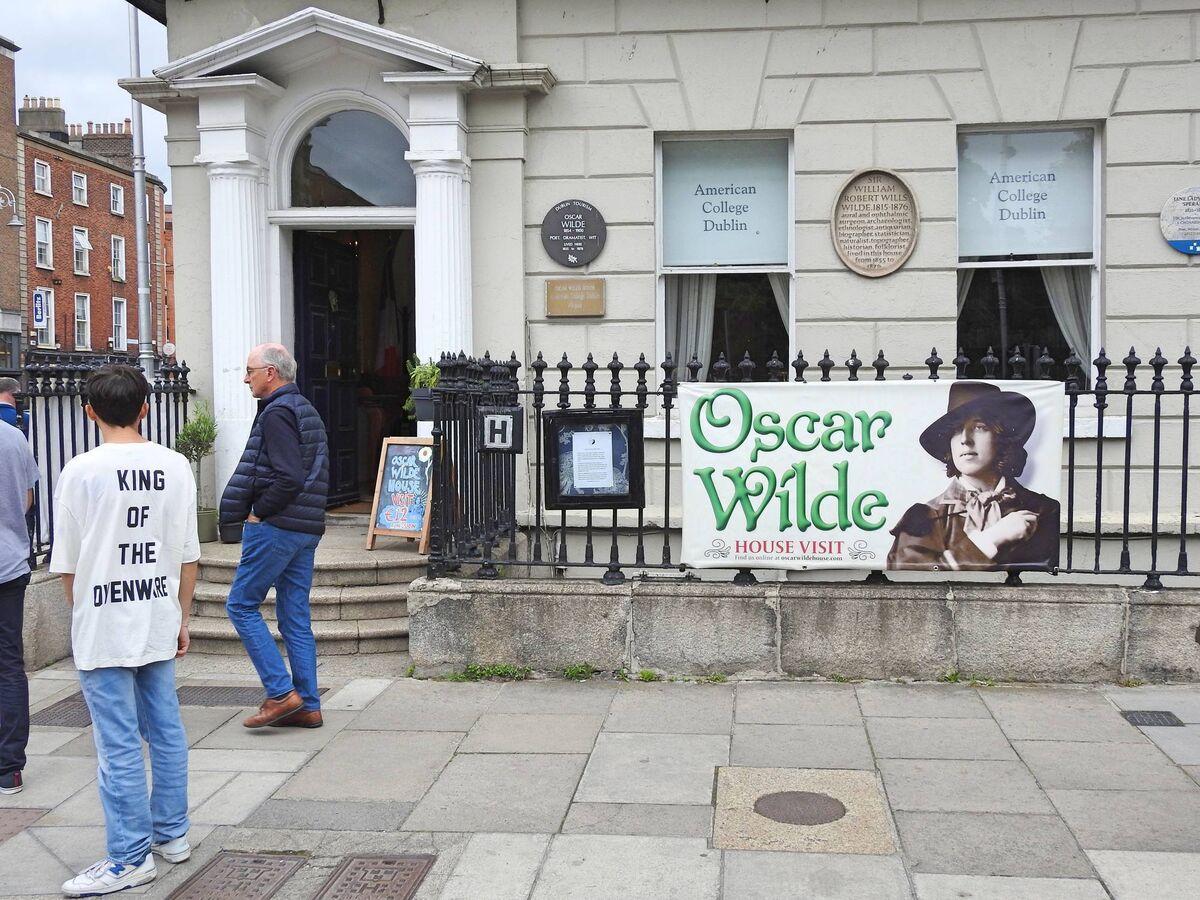
The statue is flanked by two other works: the first is a bronze statue of Wilde’s wife, Constance, when pregnant, and the second is an interpretation of Dionysus, the Greek God who represents the duality of life itself. This particular park was chosen as it directly overlooks Wilde’s boyhood home.
I walk into his grand Georgian townhouse and catch a rare glimpse of insight to Wilde’s formative years. His former abode is now part of the American College Dublin, but is open to the public. As I tour the historic house, I recollect one of my favourite quotes by Oscar Wilde, which centers on individuality: “Most people are other people. Their thoughts are someone else's opinions, their lives a mimicry, their passions a quotation.”
His words seem truer today than when they were first uttered. With continuous exposure to rage tweets, satirical memes (which trend right before election time), a continuous stream of Instagram stories and posts, how much of what we think is actually our own thought, versus subtle brain-washing from social media. And can we ever make that distinction?
Ironically, did Oscar Wilde – who grew up in this home where his fiery, non-conformist, Irish nationalist mother regularly hosted intellectual salons – ever manage to make that distinction himself? Were his rebellious views largely an echo of his mother's thoughts? Or did his early exposure to those salons train him to create and guard his unique identity? A visit to the Wilde family home leaves me with many questions. Perhaps that’s exactly what Wilde would have wanted.
As I walk the city streets, interspersed with Georgian squares dotted with red-brick townhouses, I bump into another author; one who I’ve come across many times in India. A bronze bust of Rabindranath Tagore sits snugly within St Stephen’s Green. Noticing my surprised expression, a chatty local at the park asks, “From India?” He then adds context to the statue, with deadpan humour, saying, “We’re great fans of the British too.”
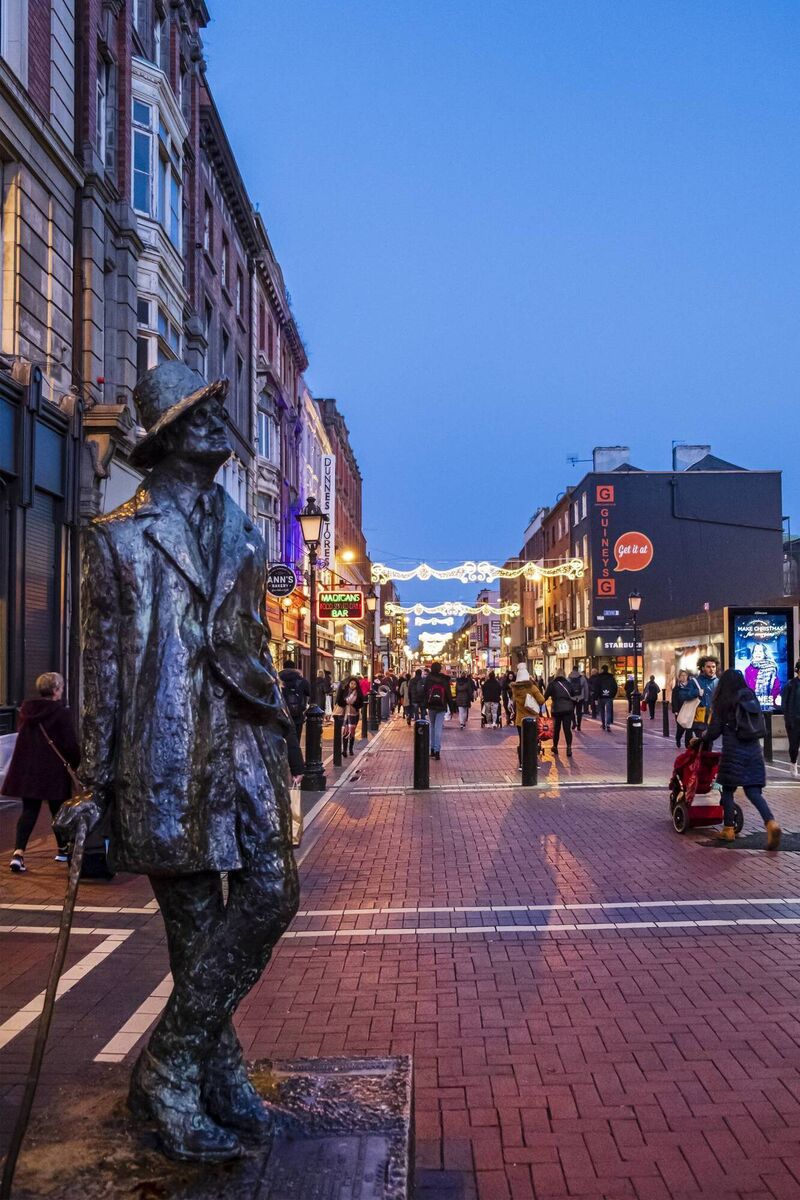
Some historians believe that the British used Ireland as a blueprint of sorts for imperialism in India. It is also a known fact that Indian nationalist Vithalbhai Patel held talks with Éamon de Valera. He eventually met with activists such as Maud Gonne and Molly Woods, who helped create the Indian-Irish Independence League.
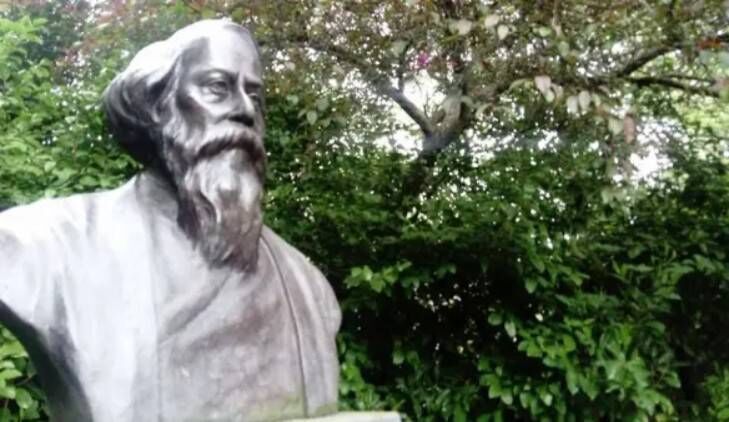
While Tagore wasn’t a freedom fighter in the traditional sense, he publicly supported the freedom struggle as an artist and an intellectual. It was these anti-imperial ideals that perhaps cemented the bond between Tagore and Yeats. The friendship between the two authors resulted in Yeats writing the introduction to Tagore’s most lauded work when it was translated to English.
Tagore’s collection of poetry, Gitanjali, focuses on themes of spirituality, the human soul and man’s relationship with the divine. It was originally published in Bengali in 1910, with an English translation published in 1912. It was this masterpiece that helped Tagore win the Nobel prize in 1913.
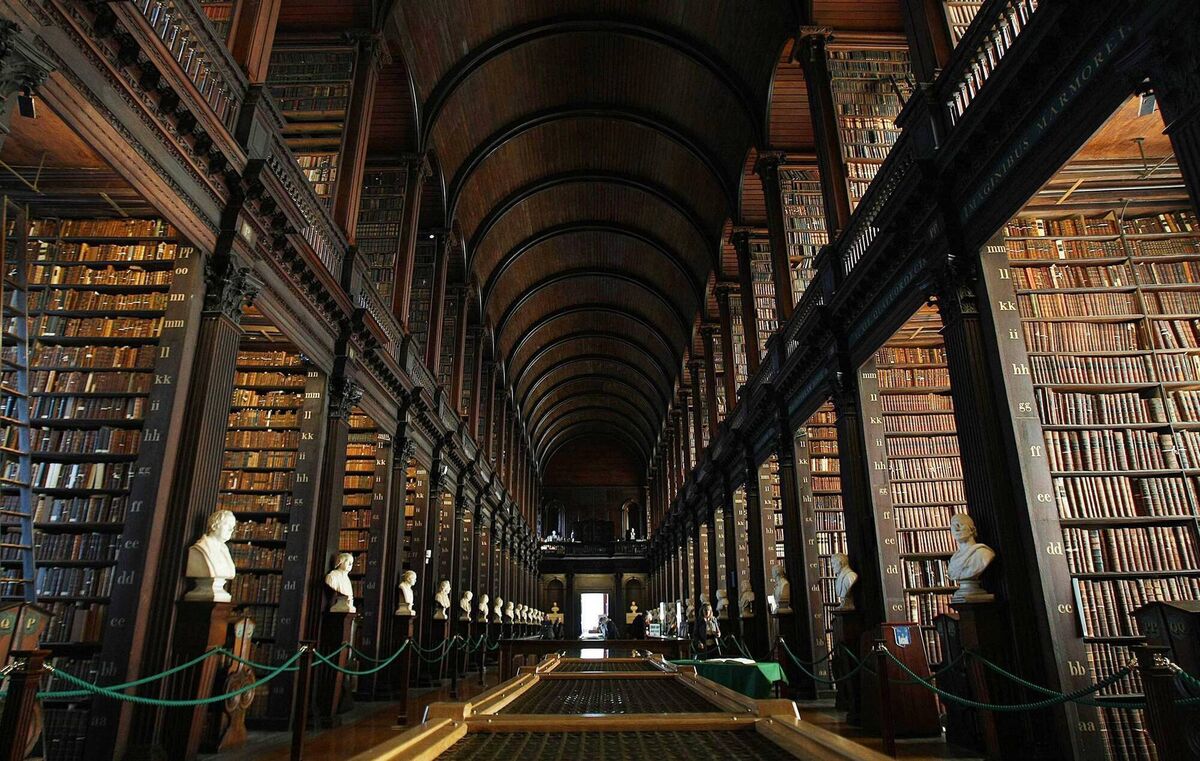
When it comes to literary greats, no tour of Dublin is complete without a visit to Trinity Library. Everyone knows of Trinity’s distinguished alumni – Bram Stoker, Jonathan Swift, Oscar Wilde, Samuel Beckett – among others. But to set foot inside the gorgeous old library is surreal. I visited prior to the planned conservation and redevelopment project and the Long Room stole the show. The Corinthian pillars stretched high above and merged into the arched wooden ceiling, while the sun's rays streamed in through the tall windows lighting up the old treasured books. The architecture itself inspires poetry.
Currently, due to the conservation project, many of the books have been removed, yet the Book of Kells continues to be on display. A digital exhibit, next to the Old Library, allows visitors to step into the reimagined Long Room and experience both the past and future of the library.
For a meal, I head to a restaurant that’s also a bookstore. The Winding Stair is a charming independent bookshop with a restaurant located atop it that offers fantastic views of the Liffey. An 18th-century staircase took me from the store to the eatery.
While chatting with my server, I learned that this neighbourhood also featured in Ulysses. And that’s when I finally admitted it out loud – I have never finished the classic. For a book that centres on one day in the life of Leopold Bloom, it’s unreasonably hefty. As I made this confession to my server, he nodded in agreement.
Then, speaking in riddles, he informed me that I could finally get to the end if I only headed to the Little Museum of Dublin. He wasn’t wrong. There I found an early edition of Ulysses on display. And it was opened to the last page. “Because nobody has ever completed the book,” informed Adam, my guide at the museum.
The museum, which sits within a historic Georgian home, is a collection of eclectic treasures, many of which are donations from everyday Dubliners. I find everything from a facsimile of James Joyce’s death mask, to half-empty bottles of old Irish whiskey. Over repeated visits to Dublin, I’ve made my way to this quirky museum because no two visits are the same, thanks to the generosity of the Irish, who continually donate artefacts. It is in this museum that I know that the spirit of the seanchaí continues to thrive in Ireland.
My literary adventure comes full circle as I head to Davy Byrne's, a vibrant, Art Deco infused pub which is also immortalised in Ulysses. As I look around me, I realise that while I may not have completed a single reading of the book, I perhaps know it in a way that few readers do, thanks to Dublin.