Great greenways of Ireland
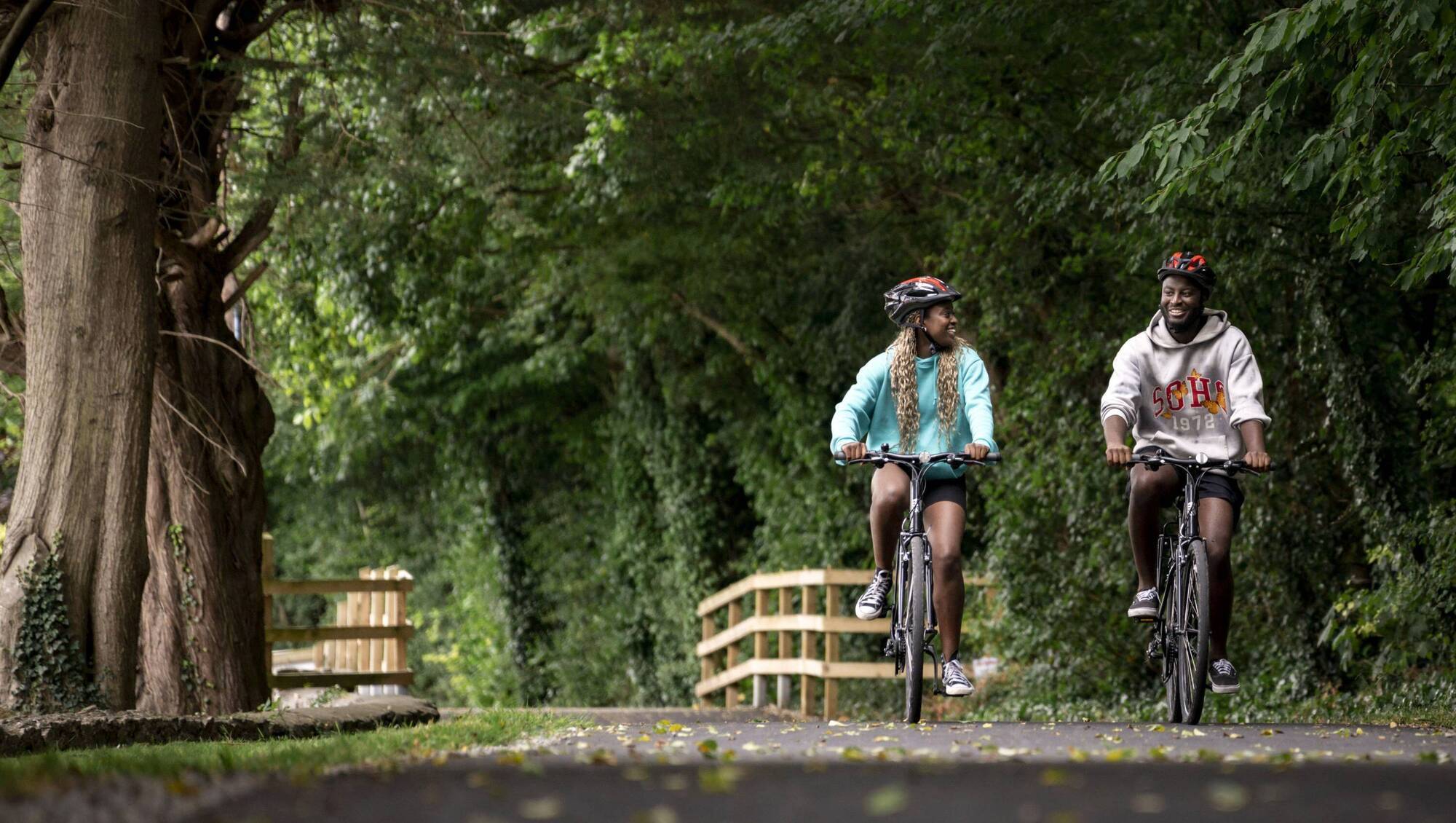
Siblings Efua and Kwame Ware enjoying a day out on Limerick Greenway, with a daily shuttle bus from 12-4pm, between Rathkeale, Newcastle West and Abbeyfeale.
East Cork tends to go under the radar but its many attractions have never been more accessible, with the opening of this 23km walking and cycling off-road route connecting the towns and villages of Midleton, Mogeely, Killeagh and Youghal. You can bring your own bike or there are many rental options available.
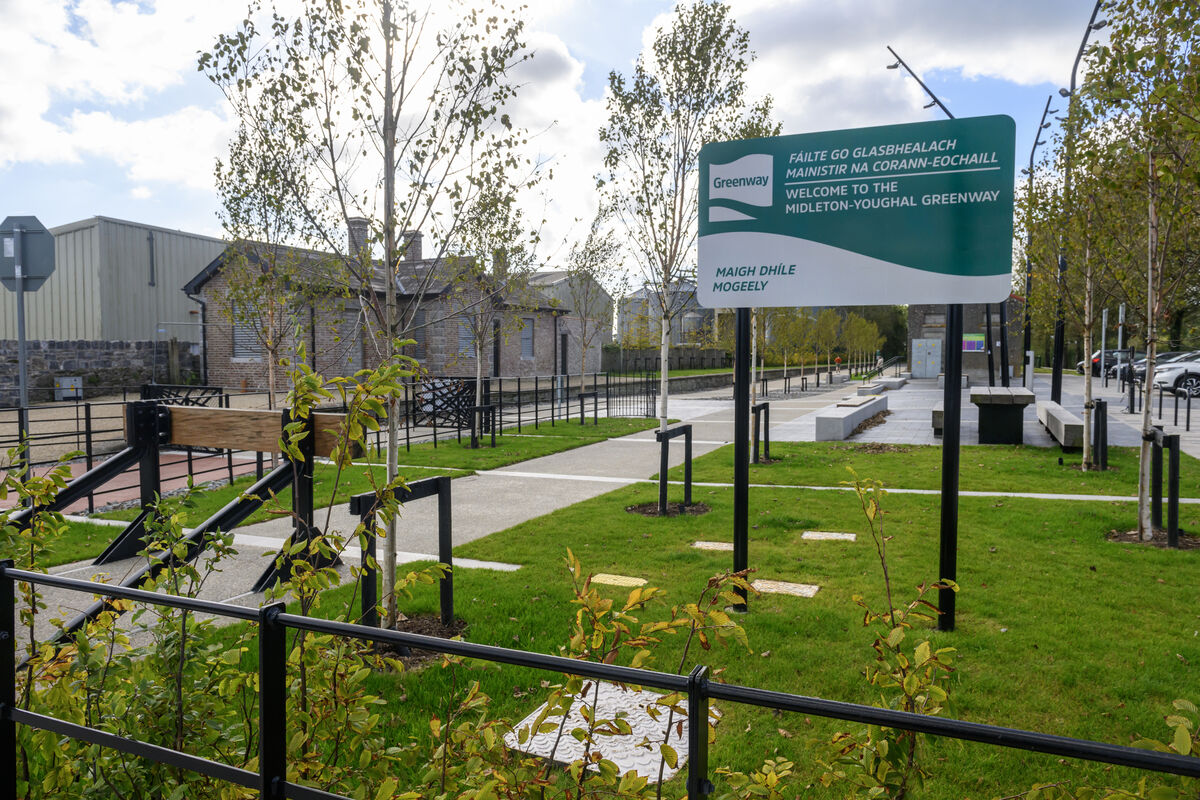
Midleton is easily reached by train from Cork city, and is a vibrant town worth exploring in itself, its premier attraction being the Midleton Distillery — just go easy on the whiskey if you’re on two wheels. Also well worth a peek is Kindred Spirits, the stunning sculpture created by Alex Pentek, which commemorates the support given by the Choctaw Nation to the Irish people during the Famine.
Killeagh and Mogeely are ideal locations for a pitstop before heading on to Youghal, where you can enjoy a stroll or cycle on Ireland’s longest seafront boardwalk, which links the Blue Flag beaches of Claycastle and Redbarn. Enjoy more wonderful seaside views heading back towards town and the many shopping and dining options on the main street. At the town’s distinctive Clock Gate Tower, visitors can take a tour through the history of Youghal via audiovisual displays, exhibits and historical artefacts.
This scenic route runs along the old Limerick to Kerry railway line, connecting the market towns of Rathkeale, Newcastle West and Abbeyfeale in the west of the county. The more energetic can opt for the entire 40km route or choose between sections, which range from just 3km long to over 9km long.
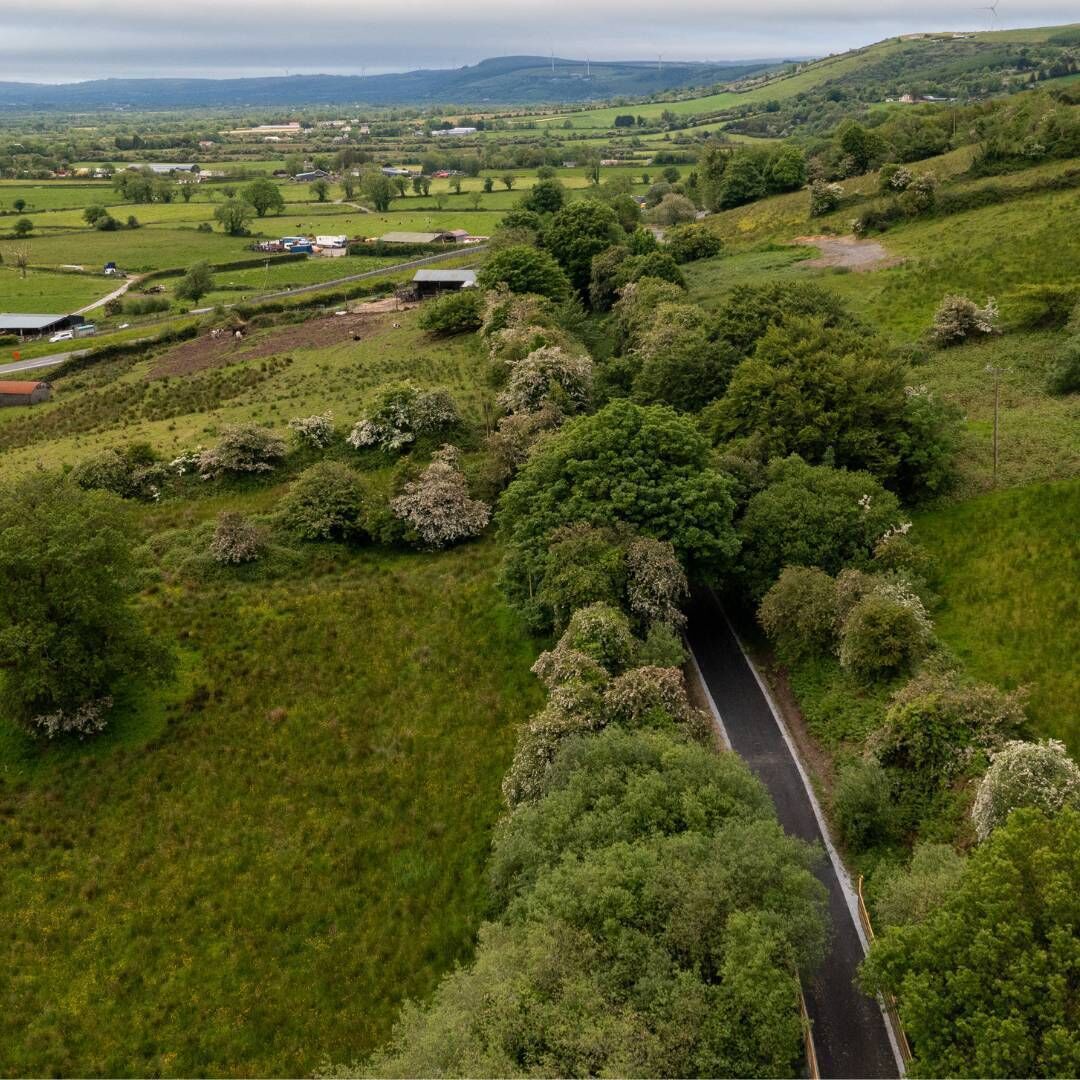
The greenway opens up the beautifully lush countryside of the Golden Vale, with numerous points of interest along the way, including Tullig Wood, the underground Victorian railway tunnel at Barnagh, Ferguson’s Viaduct and Port Castle, built by the Earls of Desmond in the 1400s. See where the famous Ardagh Chalice was discovered by two schoolboys back in 1868 and view a replica carved from an ash tree.
There are many fun family activities available en route, especially at Castle Demesne in Newcastle West, a mature parkland of over 100 acres which offers a variety of leisure facilities, including a skatepark.
There’s more to Kerry than visitor favourites Killarney and Dingle, and this tourism initiative, which currently takes in two completed routes, is the perfect way to see more of what the Kingdom has to offer.
The first completed section of the third element, the South Kerry Greenway, opened in December. The Tralee to Fenit Greenway is just over 13km and follows a particularly scenic course through north Kerry and the villages of Spa and Cotters Bend, accompanied by impressive views of Tralee Bay and Mount Brandon. Fenit itself is a lovely seaside village with the bonus of a working harbour, which means plenty of great dining options for seafood lovers.
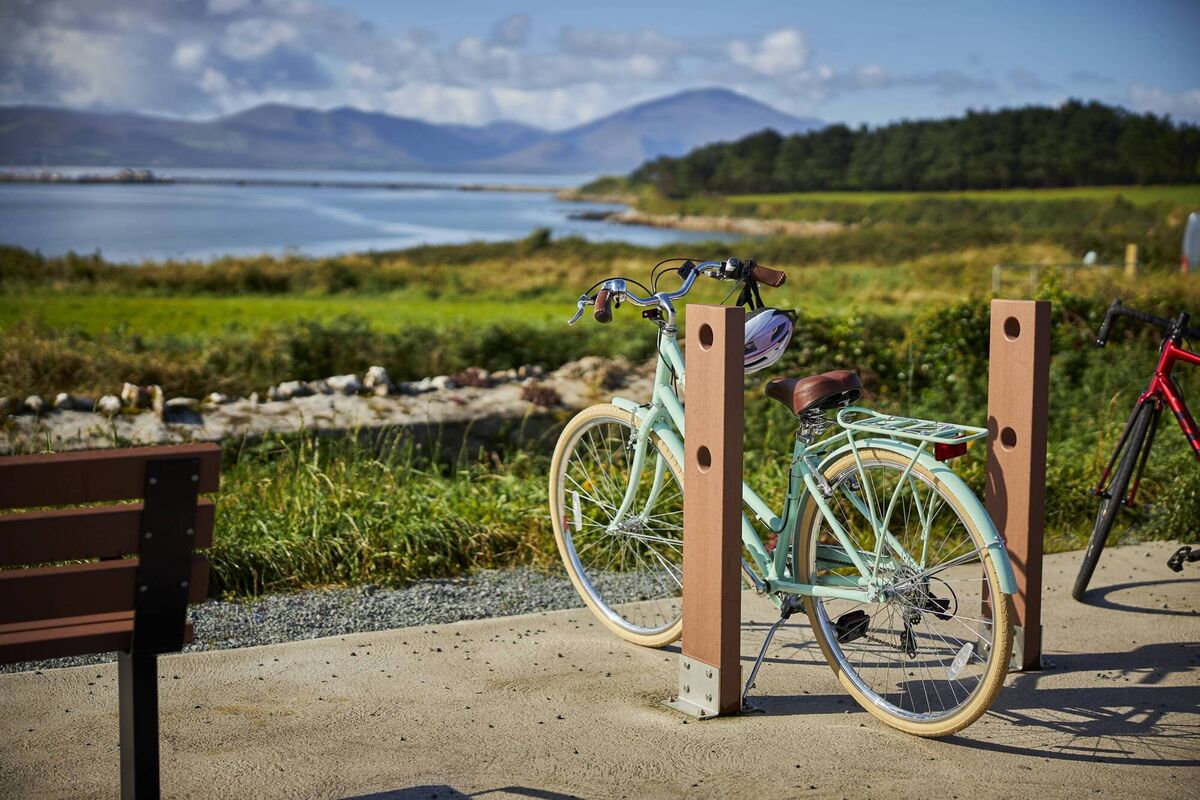
The second route is 16km, running from Listowel to Limerick, joining up with the Limerick Greenway at Abbeyfeale. It is a route that is alive with history, running along the former Great Southern and Western railway which once connected north Kerry and west Limerick. Listowel is famous as the home of writers John B Keane and Bryan MacMahon, among others, and its literary heritage is celebrated at the Kerry Writers’ Museum. It was also a major junction on the old railway line, connecting to the Lartigue Monorail, the world’s first commercial passenger-carrying monorail which served the seaside resort of Ballybunion until 1924. Visitors can learn more at the Lartigue Monorail museum. From the town, cyclists and walkers alike can soak in the serenity of the lush countryside forging a path through the verdant valley of the River Feale.
The South Kerry Greenway will showcase the many delights of the Iveragh Peninsula to walkers and cyclists. For now, visitors can avail of the 3.1 km stretch from Golden’s of Kells to the former Kells Train Station, once a stop on the scenic Farranfore-Valentia Harbour railway line. Just a short hop away is Kells Bay House and Gardens, where you can wander in a primeval forest and sub-tropical gardens, home to collection of ferns which have twice scooped a gold medal at the prestigious Chelsea Flower Show. Waterfall walks and the longest rope bridge in Ireland provide plenty of family photo opportunities.
One of the most successful Irish tourism initiatives in recent years, the Waterford Greenway continues to bring thousands of visitors to the region, drawn by an easily navigable route and an irresistible mix of amenities and activities.
The 46km route can be done as a whole or in sections and runs directly from the city, where there is no shortage of attractions, with the Viking Triangle home to five museums. Join expert guides on the Epic Walking Tour, which promises to cover 1,000 years of history in 1,000 paces or experience how the Vikings lived in The King of the Vikings virtual reality adventure.
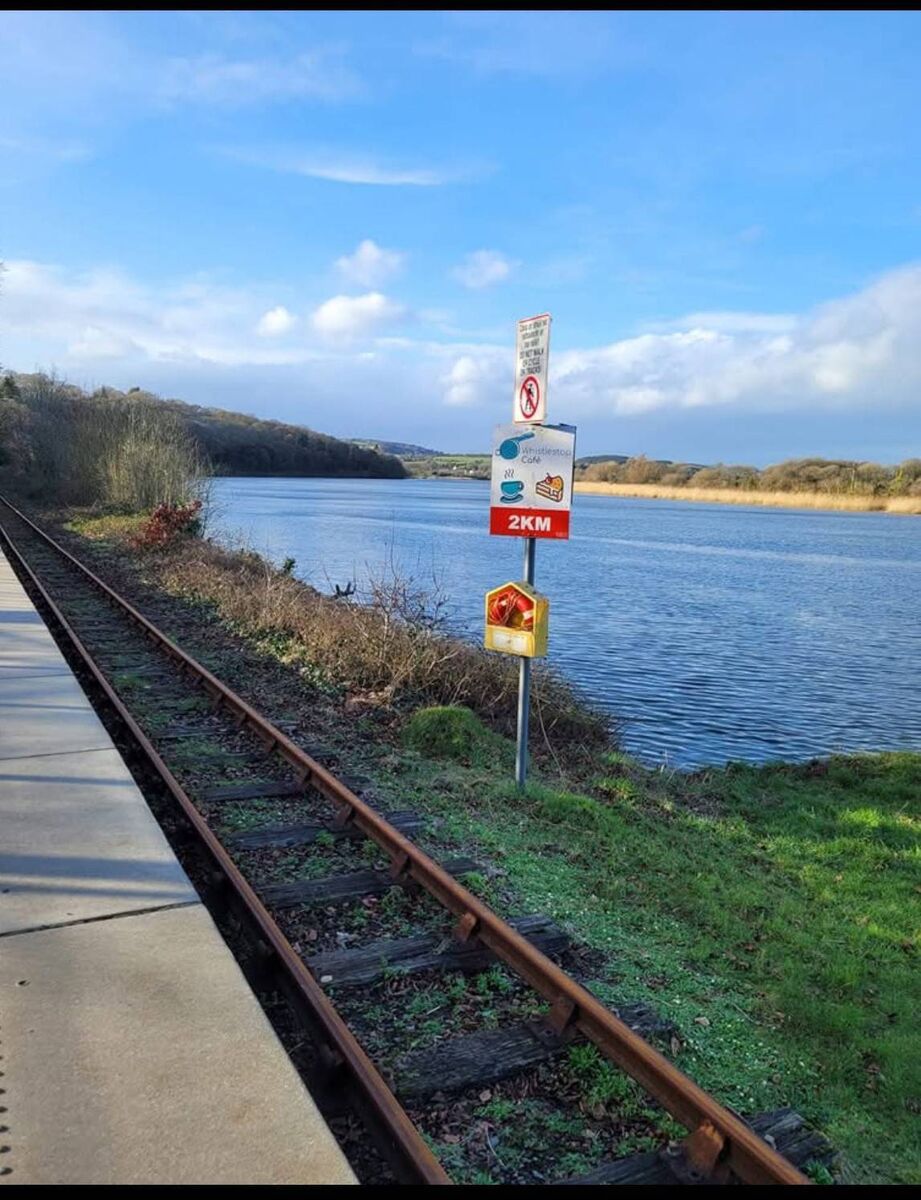
Just outside the city is the stately home at Mount Congreve, which has one of the largest private plant collections in the world as well as plenty of family-friendly activities. Further on are the villages of Kilmacthomas and Stradbally, home to a lovely sheltered sandy beach. The Durrow to Clonea/Dungarvan section offers stunning views of the Copper Coast as well as the atmospheric brick-lined Ballyvoyle Tunnel, built in the 1870s. Dungarvan is the perfect end point for some rest and refreshment, with the town square and the quay playing host to a variety of pubs, cafés and restaurants.
Completed in 2011, this is recognised as Ireland’s first Greenway, officially at least, and was selected as one of the top three cycle trails in the world by The New York Times. The Greenway follows the old Midlands Great Western Railway line, which closed in 1937 and ran from Westport to Achill.
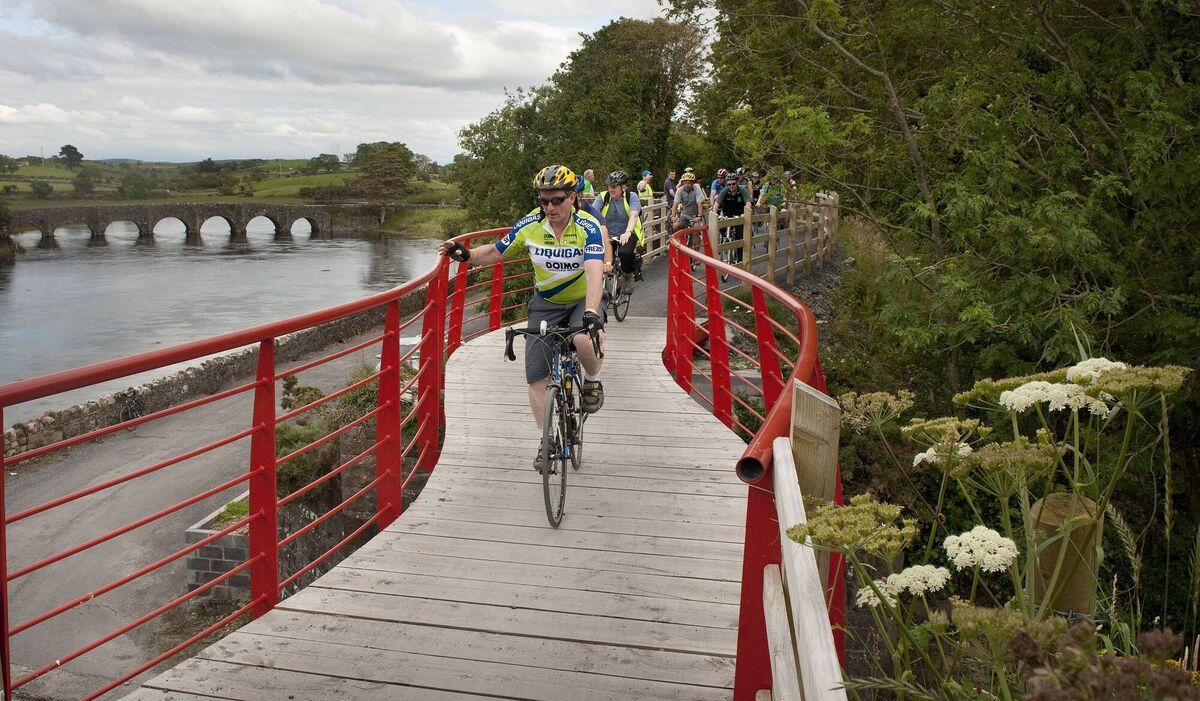
It comprises four sections, Westport to Newport, Newport to Mulranny, Mulranny to Achill Sound and the most recent addition, Achill Sound to Cashel, which brings the route to 49km in total. The magnificence of Mayo unfolds along the way, with highlights including Clare Island, Croagh Patrick and Wild Nephin National Park. The final section to Cashel, a village on Achill itself, provides visitors with a gateway to all the glorious sights of the island, including the showstopping Keem Bay.
This route gives visitors the best of both worlds, offering a waterways experience for those who don’t fancy getting their feet wet. A 130km-long flat towpath, it crosses through four counties, from Maynooth in Kildare through Meath and Westmeath, finishing up in Longford.
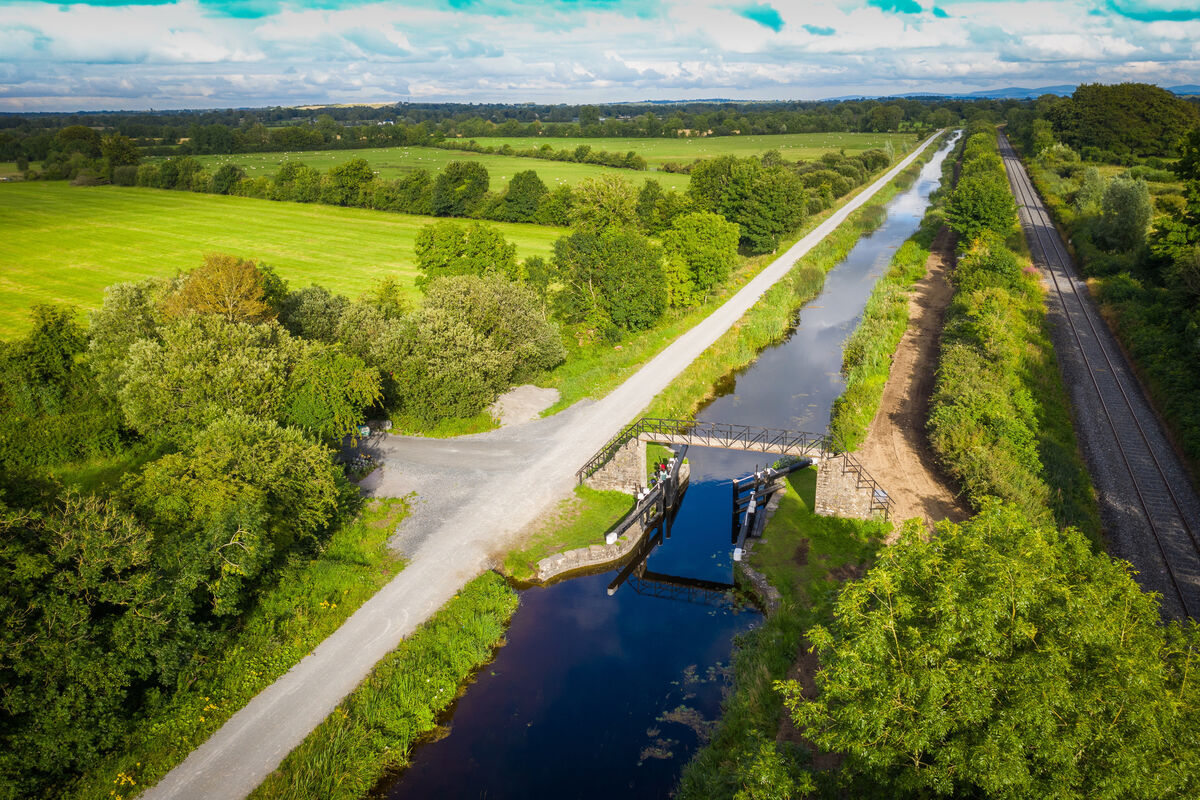
Numerous trailhead access points make it an attractive option as a hop-on/hop-off route. Also weaving its way along the Royal Canal is the National Famine Way, a 165km waymarked trail, which follows in the footsteps of 1,490 tenants who were marched from Strokestown, Co Roscommon, to Dublin in 1847, where they forced to emigrate.
The trail begins at the National Famine Museum at Strokestown Park, culminating at the Jeanie Johnston Famine Ship/ EPIC Irish Emigration Museum in Dublin. Another fascinating monument to our past is the prehistoric Corlea Trackway, an Iron Age road preserved by bog in Co Longford.