Developing a new national plan for offshore wind energy
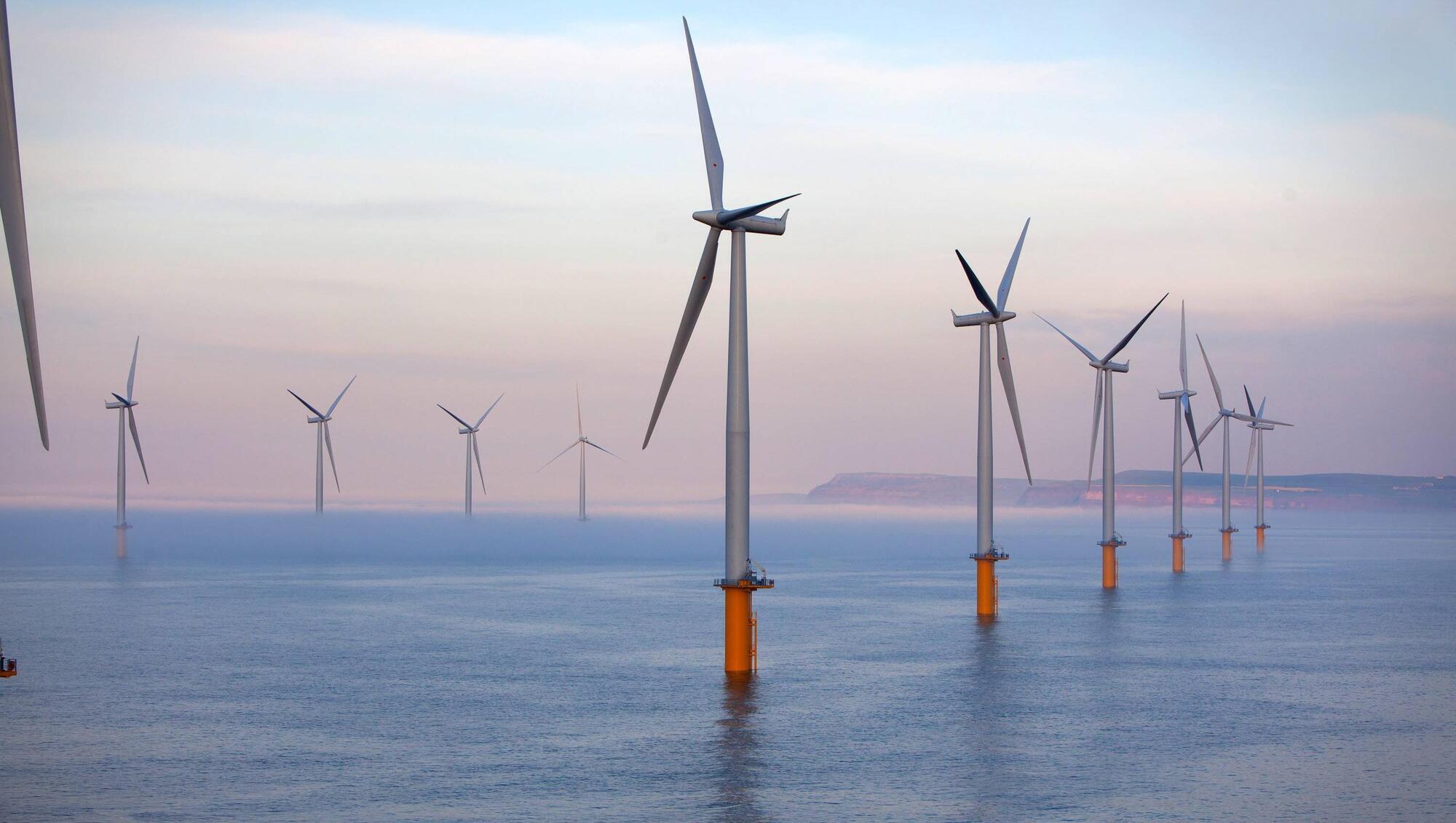
Yvonne O’Brien, regional public affairs manager with Wind Energy Ireland, explains the benefits that Ireland will gain from the extensive data-gathering and public consultation in the national Designated Maritime Area Plan (DMAP) for offshore wind
Developing a new national plan for offshore wind energy

Ireland’s national Designated Maritime Area Plan (DMAP) for offshore wind is to be developed by the Department of Climate, Environment and Energy, to identify optimum sites for wind energy generation. 

At the start of May, Minister for Climate, Environment and Energy Darragh O’Brien TD announced that work has started on a new national map to identify locations where future offshore wind farms can be developed.

The national Designated Maritime Area Plan (DMAP) for offshore wind will be developed by the Department of Climate, Environment and Energy, and will involve extensive data-gathering and public consultation. It is due to be completed by the end of 2027.


Ireland’s first DMAP was approved by the Oireachtas late last year and identified four sites off the coast of Waterford for new offshore wind farms. The map was produced following an extensive public consultation with coastal communities in Waterford, Cork, and Wexford and was informed by detailed environmental, scientific and engineering expertise.

The fishing community on the south coast was heavily involved in the process, working with the Government to ensure that, as much as possible, the impact on fishing activity from the development of offshore wind energy within the DMAP was minimised.

Four areas off the south coast of Ireland have been identified for offshore wind in the Government's draft "DMAP".

An auction for the first of those four sites, known as Tonn Nua — the Irish for ‘New Wave’ — will be held before the end of the year to build a 900 MW wind farm at that location though there continues to be uncertainty over the Government’s plans for the three other sites.

Managed and sustainable 

“The use of strategically planned DMAPs will ensure that developments in Ireland’s maritime area take place in a managed and sustainable way,” said Minister O’Brien.

“An integrated, national approach will ensure that strategic forward planning for skills, enterprise and the industry-wide supply chain development can take place.

“Ports will have the ability to forward plan for the necessary large-scale offshore infrastructure build-outs required to support ORE development, while forward planning for grid and interconnection can occur within the framework of a long-term holistic view. By focusing on a single DMAP, we will be able to maximise our resources.” 

The Irish wind energy industry welcomed the announcement as providing greater certainty and ambition for Ireland’s offshore wind energy future while highlighting concerns about the timeline for completion.

Industry response 

“This will take time,” said Wind Energy Ireland CEO Noel Cunniffe, “and our members will do everything they can to help speed things up, but once complete this will provide enough sites to accelerate the development of offshore renewable energy and to put Ireland firmly at the heart of Europe’s response to the energy and climate crises.

“But it won’t be done in 2027 if the resources, the personnel and the expertise isn’t in place to ensure we hit that target. The offshore wind industry has struggled with missed deadlines from Government in the past and we can’t afford more slippages.”

 The industry sees the budget later this year as, effectively, the Government’s only opportunity to allocate enough funding if the 2027 deadline is to be hit. Resources will be needed to collect and buy data on Ireland’s maritime area, to commission marine surveys and to ensure a thorough and transparent public consultation.

It will also be critical to ensure that the development of the new national DMAP aligns with plans for new Marine Protected Areas. Legislation has long been promised to help Ireland meet its international obligation to designate 30 per cent of Irish waters as Marine Protected Areas by 2030.

Marine protection 

While the Bill is listed as a priority in the Government’s legislative calendar it is unlikely it will be enacted before work on the national DMAP is, at a minimum, significantly advanced.

It is a challenge of which Minister for State at the Department of Climate, Environment and Energy with special responsibility for the Marine, Timmy Dooley TD, is very conscious.

“As an island nation with an extensive maritime territory, Ireland has one of the best offshore wind resources in the world,” he said.

“The development of offshore wind projects, including floating offshore wind and other innovative technologies throughout our coastal areas, offers enormous economic opportunities for coastal communities, in terms of jobs growth and local community development.

“It also provides the opportunity to align with future Marine Protected Areas. The DMAP development process will be inclusive and will provide comprehensive consultation opportunities.” 

The development of the new national map has the potential to boost confidence in Ireland as a place to invest within the wider offshore wind energy industry and to produce a strong pipeline of new projects.

But doubts persist over whether the Government will be able to meet the timeline it has set itself. And while work on the national DMAP must start immediately the greater priority is the remaining five offshore projects already in the planning system.

With the likely loss of the Sceirde Rocks project off the coast of Galway the risks to the other projects must be minimised and this has to be at the top of Minister O’Brien’s to-do list.

More in this section

Cookie Policy Privacy Policy Brand Safety FAQ Help Contact Us Terms and Conditions

© Examiner Echo Group Limited