Cloughjordan ecovillage, a model of sustainable living
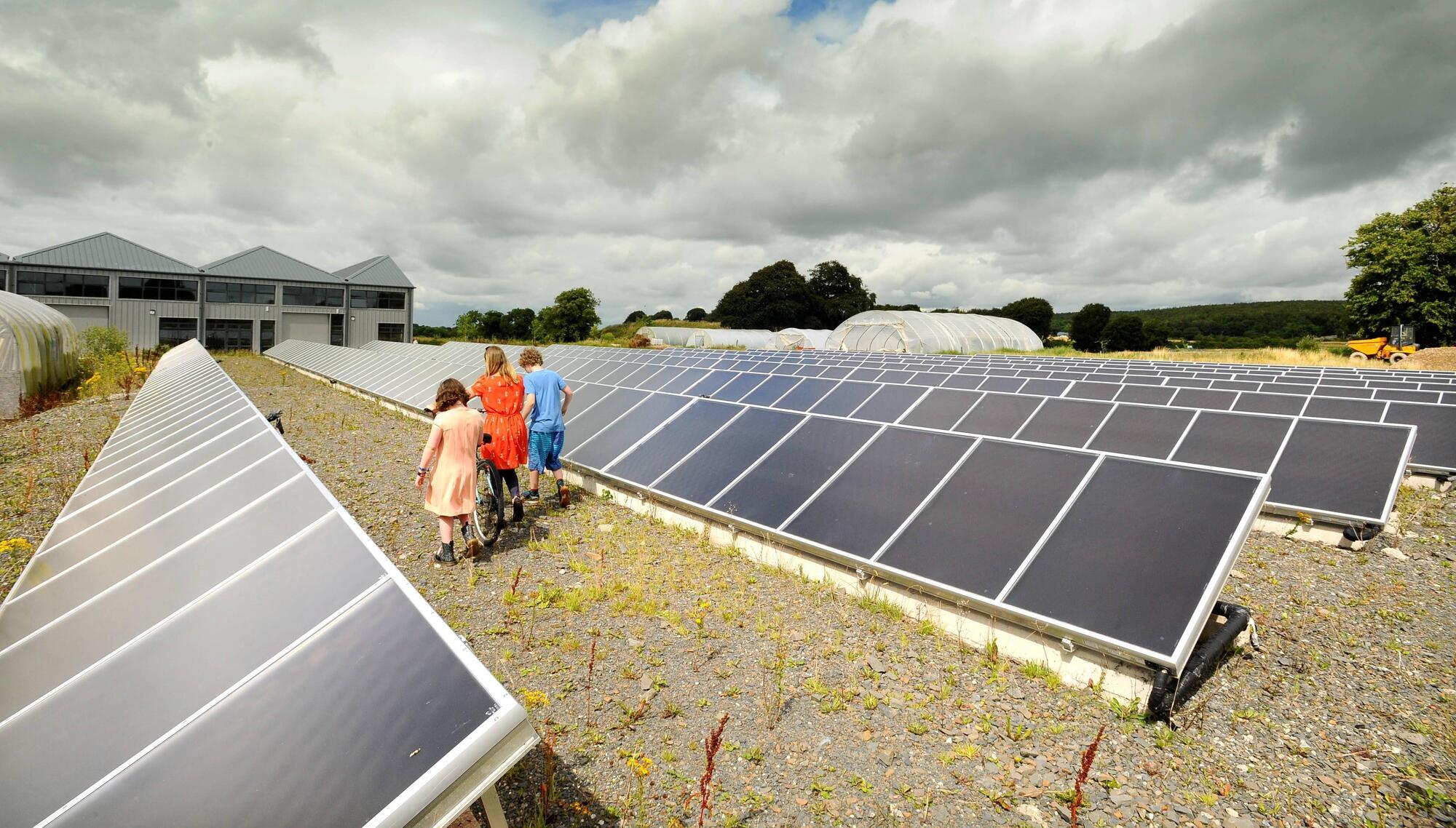
Solar panels at Cloughjordan ecovillage, Co Tipperary.
A peaceful life, well lived. For many this is reality. For others a fervent wish. At Cloughjordan ecovillage in Tipperary, there’s an awareness of the peace of mind that comes with living happily and democratically in a community, in ways that permit the natural world to flourish.
One of those is Peadar Kirby, professor emeritus of international politics and public policy at the University of Limerick. He joined the ecovillage in 2007 and moved in two years later.
Is it fair to assume ecovillage living has changed him? “Constantly,” he replies. "Before moving here, I lived my life without knowing the vital importance of a healthy ecosystem and the way in which so many everyday practices were damaging and destroying that.
“Every day here, there’s a wonderful education to access. Members can sit in on events and listen to visiting speakers and groups. Many of those know far more than I do about ecology, as do very many of the other ecovillage members. So it’s a constant education, and that’s one of the great privileges of living here.”
As the ecovillage educator and coordinator of its government-funded Community Climate Action project, Julie Lockett is also fully aware of those advantages, and of the responsibilities that come with living where she does.
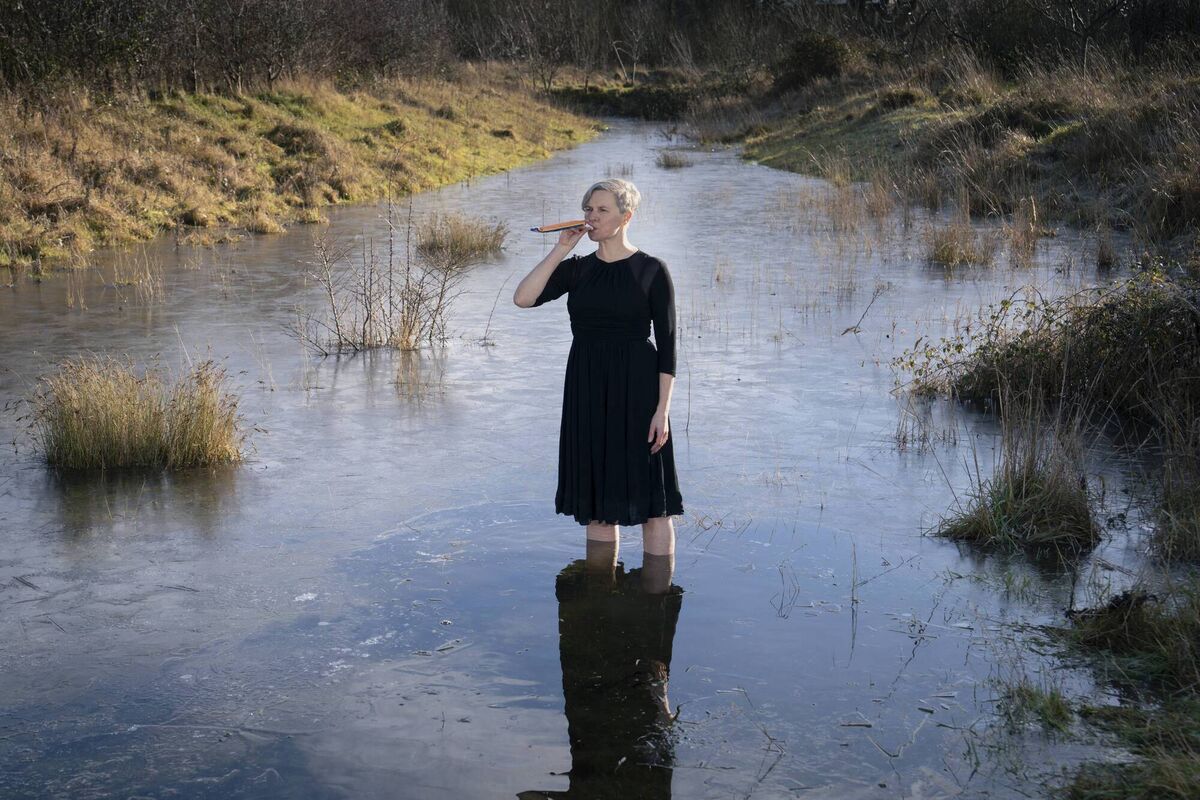
“As an ecovillage member, you’re required to do 100 hours of voluntary work a year and encouraged to attend monthly members’ meetings,” she says.
“Because Cloughjordan ecovillage is an educational charity and a place-based learning centre, we’re not just here, living our own lives for ourselves,” she explains. “This is a place where we model a more sustainable way of living, so people can come here and see that in action.”
Describing ecovillage living, she says: “It’s an active thing. It’s not just about moving into a community. Here, it’s about being aware that you need to contribute to the community and support local businesses as well.”
Julie shares that in nearly every aspect of her life, she asks herself: How can I make as much of it as I can and how can I contribute as much as I can.
“When I bought the site for my house, what really appealed to me was the fact that I was buying it from a developing company that was a not-for-profit educational charity. Also that by buying, I was enabling that educational charity to buy the 67-acre site that is this ecovillage. I liked that it was not just about me coming here to buy my house, that it was also about me being able to contribute to a bigger project. This is an example of the many ways in which our working together here as a community, can really maximise our impact.”
Prof Kirby is equally passionate about the value and power of community: “We have to band together to tackle this crisis. We have to get back to relearning what it is to live in an interdependent way; to live in community rather than to live as isolated individuals.
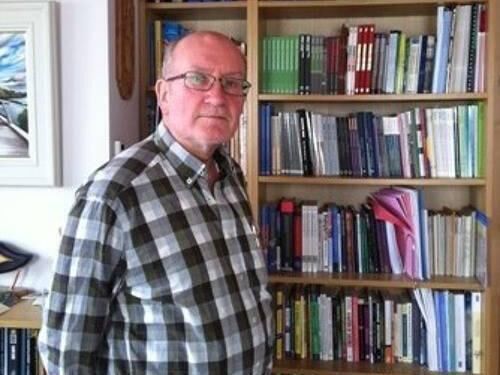
“I think that’s a big part of our problem,” he continues. “We swallowed the illusion that all we have to do is look after ourselves and our immediate families. We had no realisation that to flourish as a species and flourish with the other species with which we share this planet, we have to look after everybody and we have to look after nature.
“These were the most basic insights of our ancestors,” he says. “They lived by those insights. But we have lost that. We think we are more progressive, that we have moved ahead. But in many ways we have moved badly backwards, I think.”
He’s right, of course. But having embraced Cloughjordan ecovillage life, he and his fellow members are making progressive strides forward by living sustainably.
Asked for some of the ways in which she does that, Julie replies: “The house we built is A-rated, so it’s really well insulated. There’s a common boiler; a district wood chip heating system. So I don’t use fossil fuels to heat my house. Nor do my husband and I use fossil fuels to heat the ovens at our bakery — the Riot Rye Bakehouse and Bread School here in the ecovillage.”
Julie talks then of sharing a car with another household, of getting her vegetables from the community farm, and of the edible landscape all around them.
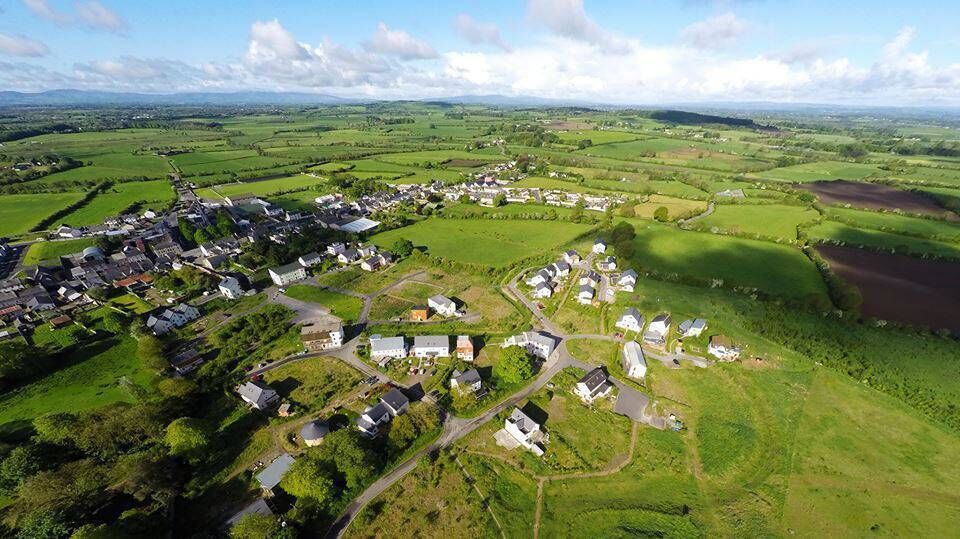
She says that while the ecovillage doesn’t have street lighting, they have planning permission to install a 'dark sky' approved version, so as to minimise light pollution. This is just one of the many well-considered plans members are making for the future of the ecovillage, which is, with 55 households, about one-third built.
“We are hoping to get really creative in the future, in terms of how we can address the housing crisis here, when we start building again in the ecovillage,” she says.
Talk turns then, to the many who don’t have the agency to respond as they’d like to the climate crisis. “People talk of electric cars, but most can’t afford to buy those,” she says. “Also, to get PV panels on your roof, you have to own a roof. That’s why building a community is so important. Because when you do that, you are building trust. So you can call on one another and rely on one another and share resources, and also because there is a limit to what one person can do to effect system change."
Is she living the change she wants to see? “As much as I can,” she replies. “But then I have a certain status. I was able to get a mortgage to do this ecovillage project. That was a privilege not everyone has.”
Like Julie, Prof Kirby’s outlook is firmly focused on helping others: “What we’re trying to do here, is show other communities how a group of 90 ordinary adults, can, by pooling together and doing things together, lower our emissions quite dramatically and live within the carrying capacity of the planet.
“Any group of people can do this”, he says. “It’s not something that’s so difficult or so exceptional. Particularly for those with an awareness of nature and how to live in balance with that.
“It’s challenging but very doable. So much so that I think I live far better here than I might, had I continued living in Dublin or Limerick in a conventional way. I'm much happier here and feel so privileged to be able to live out my days in such an interesting and exciting place."
It’s a joy to hear that, and it’s thought-provoking as well: For the able and free, life is most often as interesting and exciting as we make it.
Julie Lockett is a case in point. This becomes most apparent when she mentions in passing that she’s also a contemporary dance artist.
“I work with the land here in the ecovillage and when the weather is good, I dance around the land. When it rains, I can, if I wish, take shelter in a studio I have here. It’s great.”
It’s also beautiful. Does she dance barefoot?
“Sometimes,” she replies. “It depends on what the weather is doing and it depends on my mood.”