You'll be glad to switch to suppliers investing in renewables
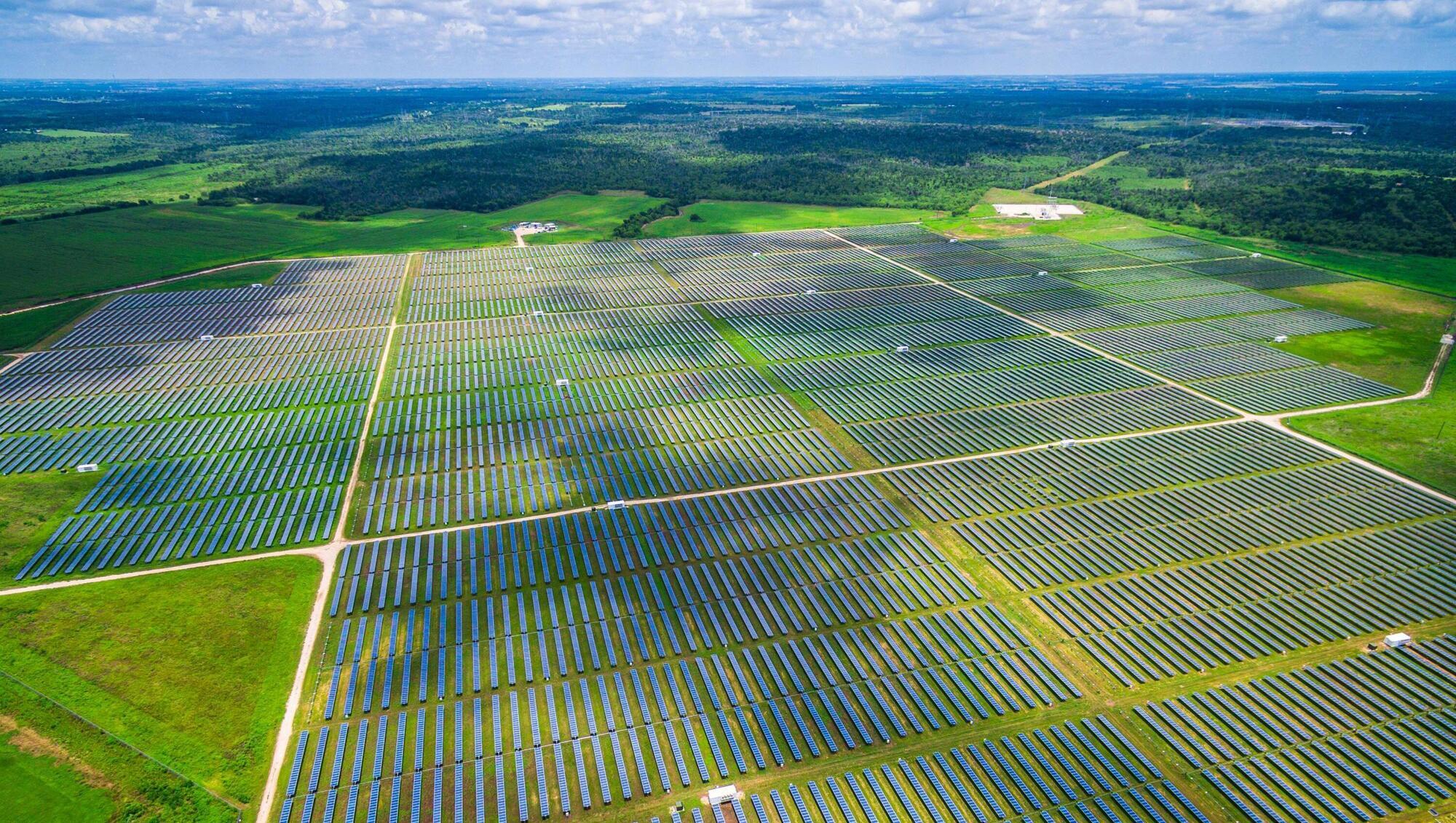
Central Texas Solar Energy Farm: Thousands of solar Collectors near Webberville, Texas, a massive solar energy plant producing clean renewable energy for a sustainable energy future.
We all know now that energy lies at the heart of the climate change challenge, and as such, the transition to renewable energy is the cornerstone of a safer tomorrow.
A significant portion of the greenhouse gases enveloping the Earth and exacerbating global warming stem from energy generation. We’re talking of course about the combustion of fossil fuels for electricity and heat. Coal, oil, and gas remain the chief contributors to climate change, responsible for over 75% of global greenhouse gas emissions and nearly 90% of carbon dioxide emissions.

Scientific consensus underscores the need to slash emissions by nearly half by 2030 and achieve net-zero emissions by 2050 to avert the direst consequences of climate change. This means breaking free from fossil fuel dependence and channeling investment into alternative energy sources.
Renewable energy, drawn from the abundant natural resources surrounding us — sunlight, wind, water, waste, and geothermal heat — offers a replenishable and low-emission solution. While fossil fuels currently dominate global energy production, cleaner energy sources are steadily gaining traction, with renewables accounting for approximately 29% of current electricity generation.
As part of its climate action brief, the United Nations is working to accelerate the shift towards clean energy. It offers five reasons why accelerating the transition to clean energy is the pathway to a healthy, livable planet today and for generations to come.
Nearly four fifths of the world’s population lives in countries that are net-importers of fossil fuels. To put it another way, that’s around six billion people who are dependent on fossil fuels from other countries. This lack of energy independence makes everyone vulnerable to the kinds of geopolitical shocks and crises that are so prevalent at the moment.

To take one example, in the immediate aftermath of the Russian invasion of Ukraine, the price of crude oil jumped by more than 50%. Everyone in Europe felt the subsequent impact in their energy bills.
As the UN points out, in contrast, renewable energy sources are available in all countries, and their potential is yet to be fully harnessed. The International Renewable Energy Agency (IRENA) estimates that no less than 90% of the world’s electricity could come from renewable energy by 2050.
Renewables offer a way out of import dependency, allowing countries to diversify their economies and protect them from the unpredictable price swings of fossil fuels, while driving inclusive economic growth, new jobs and poverty alleviation.
Renewable energy actually is the cheapest form of power in many parts of the world. Over the past decade, the cost of renewable energy technology has plummeted. For example, the cost of electricity from solar power fell by no less than 85% between 2010 and 2020. Costs of onshore and offshore wind energy fell by 56% and 48% respectively.
The demand for energy is set to rise steeply. In November 2022, the world’s population finally broke through the 8 billion mark. Given current population growth trajectory, the 9 billion mark will probably be breached in 2037. Countries with the highest fertility levels tend to be those with the lowest income per capita.
Falling renewable energy prices are better for everyone, but they’re going to be particularly attractive to low- and middle-income countries. Because of population growth, it’s here that most of the additional demand for new electricity will come from.

With falling costs, there is a real opportunity for much of the new power supply over the coming years to be provided by low-carbon sources.
The UN estimates that cheap electricity from renewable sources could provide as much as 65% of the world’s total electricity supply by 2030. It could decarbonize 90% of the power sector by 2050, massively cutting carbon emissions and helping to mitigate climate change.
According to an April 2022 bulletin from the World Health Organisation (WHO), almost the entire global population — 99% — breathes air that exceeds WHO air quality limits, and threatens their health.
"A record number of over 6,000 cities in 117 countries are now monitoring air quality, but the people living in them are still breathing unhealthy levels of fine particulate matter and nitrogen dioxide, with people in low and middle-income countries suffering the highest exposures."
It’s estimated that more than 13 million deaths around the world each year are due to avoidable environmental causes, including air pollution.
Switching to clean sources of energy like wind and solar helps address not only climate change but also air pollution and therefore health. Transitioning to sustainable power means transforming air quality, and therefore boosting health immeasurably.
According to UN secretary general, António Guterres: “Solar photovoltaics are now the cheapest power source in most countries. And renewables yield three times more jobs than the fossil fuel sector.”
Moreover, the IEA says that the transition towards net-zero emissions will lead to an overall increase in energy sector jobs. In the pathway set out in the IEA’s ‘Net-Zero Emissions by 2050 Scenario’, an estimated fourteen million new jobs are generated in energy supply by 2030.
Over the same period, fossil fuel production could lose five million positions, resulting in a net gain of nine million in this pathway.
Believe it or not, the traditional fossil fuel industry is among the most subsidized sectors on the planet. According to the International Monetary Fund (IMF), fossil-fuel subsidies surged to a record $7 trillion in 2022 as governments supported consumers and businesses during the global spike in energy prices caused by Russia’s invasion of Ukraine and the economic recovery from the pandemic.
The UN points out that in comparison, about €4 trillion a year needs to be invested in renewable energy until 2030 to allow us to reach net-zero emissions by 2050.
Moreover, investments in renewable energy pay off, and quickly. A study by the aforementioned IRENA found that the reduction of pollution and climate impact through rapidly increased use of renewable energy by 2030 could save up to $4.2 trillion per year worldwide, 15 times the associated costs of doubling the share of renewables.
In addition, efficient, reliable renewable technologies can create a system less prone to market shocks. Investing in renewables is vital in the creation of a cleaner, healthier, more affordable world.