Home Advice: Preparing for the floods
Home Advice: Preparing for the floods

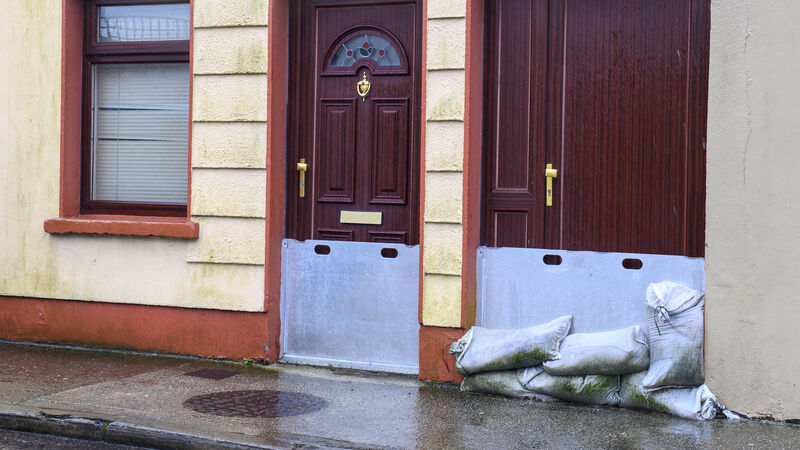
Flood protection on houses in Youghal as Met Éireann issue a wind and rain warning for Kerry and Cork. Picture Dan Linehan

Hi Brigid,

It’s hard enough for many of us younger house hunters to be able to put a roof over our heads and talking to a few friends it seems any low budget buy comes with problems — like flood risks, which are on the rise thanks to climate change.


I’m finishing a renovation on a tiny stone cottage with stone floor which flooded after a very localised deluge in the recent Storm Amy. Neighbours said it was the worst they’d seen in living memory, and I had 14 inches of water indoors.

Fortunately, I hadn’t moved all my stuff in but lost my new kitchen units among other fixtures. Thankfully it is drying out quite well after a big clean out.

However, my confidence is literally on the (stone) floor in terms of fears of similar flooding happening at some future point, when I’ve made it home.

I’m putting in a flood gate door, and non-return valves in the loo as the garden with septic tank was under lots of water, moving sockets higher up the walls, etc.

Any other advice or measures you think I should take would be really useful.

Thanks, Laura, Cork

Hi Laura,

Fourteen inches of water? My heart goes out to you. Flooding is a topic I have often written about and I’m not sure if you read my previous articles but you have hit most items I have suggested in the past on the head. Flood gates, moving sockets up the wall and non-return valves are definitely the way to go. On the kitchen units, well we do love our kitchen layouts. While everything else appears to change the one abiding thing when it comes to houses is that the kitchen is still the heart, and we put in huge time getting the style, colour, number and type of kitchen units right.

Take heart my dear, you can redesign a beautiful and future proof kitchen. It’s a little bit of fun to take the edge off! It could be unique and bespoke with presses raised off the ground and either wall-mounted or on decorative legs. (It is occurring to many of us that we are hording pots and pans and kitchen junk just because we have lots of presses to put things in.)

Some presses require climbing on a kitchen chair to see what’s up there. Often, it’s the crockery or blenders that we use once a year for something special and realise that we have two of the same items in other lower presses, having forgotten about the ones we put away in the not-so-easy-to-reach places.

Also bending down to lift something that is heavy and awkward is becoming a no no. Access where we don’t have to bend or reach is seen as good design.

It is very fortunate that you hadn’t moved your stuff in, so take the win and let’s look at what other measures we can consider that might help. Straight away you are in a better position than a lot of people who’ve had similar experiences because you live in a stone cottage. As a renovator of older building stock, I’m sure you know chapter and verse about moisture movement. For our other readers, you may have heard that the traditional buildings’ ‘need to breathe’.

This refers to the movement of moisture in vapour form through the building’s fabric. Stone cottages have lime mortar between the stone units and were traditionally finished with lime render and plasters. These were then painted with limewash (you might have heard this referred to as whitewash). Lime allows the movement of moisture through the fabric. Laura, the fact that you’ve noticed how fast the building has dried out is a testament to you and your renovation skills. You have permitted the building to behave correctly and not hindered it.

Where cementitious renders or plasters are present, monitor these and if you suspect they are trapping moisture and preventing drying out, consider removing them. You can do a test by removing some (a square of fabric perhaps 300mm x 300mm) and observing the results. If appropriate, you could remove all cementitious render and use natural lime products instead. No need to rush in however, as buildings are seldom straight forward and I don’t know your building location and/or exposure level.

When painting your lime rendered/plastered walls use simpatico products like limewashes and clay-based paints so as not to prevent vapour movement. In other words, do not inhibit the functioning of the building by trapping vapour and moisture.

There are a slew of ventilation products on the market. Some of these are designed to detect high moisture readings in the internal atmosphere and will activate and draw moisture out of the building once moisture reaches a specific level. These are gentle on the building’s fabric. A dehumidifier is also great but be sure to have it on a low setting as damage may be caused to plasters and timbers if these dry out too quickly.

Where you have limecrete floors, again consider finishing them with something that will not hinder vapour movement like clay tiles as opposed to non-breathable carpet or composite laminate floors. Where you have suspended timber floors, consider changing them to solid floors to prevent rotting of timber and degradation of fabric caused by trapped standing water.

Now, let’s move to the outside. What we need is good percolation for surface water. We need to get the water away fast. This requires good drainage ground. Where you have slow draining soil, you might consider changing some of that out for better quality soil and building soakaways into it.

Another consideration should be to plant water greedy shrubs that don’t mind standing in water every now and then. Go to your local horticulturalist and have a chat about the various options available.

Reduce your hard surfacing, such as cobble lock, paving or concrete drives and replace this with gravel. There will be maintenance involved but excess water will get away faster. Perhaps add a flood wall, constructed on the aspect of your property where the water enters your site. But seek a pre-planning meeting in case you require planning permission for this. I hope this helps.

Brigid Browne is a chartered building surveyor and chair of the Southern Region of the Society of Chartered Surveyors Ireland. She is the owner/ managing director of Cashel-based Fortress Planning which offers a range of services including assigned certifier, design certifier, building surveyor, and conservation consultancy to clients all over the country — www.fortressplanning.ie

If you have a property related query or issue you would like to raise with Brigid, please email
irishexaminerpropertyqueries@scsi.ie

x

More in this section

Revoiced

Newsletter

Sign up to the best reads of the week from irishexaminer.com selected just for you.

Cookie Policy Privacy Policy Brand Safety FAQ Help Contact Us Terms and Conditions

© Examiner Echo Group Limited