Property Advice: Who is responsible for clearing a communal drain
What to do when ‘out of sight’ is not out of mind? SCSI surveyor Brigid Browne does a deep dive
Property Advice: Who is responsible for clearing a communal drain

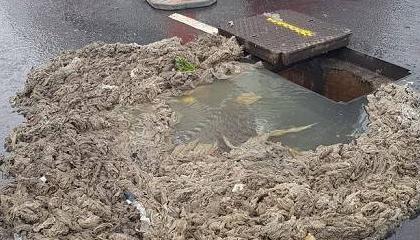
Just some of the wipes cleared out of Cork's sewers. Picture: Simon Lyons

Hi there, I hope you can help with our rather unsavoury query. We have a drains problem with our home. It’s an end of terrace 1950s property, built by the local council originally and now all in private ownership. There’s a communal drain running across the back of all eight houses before hitting a larger sewer. To put it as delicately as possible, there is waste backing up at our end of the terrace, and it is supposed to flow in the other direction.
We have rodded it as far as we can, and well past our own boundary, so the issue is somewhere ‘down the line’. It is a problem only affecting a few homes at our end. There is one unoccupied house close by as its owner, one of the few remaining original occupants, is in a nursing home. The problem it seems is beyond our property, so our house insurance isn’t covering any remedial action.
We are all good neighbours and a few of us at ‘our end’ have chipped in before for drain issues to be sorted, but this is now affecting us more than them. A visit from a drain’s specialist company costs hundreds of euro each time and will be more if cameras unearth remedial action to be taken.
Pardon the pun, but we are not flush with cash, and we have literally put money down the drain again and again. What can we do? Especially if the problem is a collapsed drain by the vacant home next to us, or on its boundary with next home? Have the council any responsibility?
— Thomas, Waterford

Firstly, congratulations Thomas for your clear description of what is a delicate subject. You clearly haven’t lost your sense of humour!
However, it is a serious issue, and my heart goes out to you and your neighbours. For a little bit of background on the back garden drainage, I understand that this originated when facilities were in a separate building from the main house and placed in the back garden. A connection into a common line was short, convenient and a fantastic addition to a modern dwelling in its day.

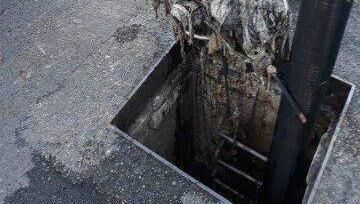
Out of sight, but not out of mind......sewage related materials being removed from a sewer network. Picture: Uisce Éireann

Back garden drainage was also carried out in a time when extending was not considered. A house had all the requirements already and there was no need to make the building any bigger. Today we live in a time where we almost feel compelled to extend in order to extract maximum benefit from our property. In this scenario back garden drainage can become more problematic as we have to design around it. If you are intending to extend, it is important that you locate the drainage line early in the design, and to talk to a building professional to see if you can re-route this around the building instead of building over it. Think of access for maintenance.

Currently the issues with back garden drainage or at least the lack of satisfactory intervention when it comes to these types of issues is a hot topic. In the past the local authorities were responsible when it came to keeping lines clear and for general drainage maintenance. This even continued well after houses were privatised. Today however Uisce Éireann are in charge of these services. With the establishment of Uisce Éireann, responsibilities in this area were clearly laid out. Or more to the point, where responsibilities stop became clearly laid out. (Please refer to https://www.water.ie for more information.)

As outlined by Uisce Éireann, homeowners are responsible for the drainage lines within their own property. While this may seem reasonable at first glance, what happens when you are sharing a line? I think any right-thinking person will find this is extremely unsatisfactory.

Of course, while a person is in a position to take responsibility for their own section of the line, you now have to take responsibility for the impact a third party has on your section of the line.

In a situation where you believe your property is being negatively impacted by a third party where do you go? Here are a few suggestions. Firstly enquire (or get your County Councillor to enquire) with your local authority as to any maintenance records on the property/neighbouring properties. If the estate was originally a council development, they should have access to records. If there is a historic issue with this line this may give you grounds to get the authority to resolve the issue. You have written that you believe that the flow is back into your garden and not towards the mains line. Well, that is a fall issue and may have occurred from day one. At the very least, the presence of raw sewage should mean that you are visited by the authority’s Environmental Officer.

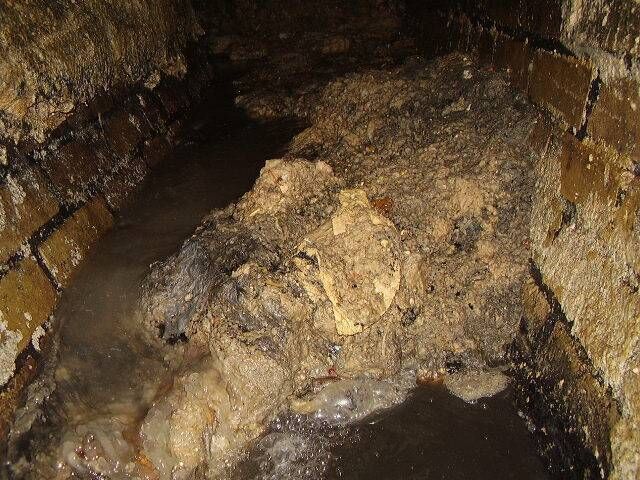
 A fatberg formed in a sewer in Ireland comprising wet wipes and fats, oils and greases (FOGs) highlights the importance of Clean Coasts and Uisce Éireann Think Before You Pour Christmas campaign.
A fatberg formed in a sewer in Ireland comprising wet wipes and fats, oils and greases (FOGs) highlights the importance of Clean Coasts and Uisce Éireann Think Before You Pour Christmas campaign.

Another route is to have the drainage company you used previously issue you with a report giving their opinion on what they believe is causing the blockage. Then speak to the owner (or owner’s representative) of the property that you believe may be responsible for the drainage issues and show them the report. If they do not show a readiness to resolve the issue, you may have to look at your legal options. No one likes going down the legal route, and it would be terribly unjust if you had to fall out with your neighbour over something that is not your fault so hopefully they will be as reasonable as your other neighbours.

Being responsible for third party services of a historic line is not just or fair, therefore I’d request that Uisce Éireann consider the position. We have so many properties in limbo all over the country and it is not acceptable. You did not pay directly to have the services installed but were left with a historic situation. That there is little clear recourse is just not good enough. We pay taxes for this kind of thing. I’d have my local county councillor give the body of evidence (CCTV, reports, opinions) to Uisce Éireann and make the argument that if they have taken responsibility from the council for our water services, this should include the lines that are daisy chained. Who else is there?

If these solutions do not work, then I can think of only one other. You are in an enviable position of being end of terrace. This means that you are the guy who has a side garden to play with. You might consider terminating the pipeline at the boundary with the neighbour and running a new line out along the side of your dwelling where it can connect into the public mains directly via a new connection through Uisce Éireann. This will mean that you will be in total control of your services and will not have to deal with any third party. This will make you and your property utterly independent. I wish you all the best and if you resolve the issue, you might let us all know.

Brigid Browne is a chartered building surveyor and Chair of the Building Surveying Professional Group in the Society of Chartered Surveyors Ireland. She is the owner/ managing director of Cashel-based Fortress Planning which offers a range of services including assigned certifier, design certifier, building surveyor and conservation consultancy to clients all over the country. (www.fortressplanning.ie)

If you have a property related query or issue you would like to raise with Brigid, please email irishexaminerpropertyqueries@scsi.ie


x

More in this section

Revoiced

Newsletter

Had a busy week? Sign up for some of the best reads from the week gone by. Selected just for you.

Cookie Policy Privacy Policy Brand Safety FAQ Help Contact Us Terms and Conditions

© Examiner Echo Group Limited