What is the solution to building on sodden sites?

Building on a site with poor drainage requires clever engineering
What is the solution to building on sodden sites?

Hi Kieran
We have quality farmland that I would like to build a family home on. I have a site in mind that has excellent views. My only concern is that this area has always had poor drainage and seems to retain water for much of the year. It is not a major problem for the farm but will this need to be addressed if we want to build here. What is your view as a builder? Should I consider a different location?
Thank you.
Peter
Innishannon,
Co Cork

Hi Peter
Thanks for your excellent question. You are very fortunate to be in the position where you have access to a potential site on your family farm, and even more fortunate that you have settled on a site with wonderful views, it sounds so idyllic. But, as is often the case, there are one or two downsides. There is water ponding here in times of heavy rain. So what effect does this have on the building of your new home and how do we deal with these issues?
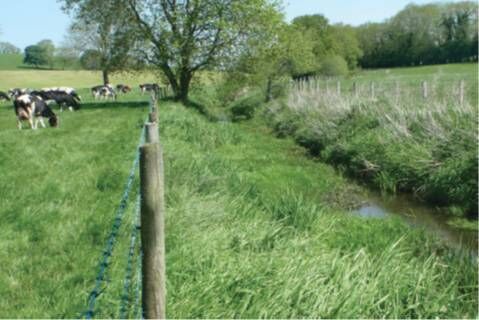

Firstly, I am assuming that this is a moderate level of water that really only becomes an issue after a period of heavy rain (not a permanently damp valley). When you consider the issues a site with poor drainage causes, you need to consider the following elements: the foundations of your home; your storm water drainage system; your foul water drainage system, and your future garden.

Let’s look at these one by one.

When building a new home on a site with poor drainage you first need to consider the foundations. Years of water logging may have damaged the bearing capacity of your soil. It may be that you will need to dig deeper with your footings to get to ‘good ground’ or if this isn’t feasible/possible you may need to change to a different type of foundation altogether.

The first option here would be a raft where instead of the walls of the house bearing on a series of strip foundations, the whole house bears on a raft foundation which covers the entire area of your house (the greater area of the raft compensates for the lack of bearing capacity of your soil, ie, the pressure is less on the ground as it’s spread more).

The other option is to build a piled foundation where you send a series of concrete pins much deeper into the ground to meet better ground at a much deeper level, then these piles provide the support for your new home.

It should be mentioned although both of these solutions will work (depending on the exact nature of the ground), they are considerably more expensive than a traditional foundation and will need specific engineering design.

Now that we have your new house supported and in place, let’s look at your storm water. This is the water that runs off your roofs, your paving, and indeed your grassed slopes. In a period of substantial rainfall this can be quite a substantial amount of running water to deal with, particularly as time runs on and the surrounding ground becomes waterlogged due to raised water tables and will not take any water.

Builder Kieran McCarthy: 'When building a new home on a site with poor drainage you first need to consider the foundations.'

Council engineers are now very focused on how this water is captured to ensure it is dealt with on your site and does not run off onto adjoining roadways or neighbouring properties. Typically you need to capture this water from your hard surfaces (driveways, patios) by means of gullies and slot ‘Aco’ drains and transmit this running water to a series of soakaways designed for your site. Soakaways are big holes in the ground, filled with large clean stones which allow for a substantial volume of water to be collected and held as it permeates into the surrounding ground. If your soil is already holding an amount of water, then the soakaways need to be bigger to compensate, to ensure the same volume of water can be absorbed.

When we look at your foul drainage system, you have similar soil drainage considerations. In a new home nowadays, your effluent is treated in either a septic tank (if site conditions allow) or, as is more likely, in a treatment unit to further aid in the breakdown of the solid waste. In either case, you require a percolation area on your land where a series of perforated pipes allow your treated drainage water to percolate back into the groundwater.

The design of this percolation area depends on the results of a ‘percolation test’ which is carried out before you lodge for planning permission. If your ground holds an amount of water then you may need to create a raised bed with imported stone or indeed add in a level of tertiary treatment (a specialised treatment unit performing a higher level of treatment) before your effluent enters your percolation area. This will need to be designed in advance by your engineer and will certainly add further cost to your project.

Now that we have dealt with everything below ground, we need to consider what happens above ground, in your garden. To drain the land permanently and to ensure that you don’t have excess water run off in times of heavy rain you will need to install land drainage. This is a series of drains that are open at the surface and collect water to run-off from the surface of your grass in heavy rainfall or water permeating into the sides of the drain when the ground is holding a lot of water. These drains then carry this surface water away to a dryer part of the site to a larger soakaway system. Over time your land will begin to dry out and it will also improve your soil and organic growth.

So, a lot to take in and your engineer will certainly be busy. There is no doubt, as mentioned above, that a site like this will cost considerably more to develop than a flat well drained field so make sure you have an understanding of these costs before signing on the dotted line. So, you will be investing more, but for those rolling rural views, it may very well be worth it.

  • Kieran McCarthy is a building engineer and director of KMC Homes bespoke A-Rated new home builder, serving Cork and Limerick. He is also co-presenter of the RTÉ property show Cheap Irish Homes.
  • Follow Kieran on instagram @kierankmc for more home building information, tips and Q&A advice.
  • Tune in to Kieran’s new podcast, Built Around You on Apple Podcasts and Spotify and on the Built Around You Youtube channel .
x

More in this section

Revoiced

Newsletter

Sign up to the best reads of the week from irishexaminer.com selected just for you.

Cookie Policy Privacy Policy Brand Safety FAQ Help Contact Us Terms and Conditions

© Examiner Echo Group Limited