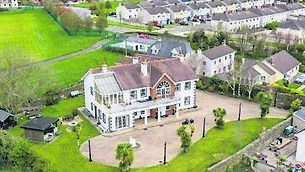
Two cottages carved into the Limerick countryside
A charming home with  amazing gardens for €295,000
Two cottages carved into the Limerick countryside

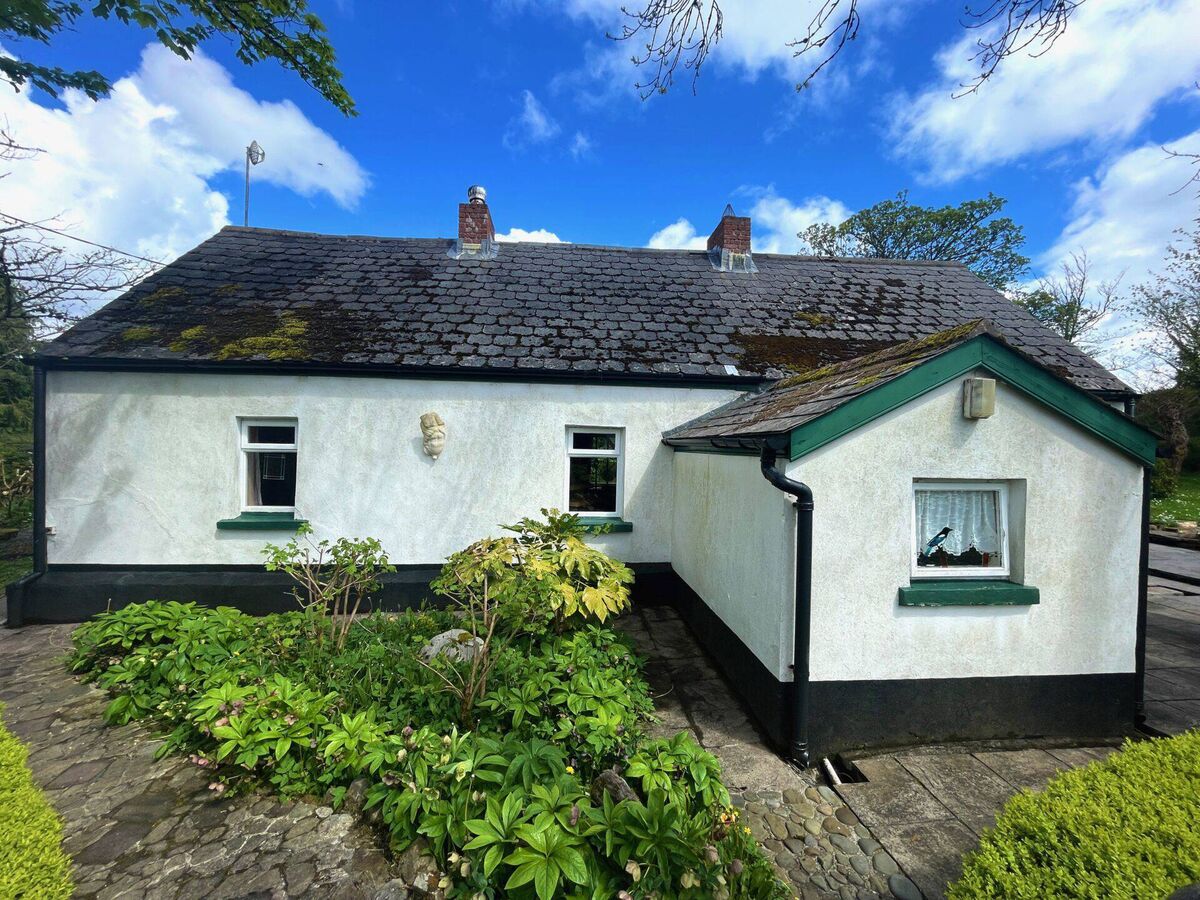
The property includes two sympathetically restored traditional cottages with hand-crafted fittings.

Tournafulla, Limerick

€295,000

Size

60sq m & 82 sq m (645 sq ft & 882 sq ft)

Bedrooms

1 & 2

Bathrooms

1 & 1

BER

G

MUCH more than the sum of its parts — this property at Tournafulla in Limerick, made up of two cottages and one and a third acre of gardens — might be looked on as something akin to a work of art.

That’s how the owners, wood sculptor Ian Norbury and his wife Betty, an expert in bespoke contemporary furniture, see it. Since first buying a derelict cottage on a flooded one-acre site in the mid-1990s, it has been a work in progress for them.

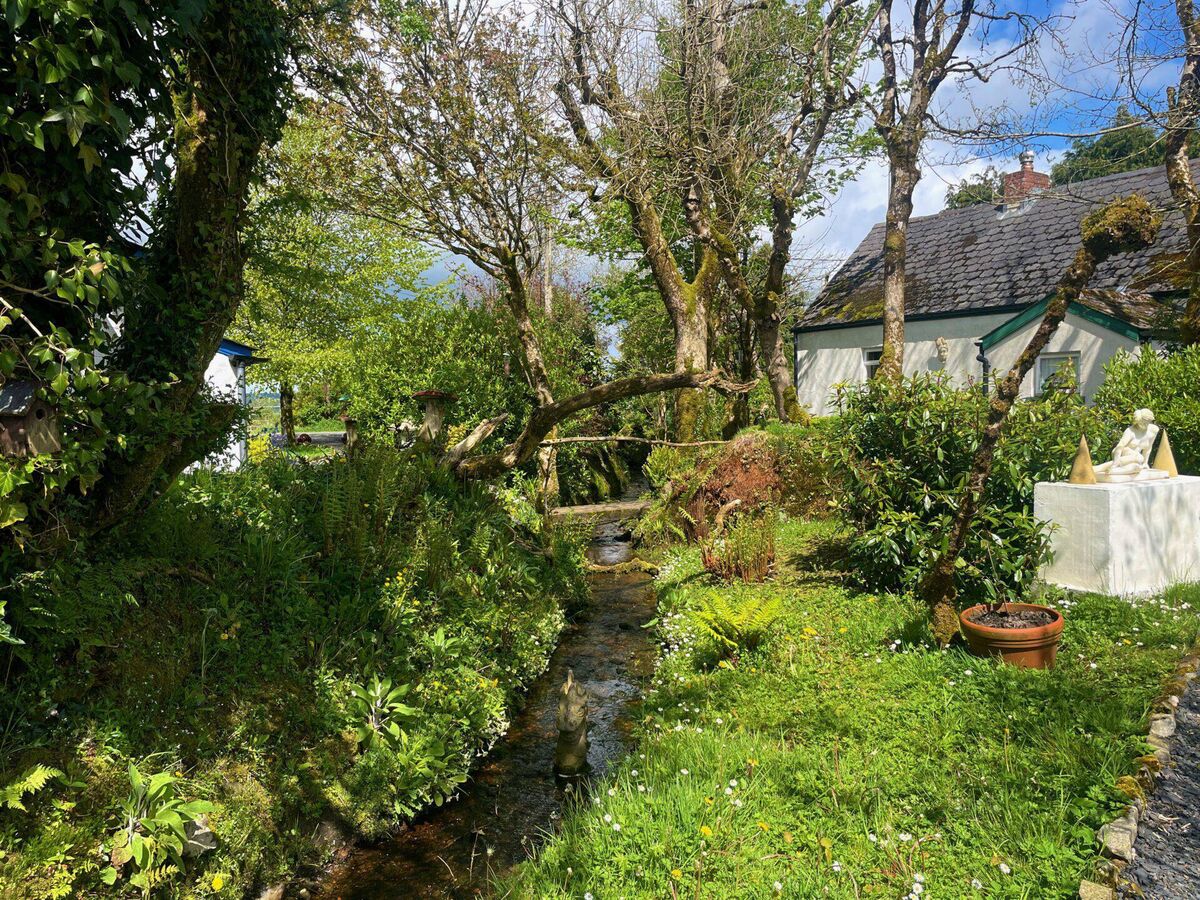
The property they are now selling includes two sympathetically restored traditional cottages with hand-crafted fittings and, in one of them, an elm staircase carved by Ian. That’s in addition to a wonderful woodland garden filled with sculptures and features which include a wide stream, meandering stone paths, sheltering trees, timber bridges, wildflowers and exotic plants as well as a veritable market garden.

Described as a world-leading wood sculptor, Ian has written nine books on wood carving including several on carving the female face and figure and has also done commissions for Buckingham Palace and the Tower of London.
It was an invitation to come to Abbeyfeale to give private classes to a group of Irish wood carvers that led to the purchase of the Tournafulla cottage.

Ian and Betty were living in Cheltenham at the time but were very taken with the countryside in West Limerick. “We bought the cottage for £4,750 Irish pounds,’’ reveals Betty, explaining that it was a shell with a roof which didn’t have running water or its own well and that the site was flooded and inaccessible.

It didn’t become their permanent home until the early 2000s, so they took a gradual approach to renovations. “People expected us to knock it but we wanted to keep everything that we could’’.

Endeavouring to do as much of the work as they could themselves, they got help from friends and, more unexpectedly, from neighbours. A local farmer turned up with a digger to help Ian unblock the garden stream and, another day, a man who said he had built the cottage in the 1940s stopped by to provide assistance. “He showed us where to make a hole to find the inglenook fireplace in the kitchen wall and where the drains were.’’ A few years after buying the cottage, they employed a dowser to find a well for them. “We paid him 25 quid and after just a few seconds he pointed at the ground and said dig,’’ says Ian.

When they decided to move full-time to Tournafulla, they bought and renovated a cottage located very close to the first one and have subsequently treated it as an annex.

“It had been empty for 17 years — the owners had gone to America leaving all the furniture. Everyone calls it Ryan’s Cottage so we decided to go with the flow and do the same”, reveals Betty.

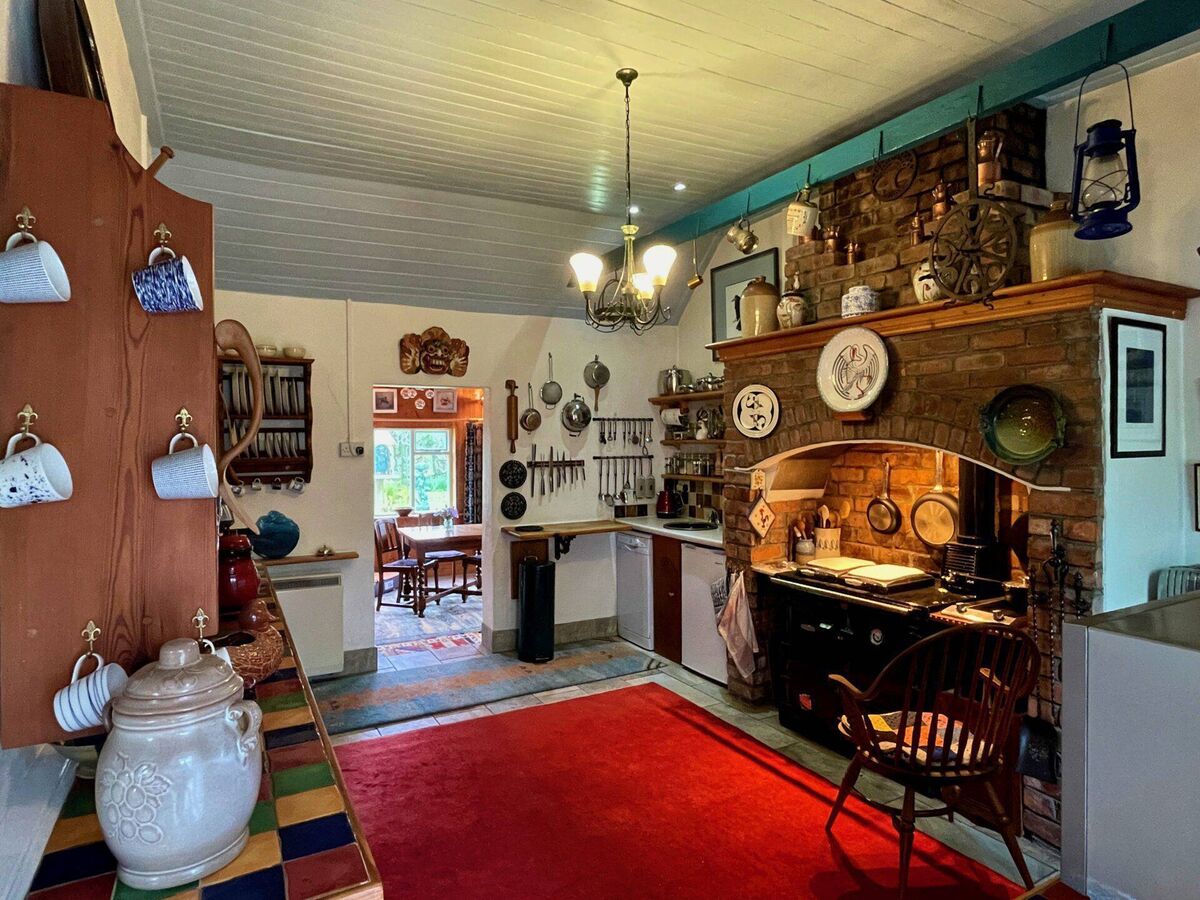
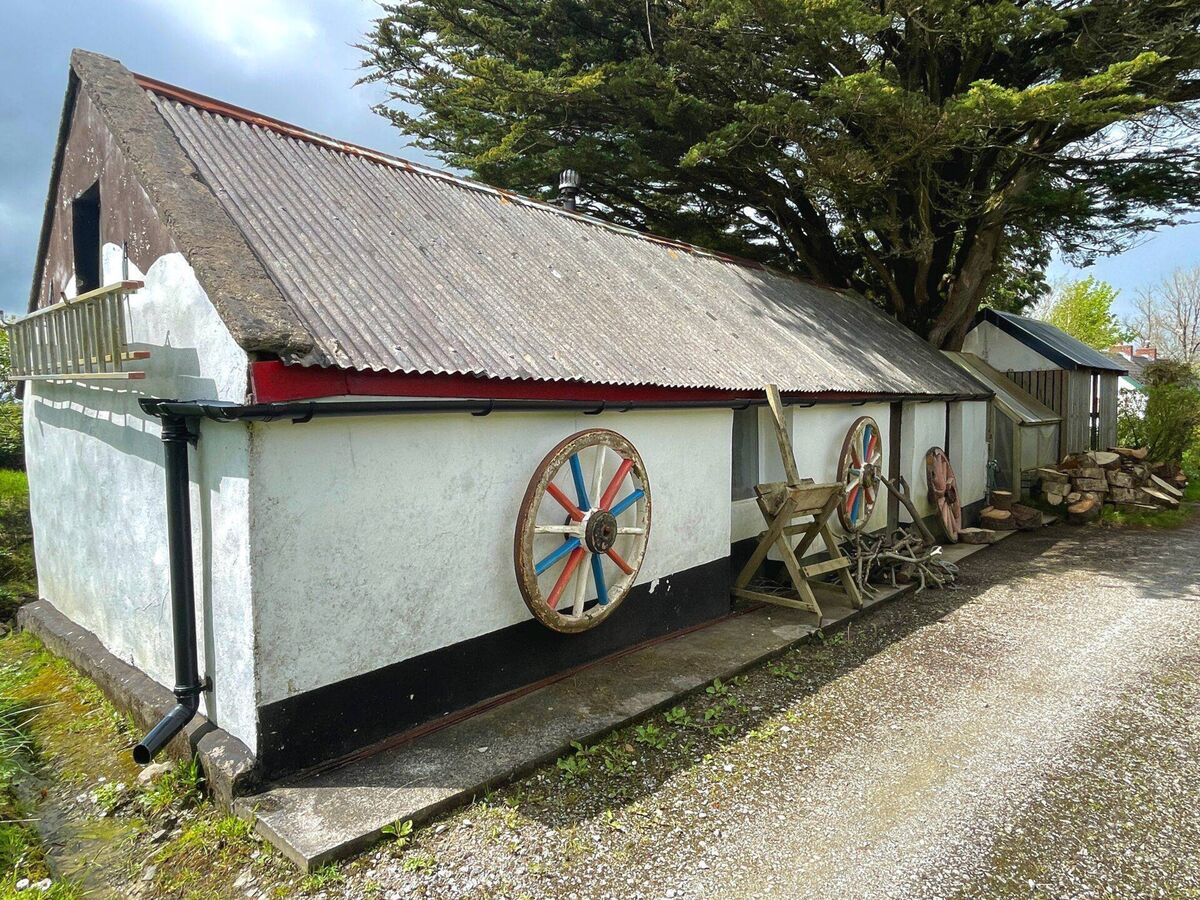
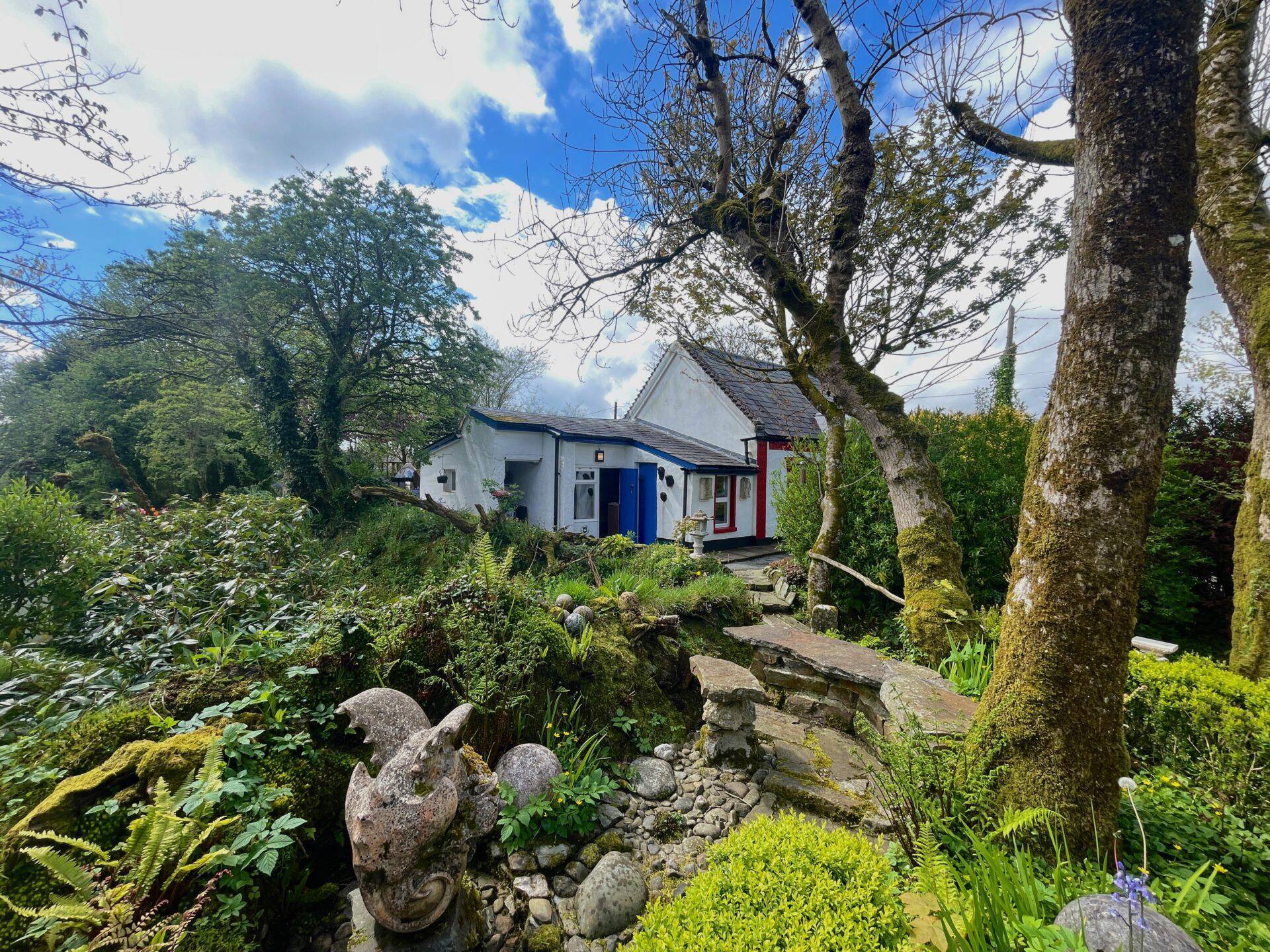
Painted red, white and blue on the exterior the main cottage is pretty and traditional with a kitchen in the centre. The original panelled ceiling is painted, and the full-height redbrick inglenook fireplace has been fitted with a Rayburn stove.

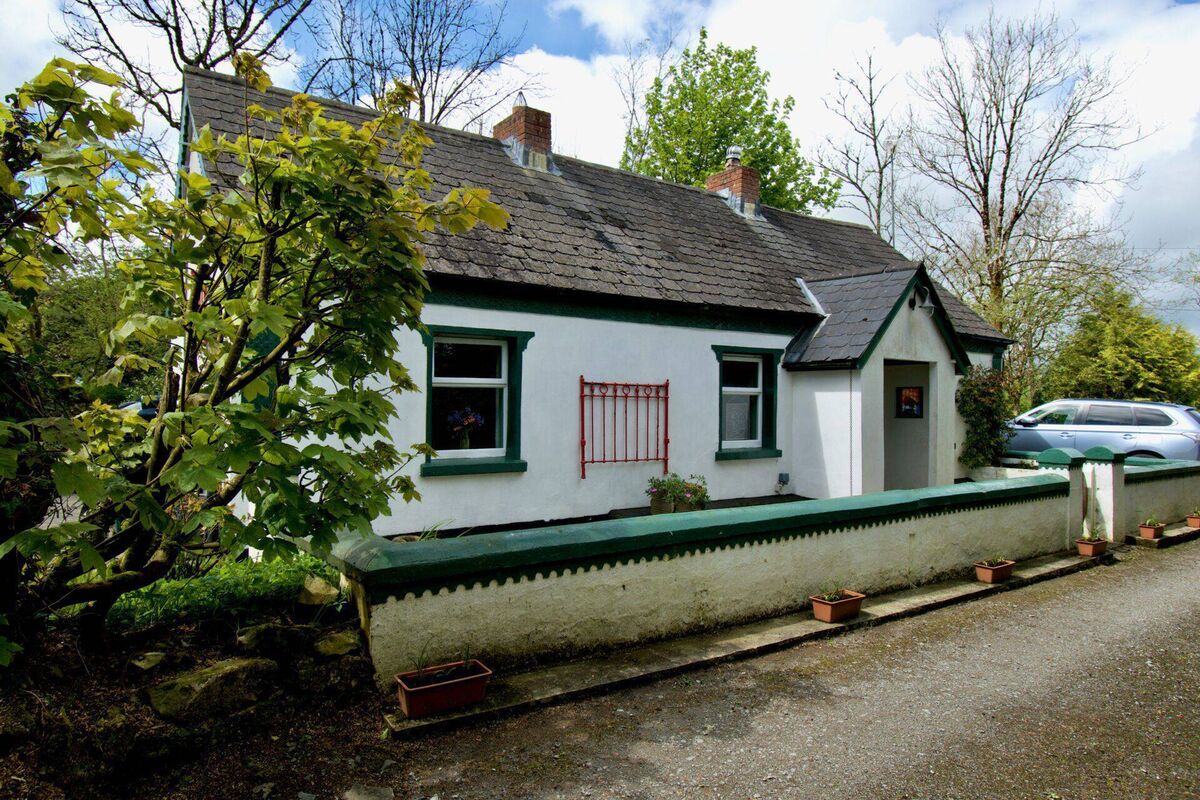
“Ian made a dresser from pitch pine cabinets which came from Cheltenham Ladies College,’’ reveals Betty, adding that this cottage still has its original single glazed sash windows.

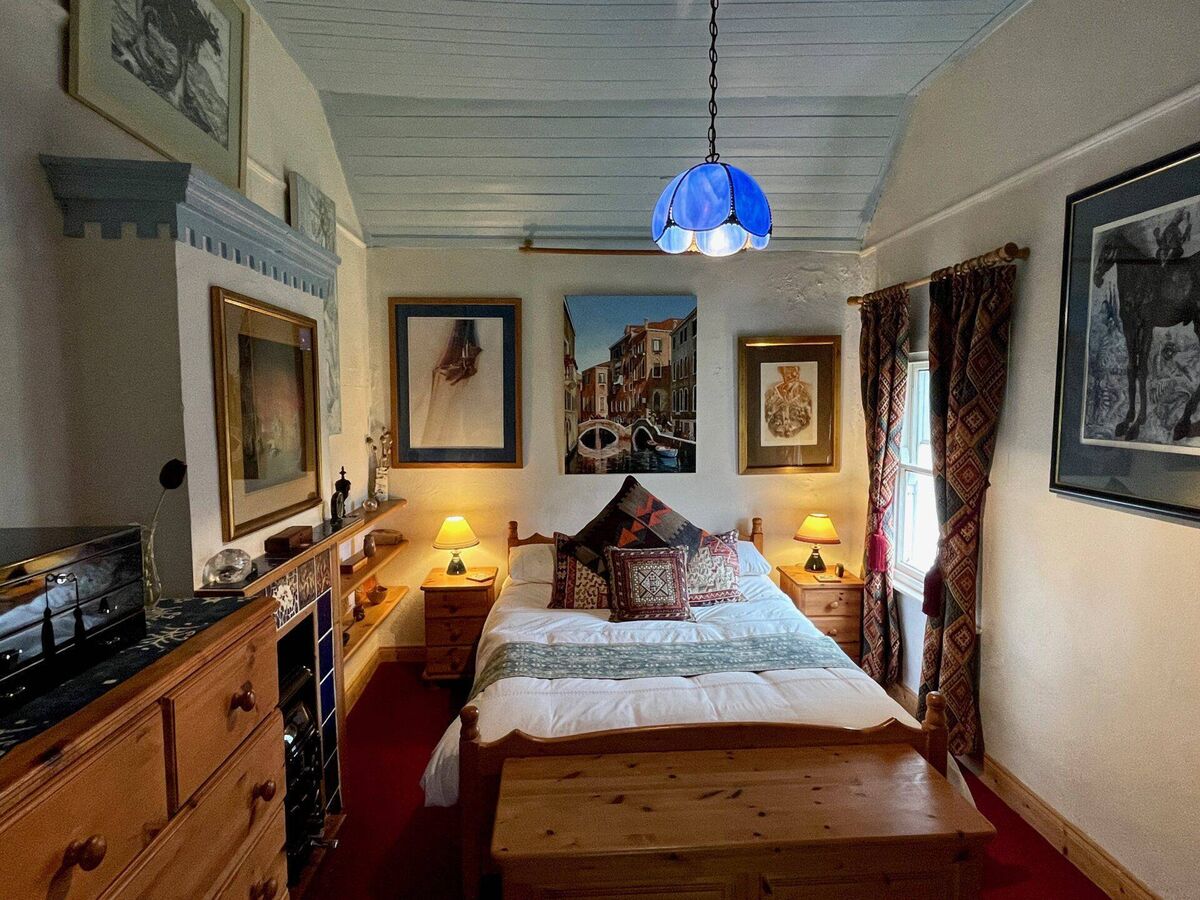
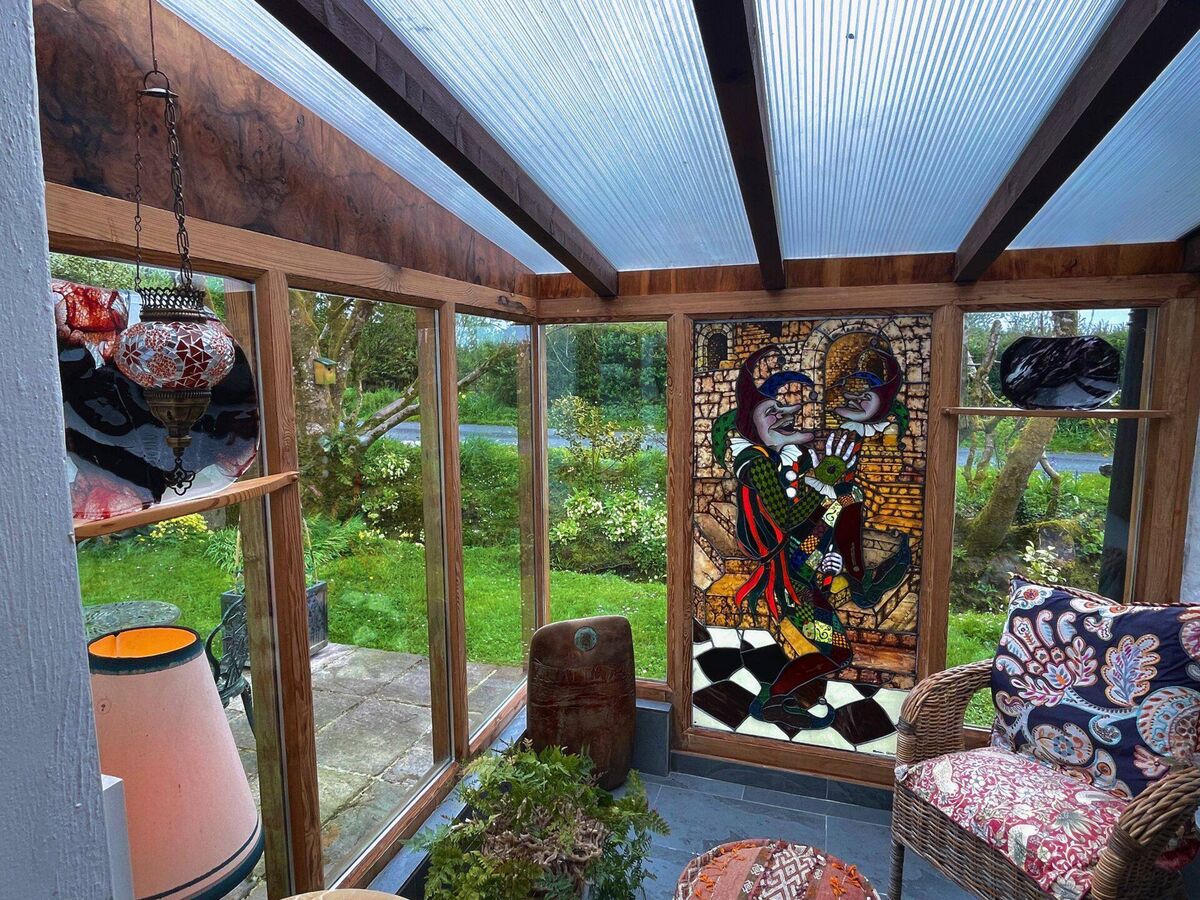
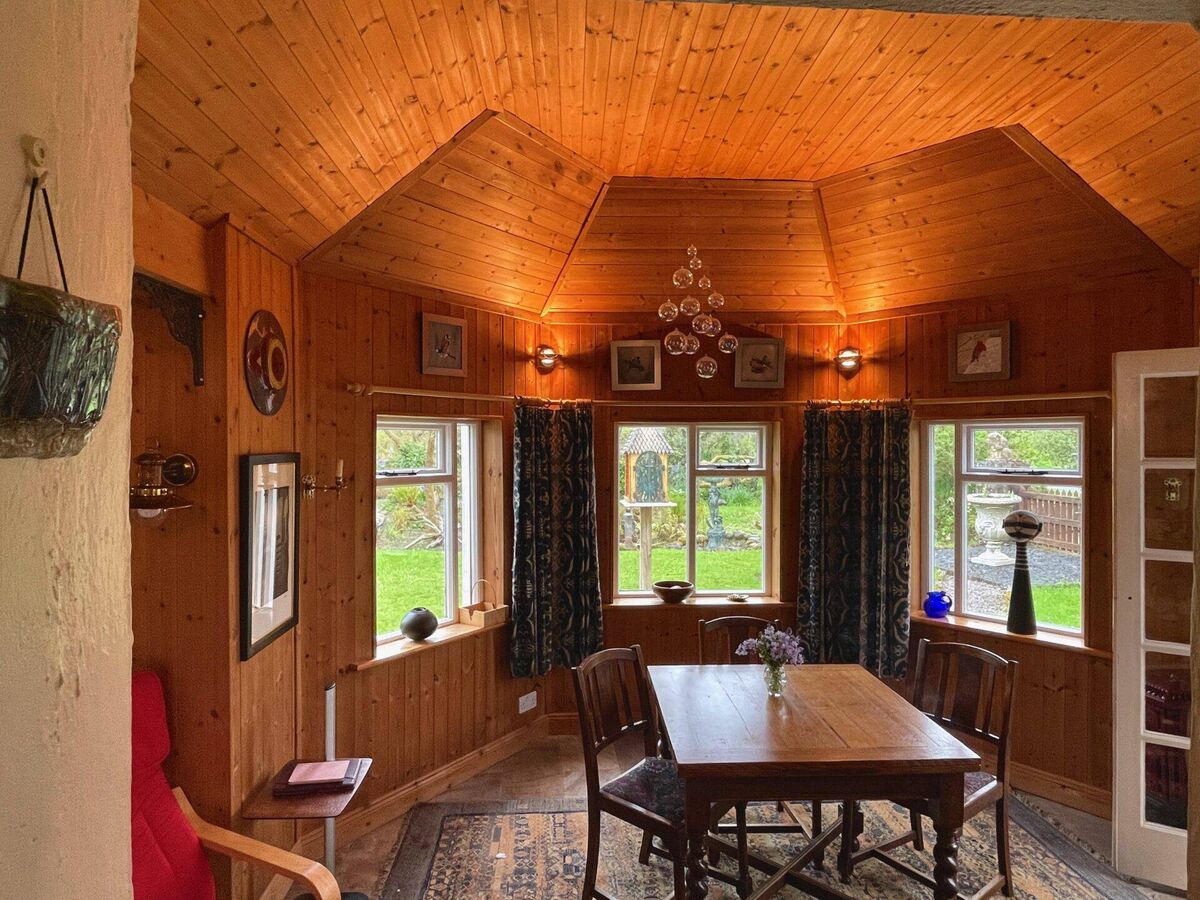
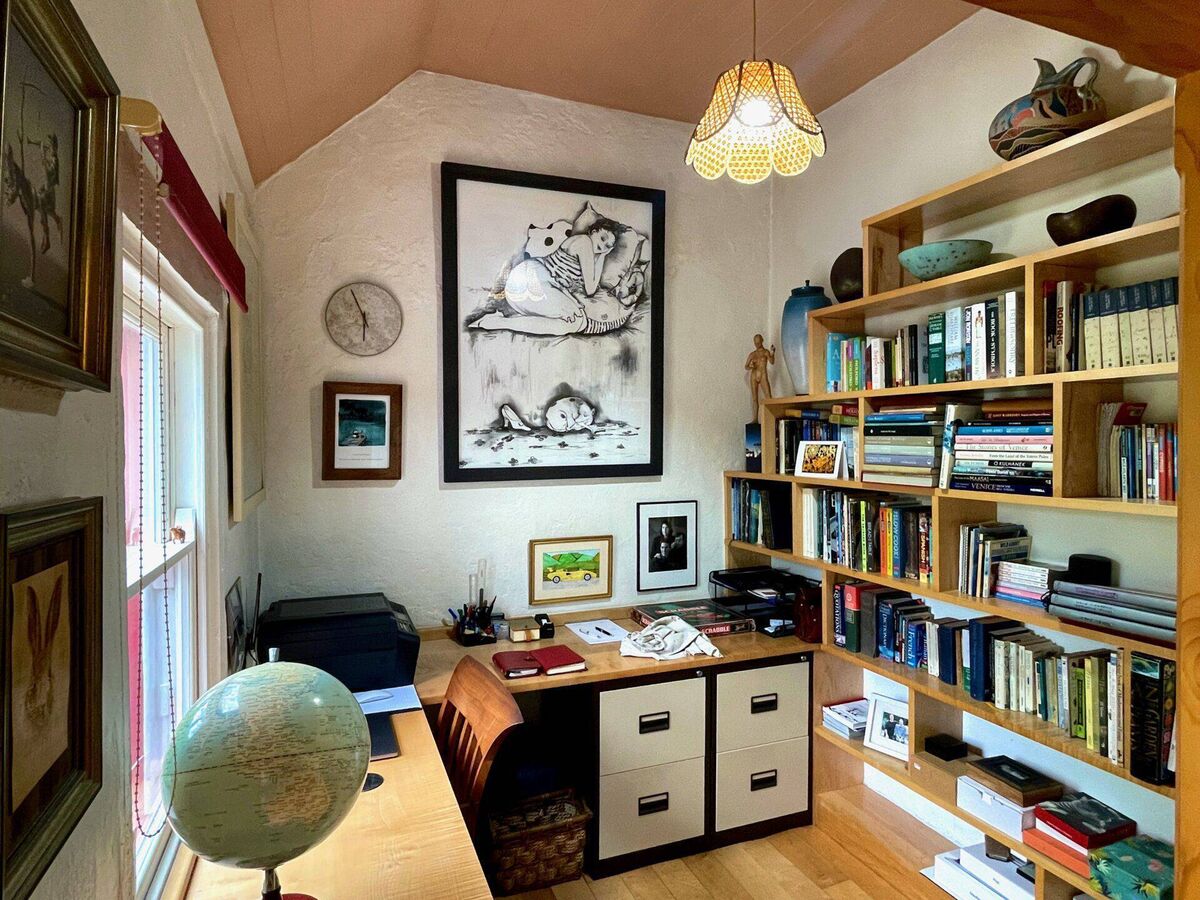
Off the kitchen, there’s a shelved room used as Betty’s office, a bedroom with a fireplace and a wet room with stained glass windows and ash cabinets made by Ian. To the rear, the couple has added on a timber-panelled sunroom with views of the garden and a smaller glass-roofed section with a stained glass window featuring a jester, which they say is an optional keep for a new owner.

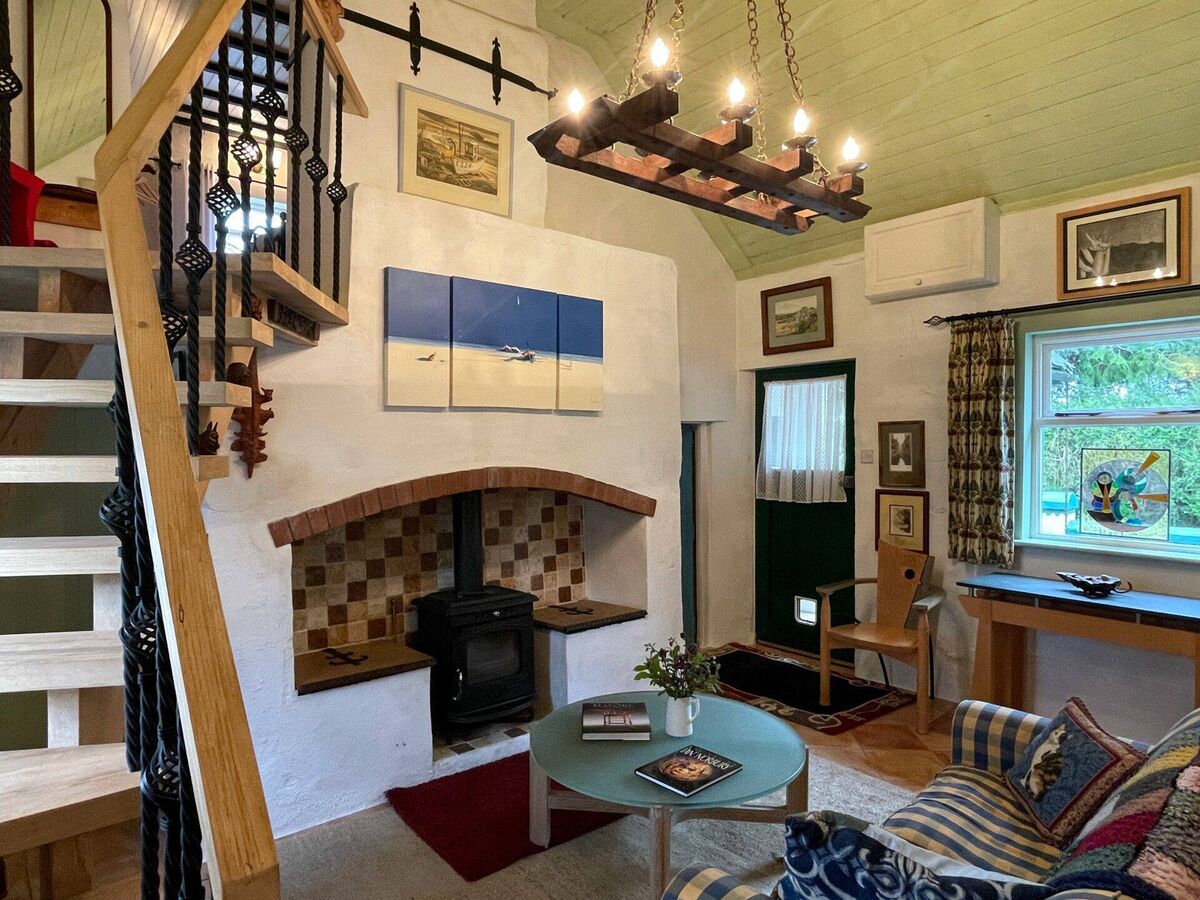
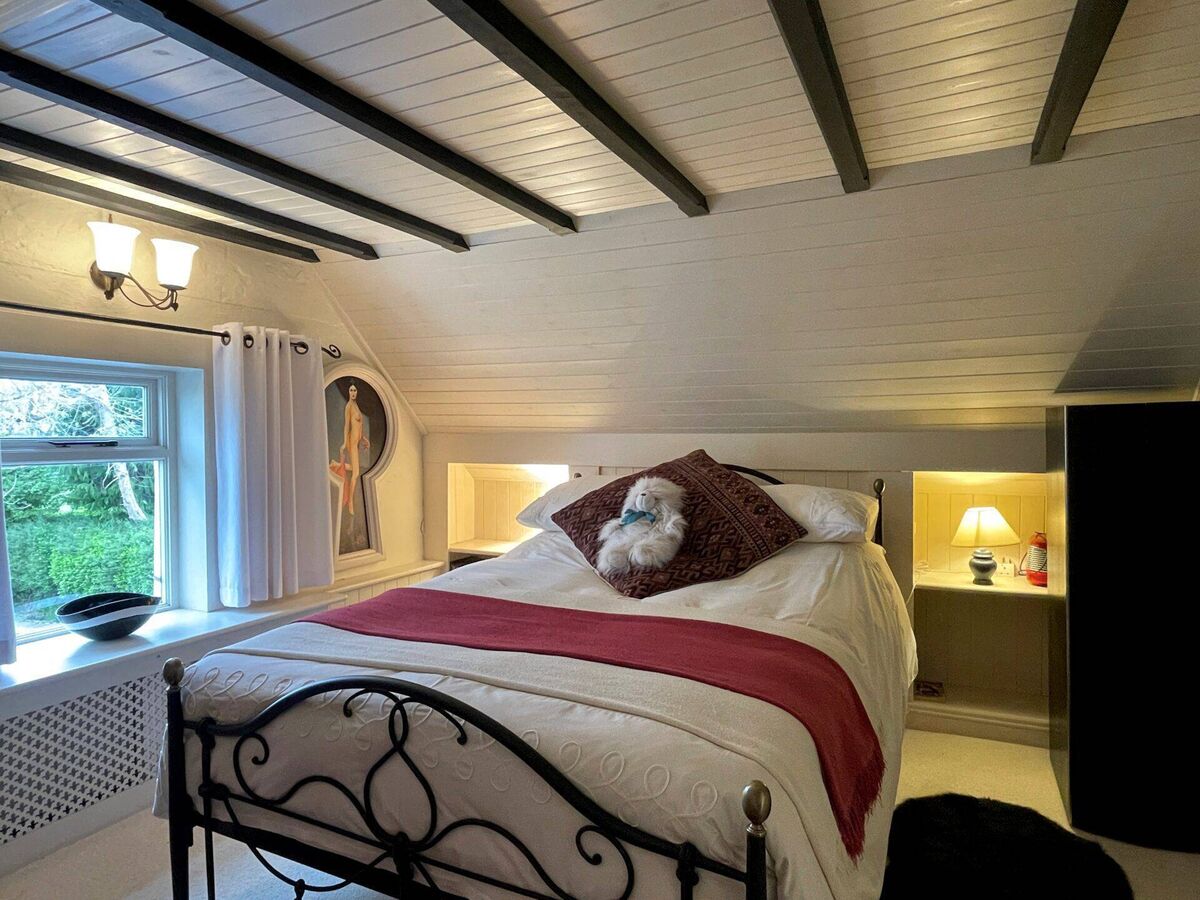
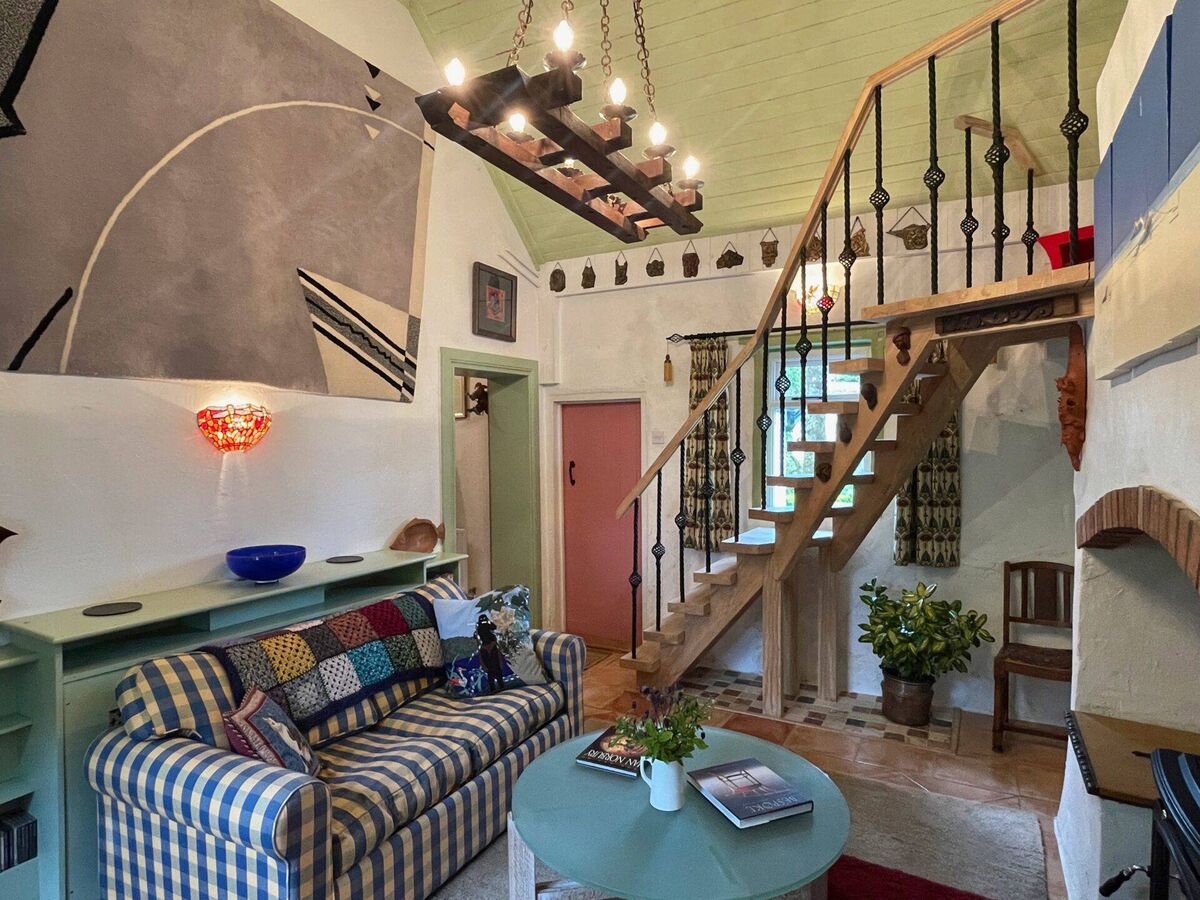
Ryan’s Cottage is slightly larger than the first one they bought and has a pretty attic bedroom accessed by an elm staircase carved by Ian. The staircase occupies pride of place in the central living room which also has a chimney breast with a stove and a high, timber-panelled ceiling.

Off the living room there’s a dining room used to showcase some contemporary furniture the couple bought with them from Cheltenham. The original timberwork in the cottage includes a moulded ceiling in this room which Ian says was put in by craftspeople who knew what they were about. This cottage also has an office for Ian, a bathroom and a small kitchenette at the rear.

In addition to the two cottages, there is a selection of stone outbuildings which Ian has mostly turned into workshops. One is a former cow shed attached to the side of the main cottage while the other is a long detached building close to Ryan’s Cottage.

Viewers will be charmed by the cottages and astonished to discover that the owners have created such a comfortable and attractive home with quite minimal disruption to the properties’ original features and character.

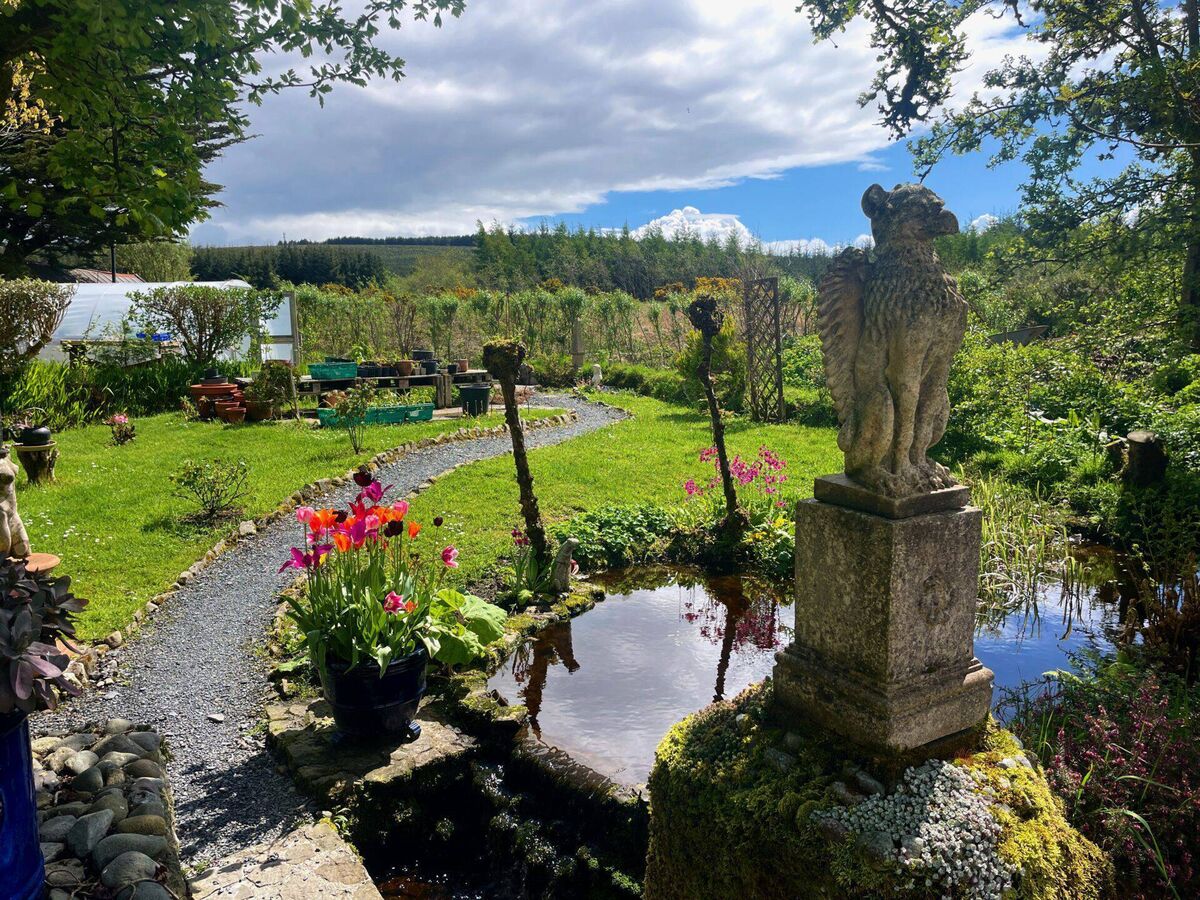
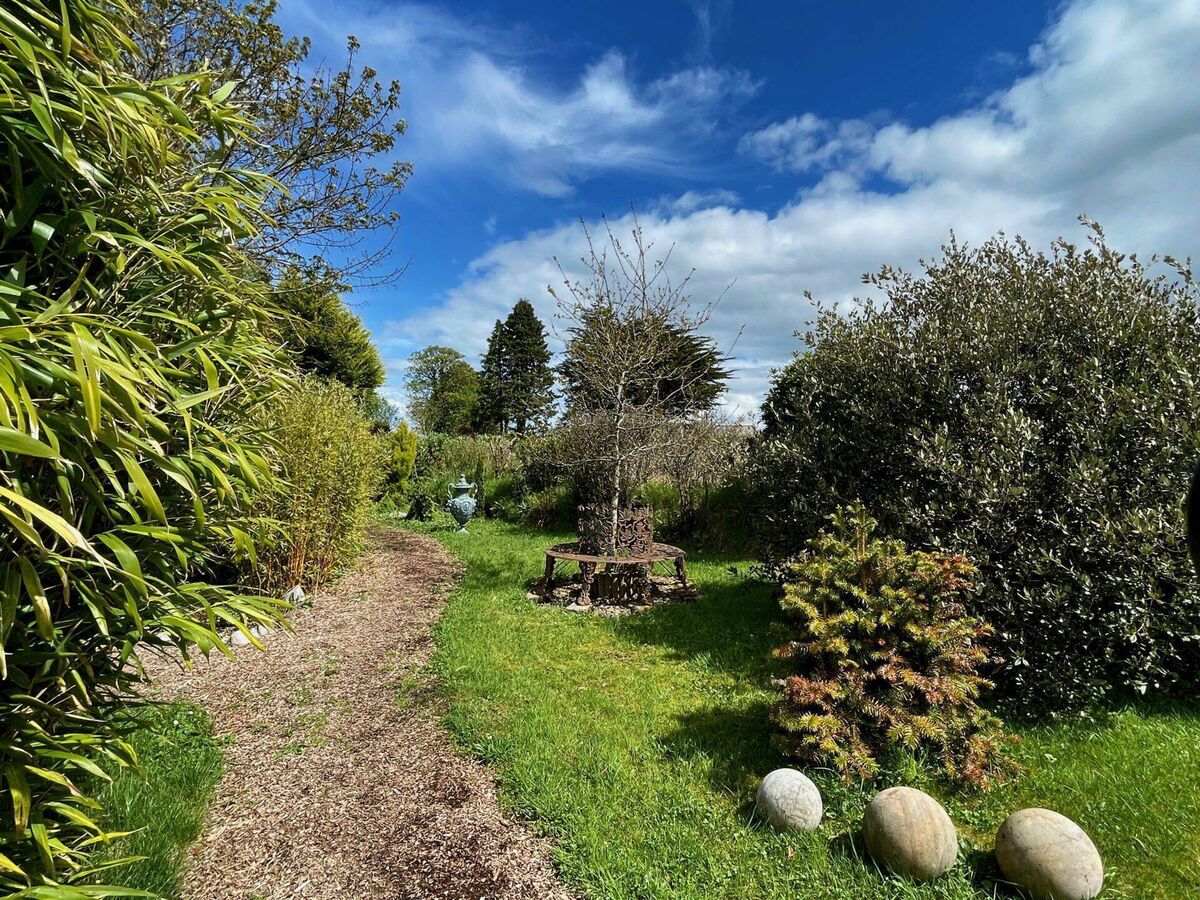
But it is the gardens — all 1.38 acres of them —which will truly astound those who come to see the property. On a site which is bounded by a stream and sheltered by a small number of huge old trees, the Norburys have dug, planted, built, tended, laid paths, constructed bridges and clearly spent thousands of hours creating gardens that you would almost expect to pay to visit.

By Ryan’s Cottage there’s a lily pond which in the recent summer sunshine has come alive with dragonflies which can also be seen flitting across the wild orchids in the garden. Bathing in the stream behind the main cottage is a female figure, made by Ian in cold cast resin, stretching her arms up to overhanging boughs.

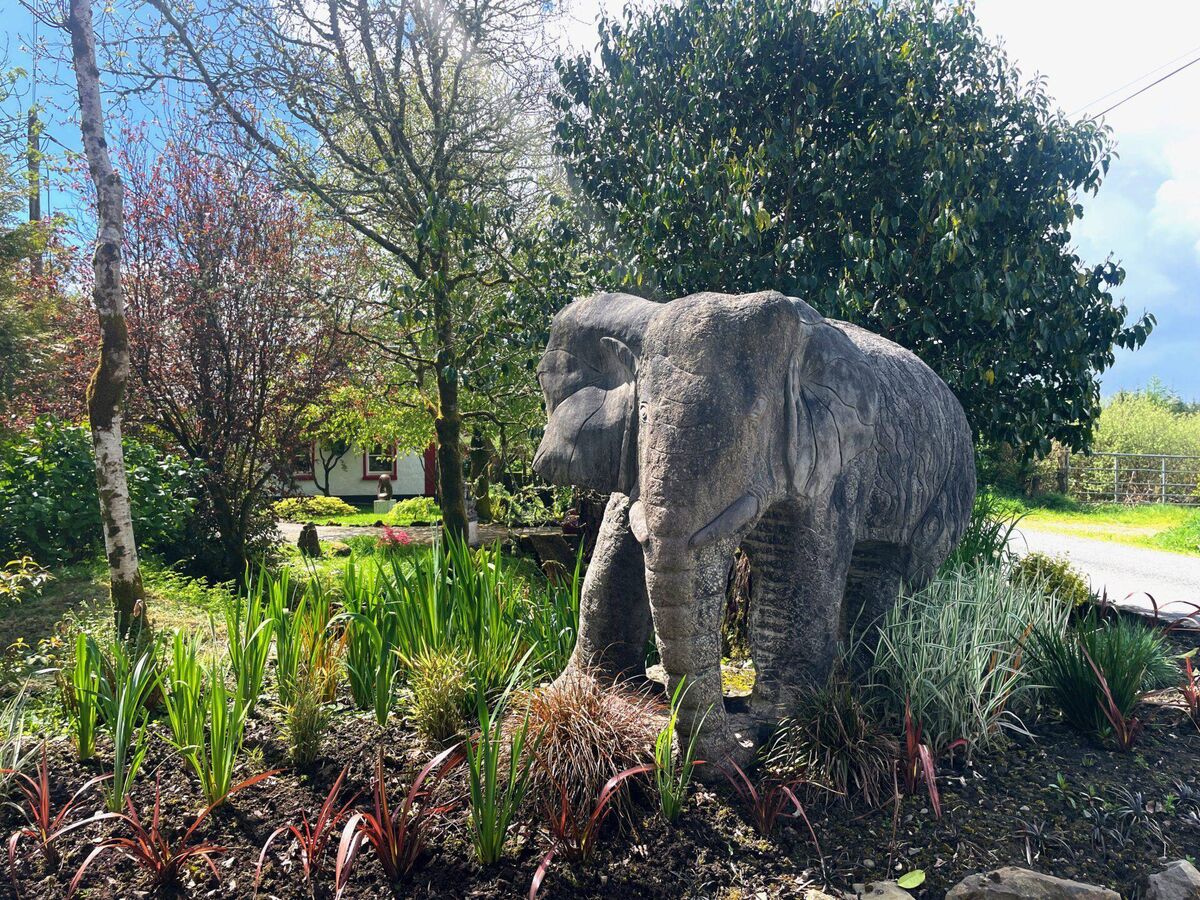
At the roadside in front of the cottages, visitors are met by a large stone elephant standing tall amidst grasses and yellow irises. Purchased from a local garden centre, this weighs four tonnes and definitely won’t be going to Wales with the Norburys.

The elephant is one of a highly diverse range of garden ornaments which include a Buddha, a gryphon, several roman figures, the Indian god Ganesh, a fountain, fossils and a statue of a naked female carved by Ian which he calls the Temple of Venus.

Behind the cottage there’s a garden with poppies, cornflowers, wild orchids and rhododendron bushes and beyond it a shaded woodland garden planted with a profusion of bluebells and where there is a large gazebo for relaxing out of the sun near the stream.

Further away from the house, there is a field with raised beds which seems to contain almost every vegetable that it’s possible to grow in Ireland. The Norburys have also planted an orchard with apple, pear and damson plum trees and built a fruit cage for raspberries, red currants and gooseberries.

The 26-metre-long polytunnel close to the edge of the site is filled with a variety of produce you don’t expect to find in a cottage garden including grapes, cherries, apricots and nectarines as well as tomatoes and nasturtiums.

In addition to attracting dragonflies, the garden is regularly visited by hares, badgers and foxes. “We also get tadpoles in the stream and in February there are hundreds of frogs — we can hear them croaking in the mornings,’’ reveals Betty.

Moving to be closer to family, the couple is sad to leave their Tournafulla home.

“But we are viewing it as if it was one of Ian’s pieces which, now that it’s finished, is time to sell,’’ says Betty.

Located at Glengort South, three km from Tournafulla village in south-west Limerick, the property is on the market with a guide of €295,000. The Norburys say that if a buyer falls in love with the cottage as is, they are willing to discuss the inclusion of the garden sculptures.

Declan Woulfe of DNG Woulfe says that property, like a piece of art, is unique.

“We are already getting enquiries from the UK, the US and Canada and we have already shown it to an American couple,’’ he says adding that in addition to being attractive to buyers looking for a tranquil, rural getaway it also has commercial potential and could be used for Airbnb or could perhaps be turned into a yoga studio.

VERDICT: A very charming home with quite amazing gardens.

More in this section

Revoiced

Newsletter

Sign up to the best reads of the week from irishexaminer.com selected just for you.

Cookie Policy Privacy Policy Brand Safety FAQ Help Contact Us Terms and Conditions

© Examiner Echo Group Limited