Want to choose a location to live at? You just might be lucky
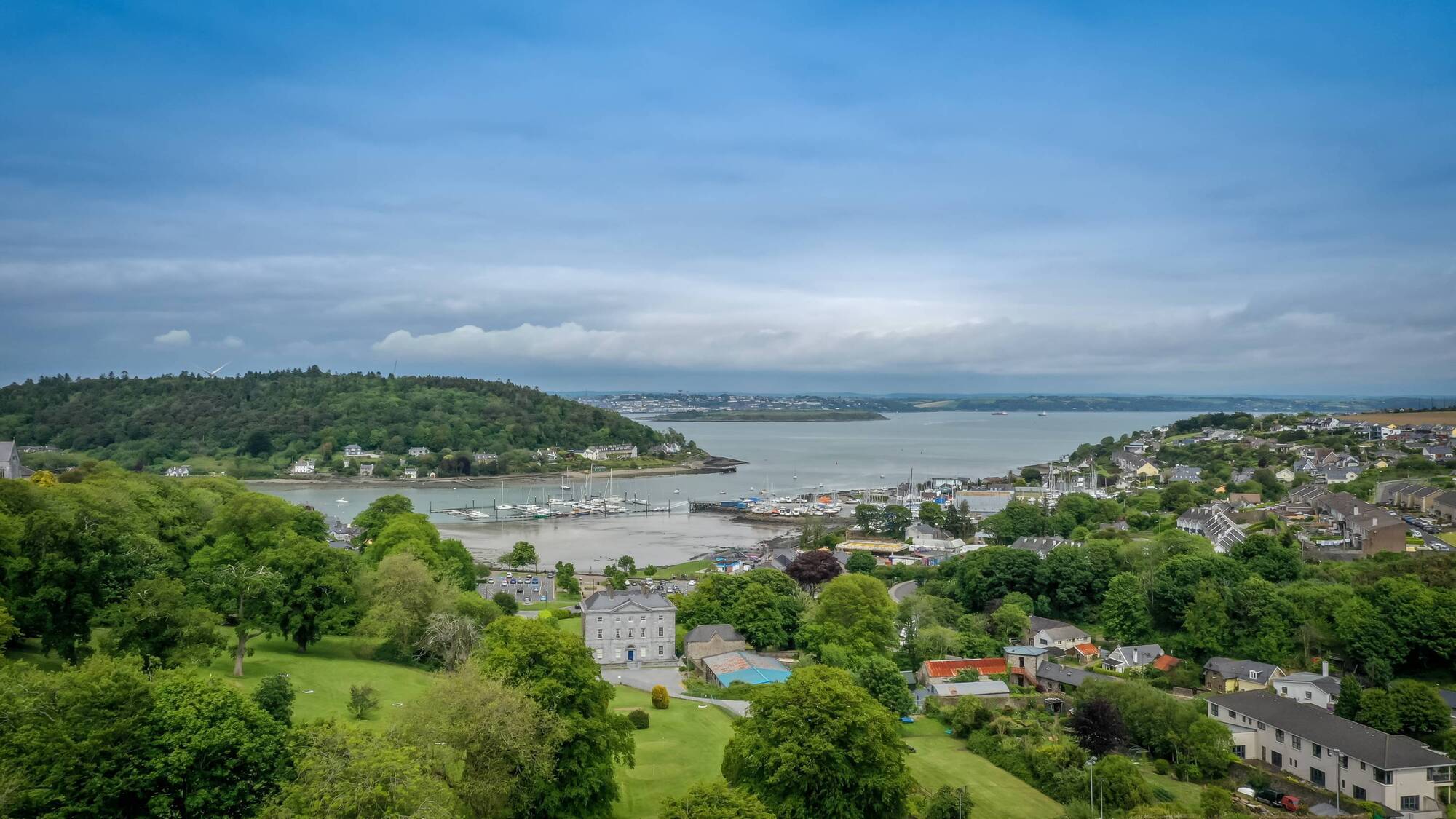
The rise of remote working means city centres are no longer the go-to for desirable or premium locations - with lake, sea and woodland settings soaring in demand as a place to live.
Home hunters keen to buy don’t need to be told there’s not a lot of choice out there: the market has been slow so far this year to pick up from winter lulls on the second-hand front, while in the New Homes sector, well, there just isn’t enough supply at all, at almost any price point.
And, if buyers are particularly location sensitive, well, the field narrows even further.
Websites like MyHome and Daft list 200-250 new homes schemes to choose from currently, with about 30% of them in the Greater Dublin Area.
Over 20 available developments show up in Cork city (v few) and county (the vast majority) with MyHome, or about 30 with Daft, but of course that’s not the entire picture.
Some are between phases, with no available stock. A reasonable number is in the 2023 pipeline. Others you just have to keep an eye out for, and a good proportion are schemes where the bulk, or majority, is being picked up by housing associations, or by the relevant local authority.
In an increasingly fragmented market, there are ways into home ownership via the likes of the Affordable Dwelling Purchase Arrangement, where local authorities retain an equity share.
The Property & Home section of last Saturday's edition of the Irish Examiner outlined a number of such ‘Affordable’ schemes in Cork alone, in locations like Tower/Blarney, Montenotte and Mayfield.
Among the schemes was one very long awaited on at Hawkes Road, Ardrostig, costly-assembled ‘legacy’ site in the heart of Bishopstown which has taken over 15 years to see homes built on it.
Some 35 of the 64 homes (being built by OBR Construction) are set aside under the affordability scheme with two-bed townhouses priced from €246,000, and three-beds from €289,500.
If sold on the open market values would be in the region of €320,000 and €370,000, it was claimed.
The application ‘portal’ opened Tuesday; those with a penchant to take a gamble will know that’s also the day the Cheltenham Festival kicks off, but, in the case of Ardrostig, the field is going to be a very crowded one indeed.
The number of applicants for such affordable homes in so-settled Bishopstown could even be a p1 story in that febrile week?
Well, that says something about ‘traditional’ locations, but one of the upsides of the covid-19 pandemic is that it shifted many people's mindset about where is a sustainable place to live.
City, town or village convenience is always a boon, especially if public transport options are to hand, or to foot.
But, remote working – when it finds its level of equilibrium in the next several years or so – has disrupted familiar parameters and will feed into a second tier of ‘desirable’ or premium locations, mostly dictated by lifestyle lures, be they lake, sea or woodland…once there’s a good broadband service guaranteed.
Feeding into the nuanced and not-so nuanced shifts in demand too for a place to live is the sheer energy efficiency of new builds, homes which can be run for a fraction of the cost of older, colder stock.
The difference right now can be as much as €500 vs €5,000 a year in running costs between a high ‘A’ rated home (as all new builds must be), passing through modern, second-hand stock with a favourable ‘B’ rating and eligibility for reduced rate ‘green’ mortgage rate, down to lowly, ‘G,’ which is either costly to run, or chilly to live in or, both.
(Given that costs for a certified deep retrofit of older homes from previous decades, from D, F and G BER-graded builds can range from €50,000, up to and over €100,000, the impetus to buy new is huge among 2020s home hunters.)
Sure, older stock can be retrofitted (and should be, once grants further align with the costs) but experience shows that even with new incentives to renovate vacant and even derelict properties nationwide, there’ll be a reticence to take on older stock at a time of high construction costs, and labour shortage, with just about every sector of the building sector competing for skilled workers now, and into the foreseeable future.


CONNECT WITH US TODAY



Be the first to know the latest news and updates