Wider mix now of buyers includes housing bodies and local authorities
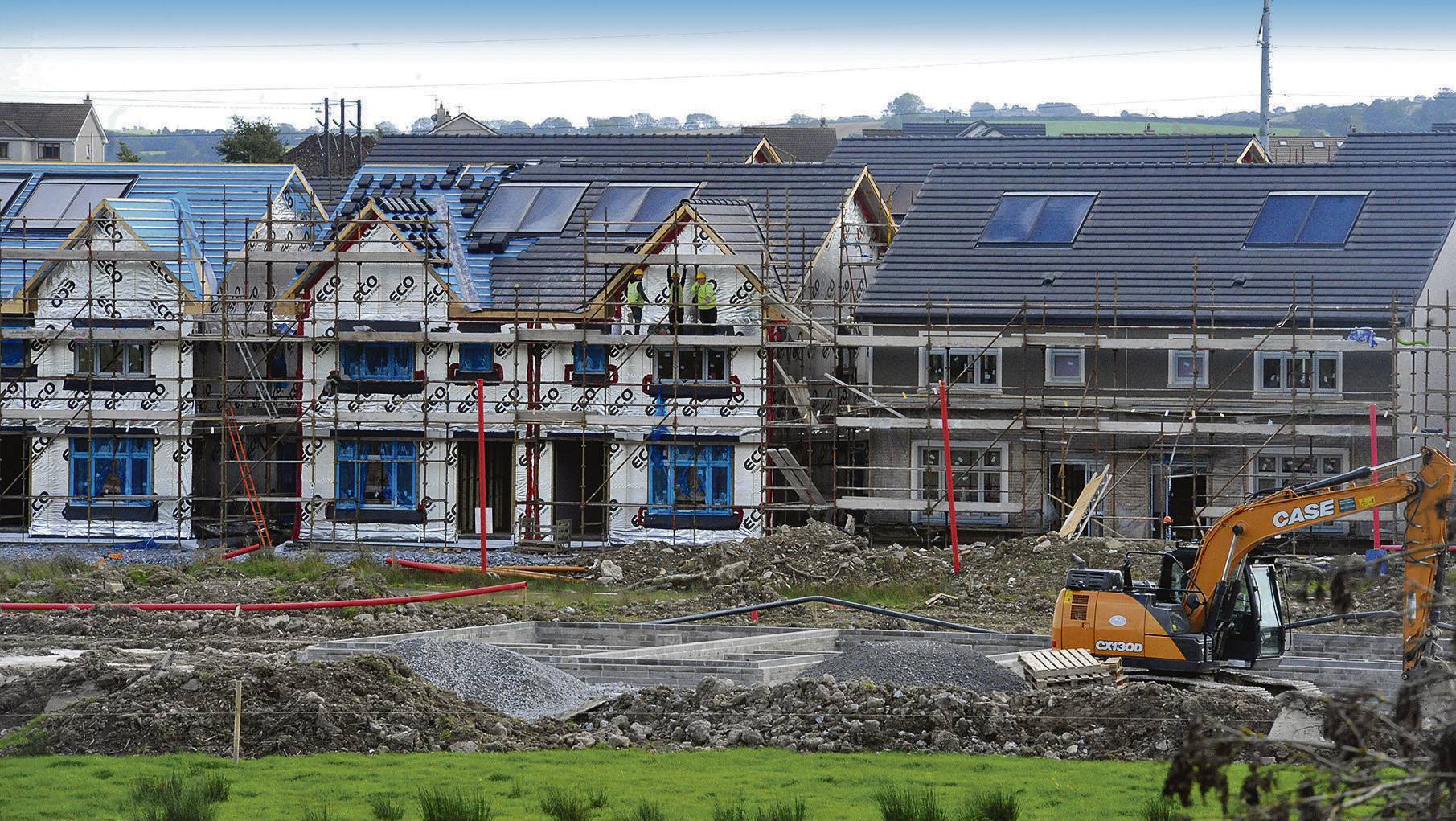
Concerns for future supply in 2023 are already being raised, with evidence of immediate supply waning.
A property market needs buyers across a wide spectrum, be they first-time buyers (FTBs), traders-up, traders-down or ‘right-sizers,’ investors for the rental market, be private/small time operators or large funds, and, increasingly important, local authorities and approved housing bodies to ensure as wide an accommodation to national housing needs as possible.
Provision of social housing is - at last - heading back to the sort of figures prevalent in the 1970s when the National Building Agency (NBA) was active: Government targets under the 2021-2030 Housing for All plan were for up to 9,000 social homes per annum; last year, they fell short, at 6,500 to 7,000 units but the evidence on the ground is that the pace of roll-out is heading the right direction for those not in a position to buy and to own tier homes privately.
For the buyer segment, there’s clear evidence of a pick-up, with the number of mortgage drawdowns last year put at 52,634 by the Banking and Payments Federation (BPF), the highest levels since 2008.
That saw €14.1 billion lent for home purchases (both new and second-hand) in 2022, when a slightly higher figure, €15.8 bn was approved for 58,276 would-be purchasers: the figure was up 21% on the preceding year, 2021, with that year’s market likely to have been impacted by covid-19 restrictions.
Of the €14bn pot lent for property purchases, 46% of borrowers by both volume and value metrics were First Time Buyers, according to the most recent figures from the BPF which totted up that 108,000 First Time Buyer (considered ‘the lifeblood’ of the market,) have drawn down mortgages over the past five years.
Despite international headwinds from the war in Ukraine, the cost-of-living crisis and higher interest rates, the lenders’ federation added “looking to the year ahead, we expect housing and mortgage demand to remain strong despite the challenging economic environment…lenders will continue to support customers as they seek to buy or build a home.”
The Price Register shows 62,11 transactions in 2022, up from 59,491 in 2021, with Marian Finnegan of Sherry FitzGerald noting that excluding block sales and new homes acquired for social housing there had been a 7.3% increase in transaction on the first nine months of 2021.
And, she noted too the increased volume of new homes sales, with new homes sales nationally having gone up 35.1% on the same period in 2021, and up 16.8% on 2019 output, a pre-covid era comparison.
Nationally, the new homes market accounted for 16% of total transaction activity in the year to the end of quarter three 2022, with a far higher figure, some 30% shown in the Greater Dublin Area (GDA)’s new homes sector.
However, Ms Finnegan highlighted concerns for future supply in 2023, and possibly beyond (see also previous page) with evidence of immediate supply waning.
The number of planning permissions granted in Q3 2022 was down 41% year on year, while commencements also slowed by 13% to 25,150 according to Dept of Housing, Local Government and Heritage (DHLGH), she pointed out.
The biggest drop in commencement was in the Midlands, at 35%, while the southwest was far lower, at just 3% reduction. The only region showing growth in activity was the mid-west, up 2% in the Jan-Nov period.
The Dublin/Mid-East region accounted for 57% of all new home construction, and it also saw most apartment construction too, up 79% on 2021 with c 9,160 apartments delivered nationally in 2022.
On the second-hand market, owner-occupiers made up 79% of buyers, the dwindling investor buyer sector came in at 13% of purchasers (whereas investors were 36% of sellers) and second home buyers half that at 6-7%.
Despite the considerable financial incentives for First Time Buyer to buy new, this segment also made up 40% of owner-occupier buyers of second-hand homes, where values in many cases were less than new ‘starter’ stock which typically averages in the €300,000-€350,000 range.
Lisney researcher Aoife Brennan recently suggested that purchasers are becoming more price sensitive, due to “the geopolitical and macroeconomic factors, most notably the war in Ukraine, rapid rises in the cost of living (particularly energy), interest rate hikes for the first time since 2011 and less disposable income.
While supply and sale listings overall had picked up “part of the supply increase is being fuelled by weary investors selling their buy-to-lets as life as a landlord has become too stressful with rent caps and eviction bans along with possible additional changes.
“Further investors will also leave the market this year which will be good news for buyers but unwelcome news for renters with even more difficulties in a severely undersupplied lettings market,” Ms Brennan added.

CONNECT WITH US TODAY



Be the first to know the latest news and updates