Property Clinic: The cost to knock down internal walls and create an open space
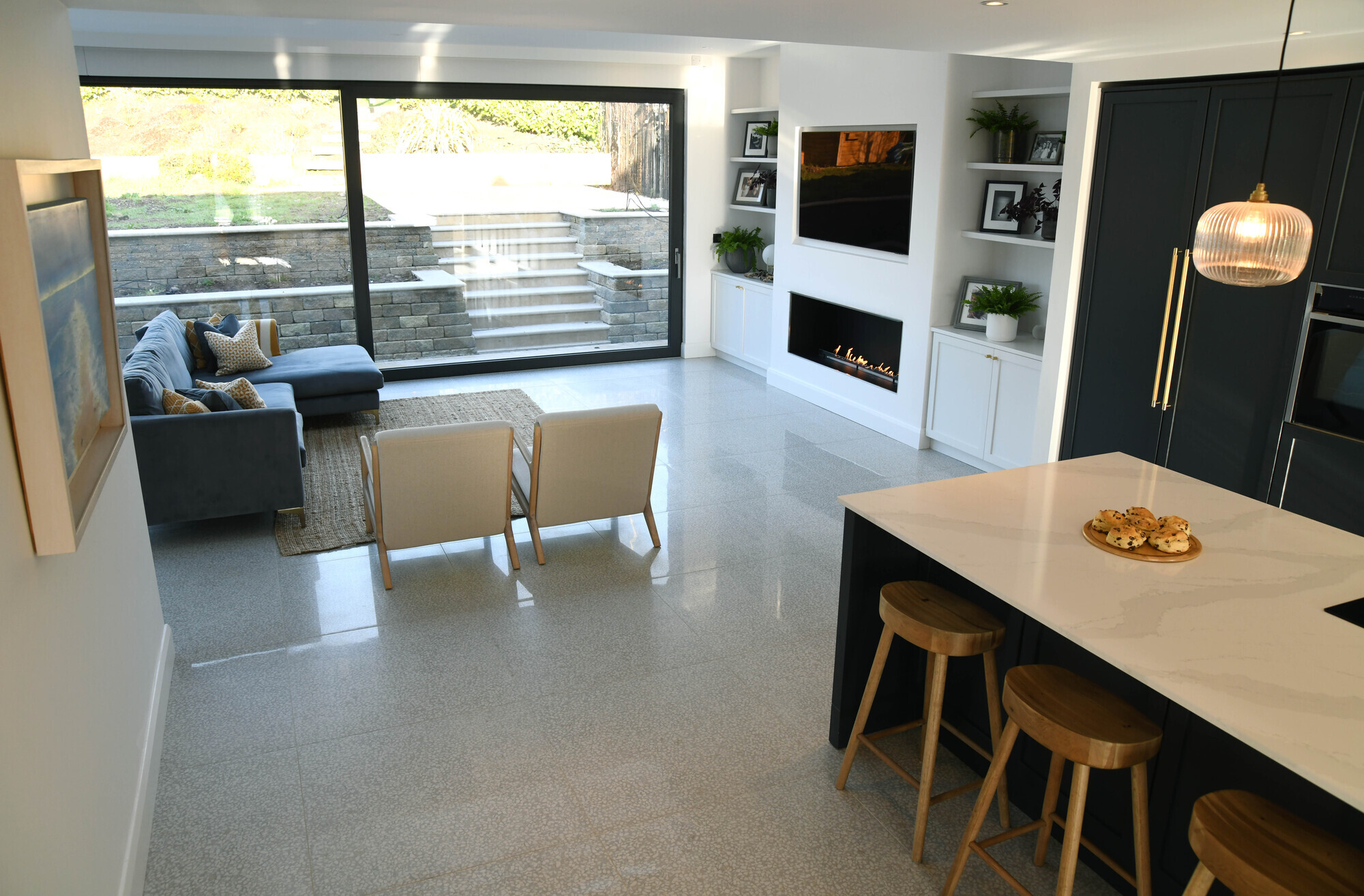
You can change layout of an older semi-detached property to create an open-plan space
Property Clinic: The cost to knock down internal walls and create an open space

Open plan living in a Co. Cork family home.


Hello Kieran, my partner and I have been looking at older era homes to trade up to from an apartment — we really need more space.

Most of what’s on the market in locations we like seem to have very traditional internal layouts and the rooms are not much bigger than what we have right now.

How big a deal is taking down a solid block wall in an existing house? Can you do it for, say, €10k?

We’re looking at semi-ds, mostly with two reception rooms and separate kitchens. What are the pros and cons of going more open plan?

We like sliding ‘pocket’ doors too as a way of compartmentalising as needed. Why don’t more builders install them? They seem like such a great idea.

Thanks, Pat and Ann,

Cork City

Hello Pat & Ann,

Thank you for your question. I certainly empathise with your current situation. Living in an apartment is great to begin with — an urban bolthole offering you all the spoils of the city at close hand. However, at some stage in life you yearn for more: more space internally as you say, your own private entrance, some community locally, perhaps even a garden.

So, you have begun to look at older semi-detached houses as your first port of choice. These offer many benefits. An established neighbourhood, simple and robust construction, reasonably sized garden to the front and rear, and generally a commutable distance from the town or city centre.

The older variety in particular boast more generous sized reception rooms and often slightly higher ceilings but what they lack is, of course, open-plan living. This is a modern phenomenon and as such it needs to be reverse engineered into older homes.

So, what are the advantages and disadvantages of open-plan living and what is typically involved in knocking walls to create this elusive bastion of modern living?

Open-plan living has been around for some time. In my experience it started with the ‘kitchen/diner’ in the 1990s and early 2000s. As time wore on and more architects were commissioned to design new homes and overhaul our existing stock, the humble sunroom was added to this open-plan core and the modern living space was born.

Having lived in an open-plan house for some time, I love the concept from a social point of view. I feel the kitchen and dining connection is seamless but I do feel there is a yearning for the living area to be slightly removed.

Yes, people have a concern that cooking smells permeate the entirety of the space but I am less concerned with this. For me it’s more about sound.

As someone who listens to music a lot or indeed daily news bulletins, I do find the kitchen noise can interfere with the tranquillity of a living room, where subdued background noise is more important.

I also feel, from a spatial design perspective, a little intrigue is welcome and as such I like the living area to be a little set back from the kitchen/dining thoroughfare. Ideally this is done in a way that this space could be potentially cut off from the kitchen space should the need arise, even at some point down the line (eg in the advent of teenagers in the house).

In older suburban houses, creating some level of open-plan space is usually achieved by simply knocking a wall between the kitchen and the dining room. These rooms together will likely provide enough space for a larger kitchen with a breakfast bar, a dining area, and perhaps even a further connection into a neighbouring sitting room.

A simple check to see if this wall is load bearing is to walk upstairs and look at the floorboards (which may involve lifting the carpet). The first-floor joist timbers always run in the opposite direction to the floor boards so if you want to remove a wall at right angles to the back wall of the house (as is often the case) and the floorboards are running parallel to the back wall, you are in business as the joists are running front to back so are not supported by the dividing wall under (but be sure to get a builder/engineer to confirm this) . If this is the case, then I certainly see this costing much less than €10,000.

You need an electrician to remove the local electrics, a plumber to move a radiator or two, a labourer to remove the wall and make good at the edges, a plasterer to repair the ceiling and walls locally, and a carpenter and painter to complete the finishes.

You may very well have most of these trades involved in your project in any case, so these elements may form part of your overall project brief.

If the wall is running in the opposite direction you have the added complexity of needing to install a steel beam and cut the floor joists into it. This will certainly add a couple of thousand to the budget.

If you have a sitting room nearby you could open a square arch to connect with this. This allows you to keep the load-bearing structure above while forming an opening (or ‘ope’) for a feature or ‘pocket door’.

If installing a pocket door, you will need to stand another stud wall alongside this wall to form a cavity for concealing these doors when opened.

I have no difficulty with the principle of pocket doors in a feature wall where they get occasional use but I prefer to avoid them in a high-traffic area as I feel they are not as robust as a normal hinged door. I can certainly appreciate their value in potentially transforming your modest kitchen/diner into a suburban entertaining hub during the summer or Christmas festive seasons when open-plan entertainment is de rigueur.

  • Building engineer Kieran McCarthy is design and build director with KMC Homes, serving Cork and Limerick. He is also co-presenter of the RTÉ show ‘Cheap Irish Homes’.
  • Tune in to Kieran’s new podcast, coming in September.

More in this section

Revoiced

Newsletter

Sign up to the best reads of the week from irishexaminer.com selected just for you.

Cookie Policy Privacy Policy Brand Safety FAQ Help Contact Us Terms and Conditions

© Examiner Echo Group Limited